


A large number of women live with constant tiredness and assume it is simply part of modern life. Work pressure, family duties, irregular meals, and poor sleep often take the blame. Yet doctors continue to see a quieter, more common cause behind this exhaustion: low iron levels.Dr Manjula Anagani, Padmashree Awardee and Clinical Director at CARE Hospitals, observes this pattern repeatedly. “A surprising number of young women walk into hospitals complaining of one thing: constant tiredness. Not dramatic illness, not severe pain — just a lingering lack of energy that refuses to improve despite rest. Many assume it is stress, poor sleep, or a demanding schedule. Often, the real reason is far simpler and far more common: low iron levels.”Iron deficiency rarely creates alarm. It settles in quietly. And that is exactly why so many women miss it.
The silent slide into deficiency
Iron deficiency does not strike suddenly. It develops over months, sometimes years. The body adapts slowly as iron stores drop, so symptoms do not appear dramatically.“Iron deficiency continues to be one of the most widespread nutritional concerns among women, particularly during the reproductive years. What makes it tricky is how quietly it develops. The body adjusts slowly as iron stores decline, so symptoms rarely appear all at once,” explains Dr Anagani.This slow adjustment becomes dangerous. When changes are gradual, they feel normal. Slight fatigue blends into daily routine. Reduced stamina is blamed on age. Decreased focus is blamed on stress.By the time haemoglobin levels fall significantly, the body has already been compensating for months.

Iron deficiency does not strike suddenly. It develops over months, sometimes years.
Why women are more vulnerable than men
The biology of menstruation plays a central role. Monthly blood loss slowly reduces iron reserves. Women with heavy periods are at even higher risk.“Menstruation remains a major reason women are more vulnerable to iron deficiency than men. Monthly blood loss gradually reduces iron reserves, especially in those with heavier cycles. Over time, even a balanced diet may struggle to compensate if intake does not match loss,” says Dr Anagani.Pregnancy increases the demand further. The body must produce more blood to support the growing baby. Without adequate iron intake, reserves deplete quickly.The scale of the issue is significant. According to a study published in the BMC Public Health, over 67% of women aged 15–49 years are anaemic. These are not small numbers. They represent millions of women functioning below their full physical capacity.
Diet patterns that look fine, but aren’t
Many women eat enough calories but still lack iron.Dr Anagani notes, “Meals are frequently irregular — breakfast gets skipped, lunch happens in a hurry, and snacks from packets quietly replace proper food. Over time, iron intake simply doesn’t keep up with the body’s needs.”In many Indian households, vegetarian diets are common and often nutritious. However, the iron in plant foods (non-heme iron) is absorbed less efficiently than iron from animal sources.“Unless meals are thoughtfully planned — for example, combining iron-rich foods with ingredients that improve absorption — iron stores can slowly decline even when overall food intake seems adequate,” she explains.Tea and coffee immediately after meals further reduce absorption. Crash dieting and intense fitness routines without nutritional planning add another layer of risk.Iron deficiency, in this sense, is not always about poverty or food scarcity. It is often about absorption, timing, and balance.
The symptoms that hide in plain sight
Iron’s main job is to help produce haemoglobin, which carries oxygen in the blood. When iron levels fall, oxygen delivery drops.“Iron is essential for producing haemoglobin, the substance in red blood cells that carries oxygen throughout the body. When iron levels drop, tissues receive less oxygen than they need. The change is subtle at first. Daily tasks begin to feel slightly more exhausting. Climbing stairs feels harder than usual. Concentration slips,” says Dr Anagani.
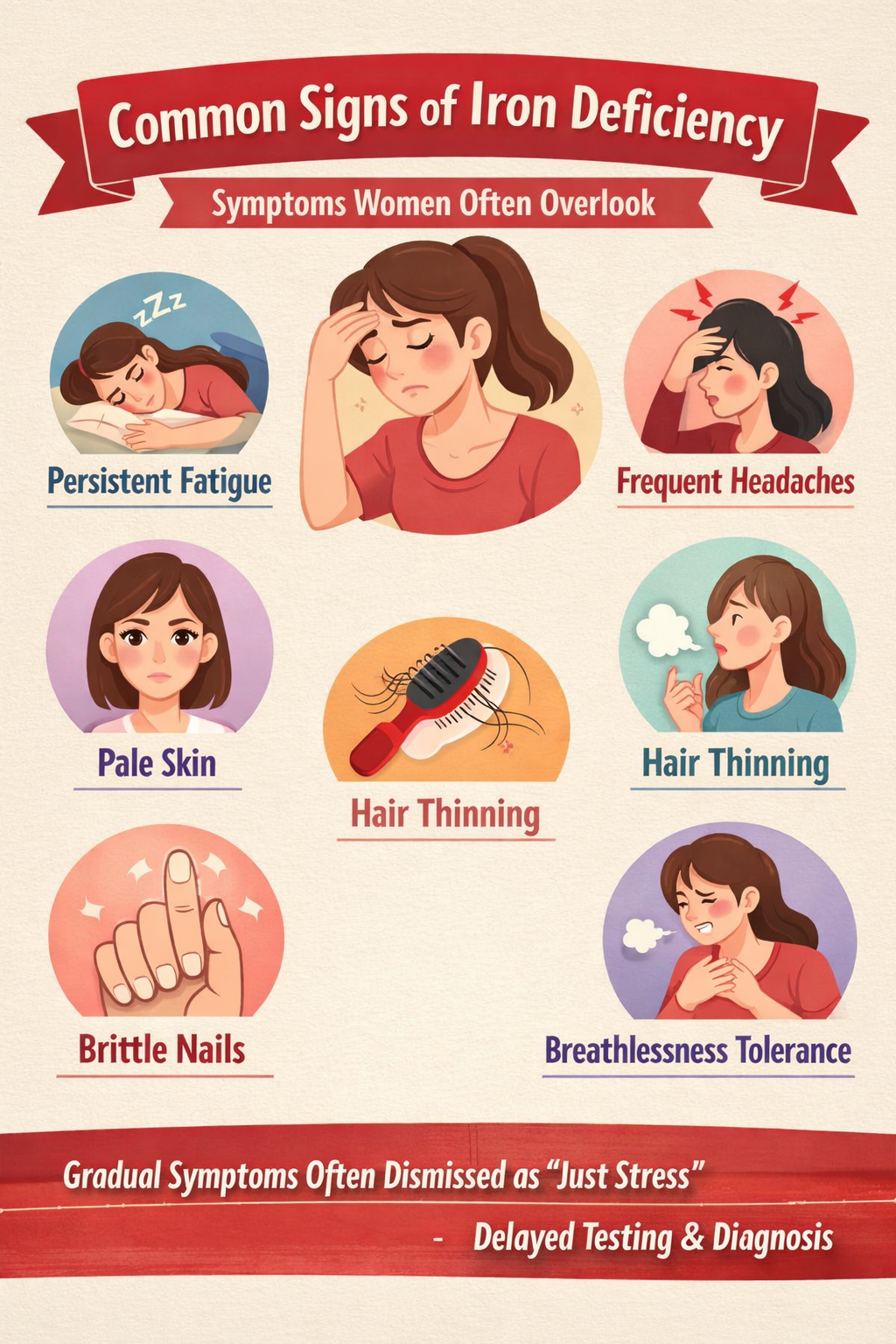
Iron deficiency rarely creates alarm. It settles in quietly. And that is exactly why so many women miss it.
Common signs include:
- Persistent fatigue
- Frequent headaches
- Pale skin
- Hair thinning
- Brittle nails
- Breathlessness during mild activity
- Reduced exercise tolerance
These symptoms develop gradually. Many women dismiss them as routine stress. That dismissal delays testing.
When iron deficiency becomes anaemia
If untreated, deficiency progresses to iron-deficiency anaemia.Dr Anagani cautions, “If iron deficiency progresses into anaemia, the effects extend beyond tiredness. Immunity may weaken, mood changes can occur, and productivity suffers. During pregnancy, untreated anaemia increases health risks for both mother and baby, making early detection especially important.”Research from the Indian Council of Medical Research (ICMR) has repeatedly highlighted the link between maternal anaemia and adverse pregnancy outcomes. Anaemia does not only affect physical health. It affects work performance, emotional wellbeing, and cognitive function. The body runs, but not efficiently.
Why so many women don’t realise it
There is a cultural layer to this problem.Many women prioritise family health before their own. Routine fatigue is accepted as part of responsibility. Regular blood testing is postponed unless symptoms become severe.Dr Anagani emphasises early screening: “Routine blood tests remain the simplest way to identify the problem. Checking haemoglobin levels — and doing iron tests when required — can identify a problem well before symptoms start affecting daily life. Regular screening is especially useful for adolescents, women with heavy menstrual cycles, and those preparing for pregnancy, instead of waiting until fatigue becomes difficult to ignore.”Fatigue should not feel permanent. When it does, it deserves investigation.
Small corrections, real impact
Correction rarely requires extreme measures. It begins with steady, practical adjustments.“Including iron-rich foods such as lentils, green leafy vegetables, dates, jaggery, nuts, seeds, and fortified cereals helps rebuild stores gradually. Pairing these foods with vitamin C sources — lemon juice, citrus fruits, or tomatoes — improves absorption significantly. Spacing tea or coffee away from meals can make an unexpected difference,” advises Dr Anagani.In moderate to severe cases, doctors may recommend iron supplements after testing. Self-medication is not advised, as excess iron can also cause harm.Restoring iron levels restores clarity, stamina, and mood. Many women describe feeling “like themselves again” after treatment.Florence Nightingale once said, “The very first requirement in a hospital is that it should do the sick no harm.” In the context of iron deficiency, harm comes from silence and delay rather than disease itself.Iron deficiency is common. But common does not mean harmless. Persistent fatigue should not be accepted as normal life.
