
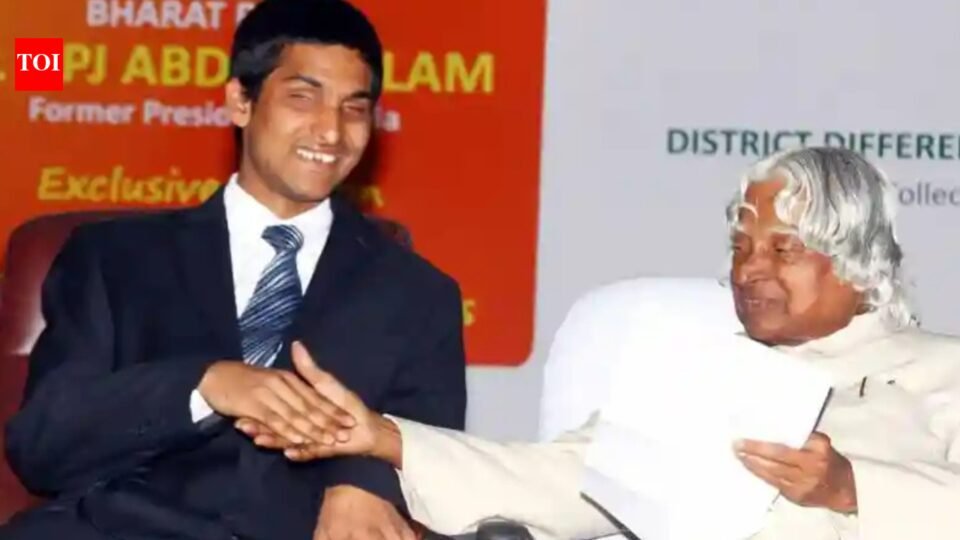
In a small village in Andhra Pradesh, Srikanth Bolla entered the world under circumstances that many around him viewed with sympathy rather than hope. Born visually impaired, his future seemed predetermined in the eyes of society. In rural India at the time, disability was often misunderstood, seen less as a condition requiring support and more as a boundary that defined a person’s entire life. Expectations arrived early, and they were painfully small. Yet within his home, a different belief quietly took root. His parents, despite limited resources, refused to accept that their son’s life should be confined by social assumptions. Education became their act of resistance. They encouraged curiosity, independence, and dignity, planting in Srikanth a conviction that ability could not be measured by sight alone. Scroll down to read more.
When the education system said no
The school itself was not an easy beginning. Classrooms were not designed for students who learned differently. Textbooks were inaccessible, teaching methods rigid, and acceptance conditional. Every academic step required negotiation, convincing institutions that he deserved a place in spaces rarely built with inclusion in mind.
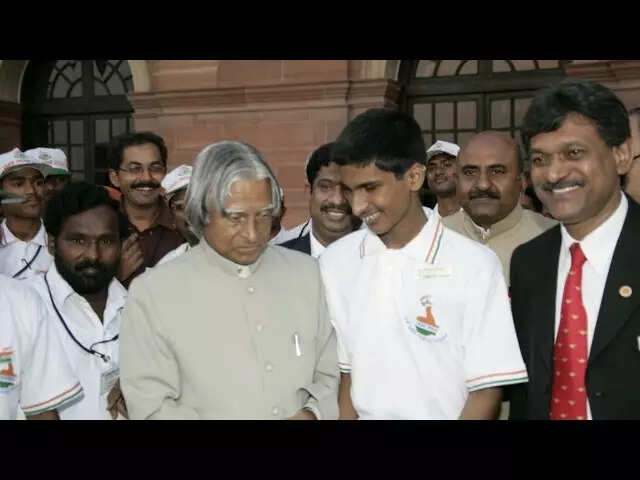
The real turning point came after Class 10, when Srikanth expressed a desire to study science. Authorities rejected his request, arguing that a visually impaired student could not manage scientific subjects. The decision reflected a broader mindset: ambition, for someone like him, was expected to remain modest. For Srikanth, however, the refusal felt less like an end and more like a challenge.
Fighting for the right to learn science
Instead of accepting the decision, he fought it legally, an extraordinary step for a teenager facing institutional resistance. The case was not simply about choosing a subject; it questioned whether opportunity itself could be restricted by disability. When he won, becoming one of the first visually impaired students in India allowed to pursue science at the higher secondary level, the victory carried symbolic weight. It proved that barriers often exist not because something is impossible, but because systems have never been forced to adapt.Studying science required immense effort. Diagrams had to be explained verbally, lessons converted into audio formats, and concepts memorised through repetition and imagination. Yet the struggle strengthened his confidence. Achievement felt earned, not granted.
A door closes in India; another opens at MIT
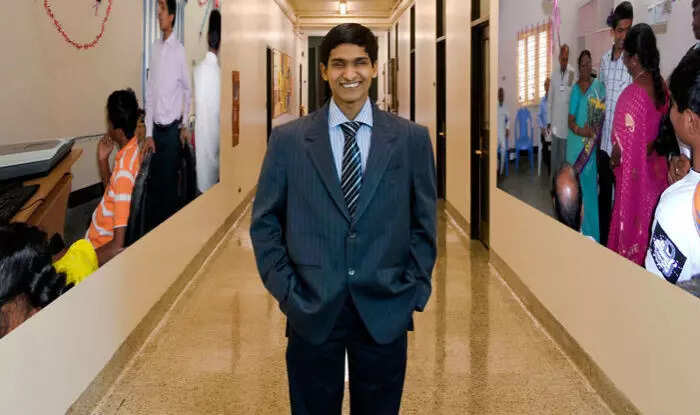
Despite academic success, another setback followed. India’s top engineering institutions declined admission, once again citing his disability. Years of hard work seemed overshadowed by familiar doubt. But rejection, as Srikanth would later realise, sometimes redirects rather than stops a journey.He was accepted into the Massachusetts Institute of Technology (MIT), becoming the first international blind student to study there. At MIT, the environment felt different. Accessibility was seen as innovation, not inconvenience. For the first time, he experienced a system that focused on possibility rather than limitation. Exposure to global ideas reshaped his ambitions. Education was no longer just personal progress; it could become a means to change how society itself functioned.
Discovering purpose beyond personal success
At MIT, entrepreneurship began to feel like a powerful language of change. Srikanth recognised that businesses could challenge social inequalities more effectively than charity alone. Instead of waiting for opportunities to be created for people with disabilities, he imagined building platforms that generated those opportunities directly.

Srikanth Bolla is a distinguished Indian entrepreneur, serving as the Chief Executive Officer, co-founder, and Chairman of Bollant Industries Private Limited.
This idea stayed with him as he prepared to return to India. Many expected him to pursue a comfortable career abroad, but Srikanth chose a more uncertain path, one rooted in purpose rather than security.
Returning home to build something meaningful
Back in India, he founded Bollant Industries, a company focused on manufacturing eco-friendly packaging products. The business model combined sustainability with social inclusion, employing people with disabilities and individuals from marginalised communities.The concept was ambitious and unconventional. Investors were hesitant, unsure whether a socially driven enterprise could remain commercially viable. Srikanth faced scepticism repeatedly, not only about the business but also about his ability to lead it. Yet persistence slowly replaced doubt. With mentorship and determination, the company began producing areca leaf packaging and recycled products, aligning environmental responsibility with economic empowerment.
Entrepreneurship with inclusion at its core

What made Bollant Industries unique was its philosophy. Employees were not hired out of sympathy but for their capability. Workspaces were adapted to ensure accessibility, allowing individuals long excluded from employment to contribute meaningfully.For many workers, the job represented more than income. It restored dignity, the simple but powerful recognition of being valued for skill rather than limitation. Srikanth often emphasised that inclusion should never be mistaken for charity; it is an investment in human potential.
Turning opportunity into dignity for others
As the company grew, so did its impact. Recognition arrived from national and international platforms, and investments helped expand operations. Yet Srikanth’s focus remained consistent: building systems where opportunity became normal rather than exceptional.His journey challenged deeply rooted assumptions about disability in the workplace. By demonstrating that inclusive businesses could thrive financially, he reframed inclusion as smart entrepreneurship rather than social obligation.
Redefining what success looks like
In interviews and public talks, Srikanth often repeats a line that has come to define his philosophy: “I lack eyesight, but not vision.” The statement captures more than resilience. It reflects clarity, the understanding that vision is not physical sight but the ability to imagine change and pursue it relentlessly. His success does not rest solely on personal achievement but on reshaping conversations around ability, education, and employment in India. Through his journey, many began to realise that barriers often exist in perception long before they exist in reality.
Vision beyond sight

Here’s all you need to know about Srikanth’s OTT release. From platform to date, know when you can watch Srikanth Bolla biopic starring Rajkummar Rao online.
Today, Srikanth Bolla stands as both an entrepreneur and changemaker, representing a new narrative of possibility. His life demonstrates that resilience is rarely dramatic; it is built quietly through repeated decisions to continue despite rejection. What began as a struggle for education evolved into a broader mission, creating spaces that symbolise opportunity, where others would not have to fight the same battles alone but instead find pathways opening before them. His extraordinary journey has also reached popular culture, inspiring a biographical film Srikanth, starring Rajkummar Rao, which brought his story of determination and inclusion to a wider audience, introducing many to the vision behind his success.
A story larger than one individual
Ultimately, Srikanth’s journey is not just about overcoming blindness. It is about refusing to inherit a smaller future defined by others. Through determination, innovation, and empathy, he transformed rejection into purpose and entrepreneurship into social change. His story reminds us that true vision begins not with what we see, but with what we believe is possible and the courage to build it, even when the world cannot yet imagine it alongside us.
