
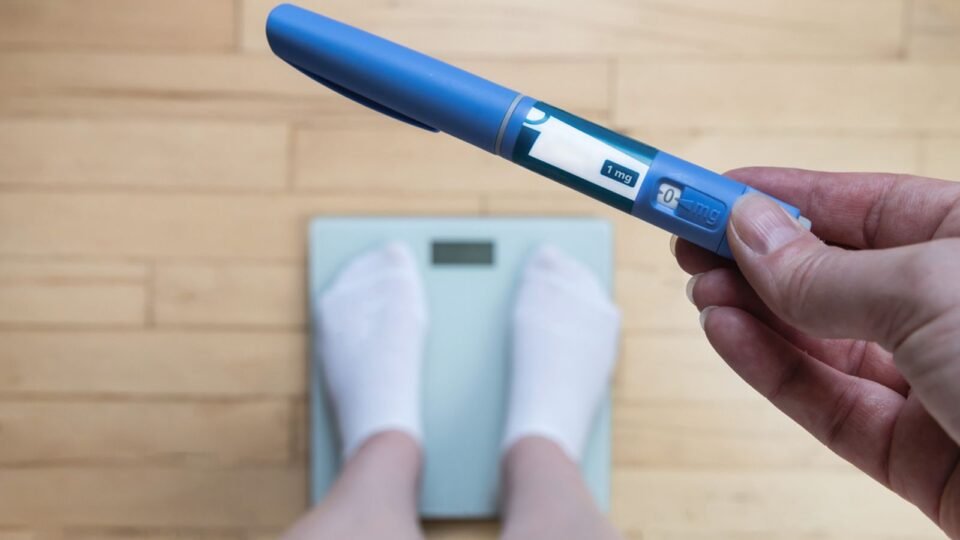
People on obesity jabs will regain the majority of the weight they lose within a year of stopping the drugs, a new study suggests.
Researchers at the University of Cambridge found that after stopping the jabs for 52 weeks, on average people had regained 60% of the weight they lost.
They warned that if the regained weight is mainly fat, patients could “be worse off than before” they started the jabs.
How do the drugs work?
Weight loss jabs are a class of drugs known as GLP-1 receptor agonists, which work by mimicking the hormone GLP-1 to regulate blood sugar and insulin levels.
Originally developed as a treatment for type 2 diabetes, certain types, such as semaglutide (Wegovy) and tirzepatide (Mounjaro), are approved for use on the NHS to help tackle obesity.
The jabs could also be used to prevent and treat addiction to alcohol, cigarettes and drugs like cannabis, cocaine, nicotine and opioids, a second study involving more than 600,000 US veterans with type 2 diabetes suggests.
Experts believe the way the GLP-1 receptor agonists work on the brain’s reward pathway cuts cravings and found that they helped both prevent substance misuse in those who had no addictions and prevent overdoses and A&E visits in people already addicted.
File pic: iStock
What have researchers found?
The Cambridge study, which included six trials involving more than 3,200 people, was published in eClinicalMedicine. It suggests that “there is significant weight regain following cessation” of weight loss drugs.
But the researchers found that the weight regain is likely to plateau, tapering off at 75% of the original weight lost by 60 weeks, meaning that 25% could be sustained long-term.
Brajan Budini, a medical student at the School of Clinical Medicine and Trinity College, University of Cambridge, said: “Our projections show that even though people regain most of the weight they have lost, they still maintain some of the weight loss, but what we currently don’t know is if the same proportion of lean mass is recovered.
“If the regained weight is disproportionately fat, individuals may ultimately be worse off than before in their fat-to-lean mass ratio, which may have adverse consequences for their health.”
The researchers called for further trials to explore how the jabs affect the composition of weight loss during and after treatment.
Read more:
GPs to be offered bonus for prescribing jabs
Which weight loss jabs are available on the NHS?
Weight loss jabs could be banned by next Olympics
The separate US study monitored veterans for up to three years and found those with no history of substance abuse had an overall 14% reduced risk of substance use disorders (SUDs) after starting the weight loss jabs.
The findings, published in the British Medical Journal (BMJ), also included a reduced risk of problems with alcohol (18%), cannabis (14%), cocaine (20%), nicotine (20%) and opioids (25%) in those veterans on GLP-1s compared to people on other diabetes drugs.
Among those with an existing substance use disorder, starting the jabs was linked to a 31% lower risk of SUD-related emergency department visits, hospital admissions and mortality, and drug overdoses and suicidal behaviours.
While the study was predominantly on older men, similar results were found in women.
