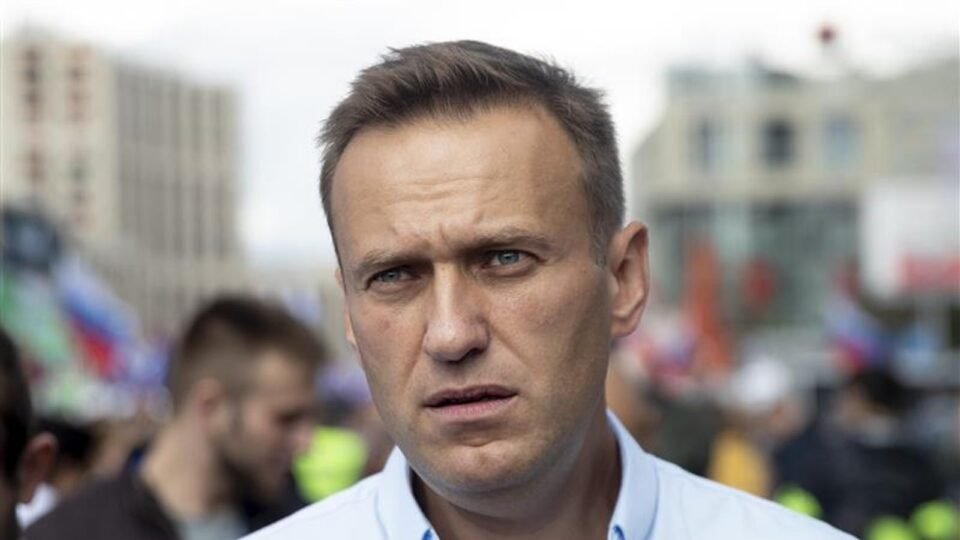
Russia’s ambassador to Britain has denied that poison from a dart frog was used to kill opposition leader Alexei Navalny.
Speaking on Sunday Morning with Trevor Phillips, Andrey Kelin said his death was “nothing to do with us”.
Mr Navalny, 47, was killed while imprisoned in a Russian penal colony in 2024.
At the Munich Security Conference earlier this year, the UK, Germany, Sweden and the Netherlands claimed he had been poisoned with a deadly toxin found in the skin of Ecuadorian dart frogs.
They claimed the “barbaric” act – using a neurotoxin that is classed as a chemical weapon – could only have been carried out by Vladimir Putin’s government.
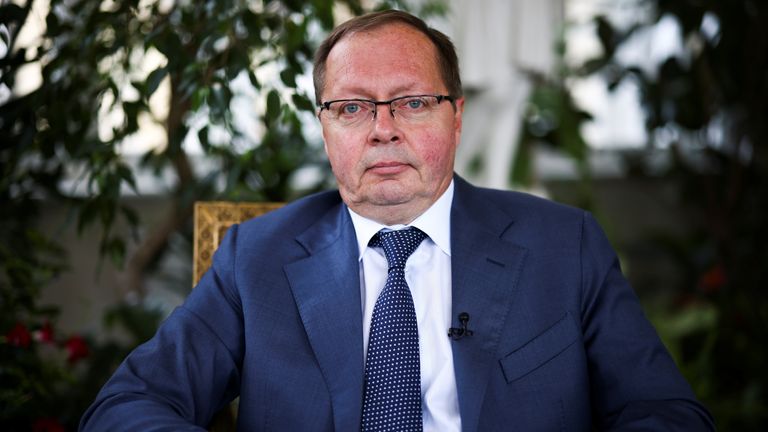
Ambassador of Russia to the United Kingdom Andrei Kelin. Pic: Reuters
Responding to the accusation, Mr Kelin said: “Do you think that we have got this frog in from South America, tell me please?”
He then claimed there are “six places” in London where a synthetic version of the toxin can be bought.
Also speaking on Sunday Morning with Trevor Phillips, Foreign Secretary Yvette Cooper said that Mr Kelin was wrong.
Russia had both the “means and the motive” to kill Mr Navalny, she claimed
Ms Cooper added that “clear evidence” pointed to Russian involvement – hence why the UK, along with other nations, pointed to Moscow being to blame for Mr Navalny’s death.
Sky News understands it is likely the toxin that killed him was manufactured in a laboratory rather than actually taken from a dart frog.
It is not clear how the frog poison – called epibatidine – was allegedly administered to Mr Navalny, who had been in a penal colony in Siberia when he died almost exactly two years ago.
Read more:
The science behind Russia’s frog poison
Why Navalny announcement was deliberately timed
Indigenous tribes in South America are said to use the toxin in blow darts or blowguns when they hunt.
The poison – described as “one of the deadliest on earth” – is 200 times stronger than morphine. It causes paralysis, breathing difficulties and death.
Speaking to Trevor Philips, Mr Kelin also claimed Russia was on the side of Tehran in its war against the US and Israel.
He said: “We are not neutral. No way neutral. We are supportive to Iran, of course. And we consider, as I have said, very negatively what is being done.”
