
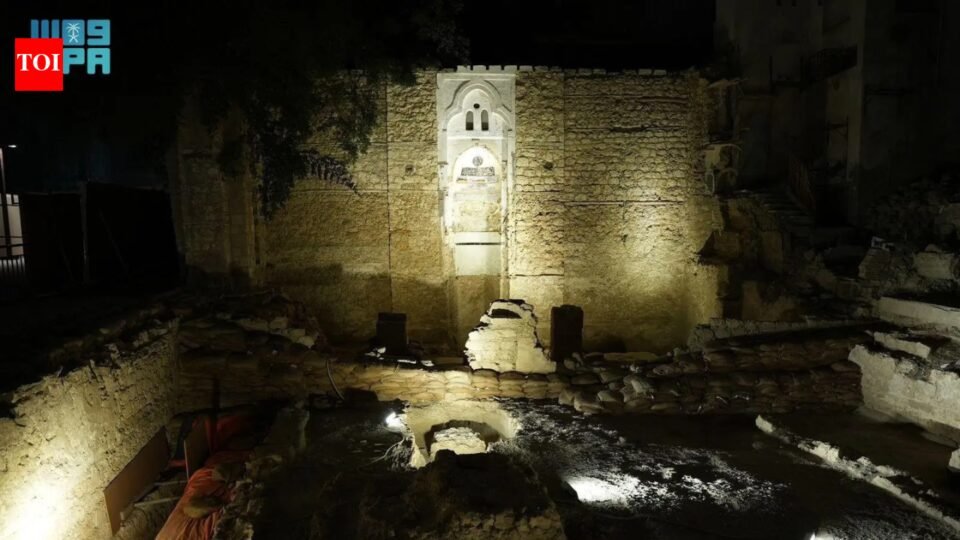
Tucked between narrow medieval lanes in historic Jeddah, the Othman bin Affan Mosque is offering a rare, layered look into the city’s past. Fresh excavations at the site have uncovered more than 1,300 years of continuous history, linking early Islamic foundations to global trade routes and evolving architectural traditions, as reported by the Saudi Press Agency.
A foundation linked to early Islam and Jeddah ’s rise
The origins of the Othman bin Affan Mosque date back to 33 AH (654 CE), making it one of the oldest archaeological and religious landmarks in Jeddah. Its historical importance is directly tied to Caliph Othman bin Affan, who designated Jeddah as the primary Islamic port. This decision transformed the city into a key gateway for pilgrims travelling to Makkah as well as a centre for maritime trade.Positioned among ancient pathways and surrounded by traditional buildings, the mosque has remained in continuous use for more than 1,300 years. This uninterrupted usage highlights not just its religious significance, but also its role in the everyday life of the city across centuries.The mosque’s endurance reflects how Jeddah developed alongside it, evolving from an early Islamic settlement into a thriving port city that connected different regions of the world.
Layers of history across major Islamic empires
Recent excavations have revealed that the mosque contains multiple historical layers, each corresponding to major Islamic periods. These layers confirm that the site remained active across:
- Umayyad Caliphate (661–750 CE / beginning 41 AH)
- Abbasid Caliphate (750–1258 CE)
- Mamluk Sultanate (1250–1517 CE / up to 923 AH)
Together, these periods span from 41 AH (661 CE) to 923 AH (1517 CE), representing nearly a thousand years of continuous development and use.During the Umayyad period, early coral-stone foundations and port-related developments supported the growing number of pilgrims and traders. This was a time when Islamic rule expanded rapidly, stretching from Spain to India, and Jeddah began to establish itself as a key maritime hub.Under the Abbasids, often referred to as the Islamic Golden Age, the region saw advancements in science, knowledge, and infrastructure. Evidence from the mosque, including glass lamps and aqueduct channels, suggests improvements to both the mihrab and water systems. These developments indicate that Jeddah was not only a trade centre but also part of a broader intellectual and cultural network across the Red Sea.The Mamluk era brought further transformation. Known for their military strength and control over trade routes, the Mamluks strengthened Jeddah’s fortifications. Discoveries from this period, including ebony imports from Ceylon and porcelain fragments, point to increased commercial activity and long-distance trade. The mosque during this time evolved into a resilient structure within a fortified and economically active port city.
Evidence of global trade and advanced engineering
One of the most significant findings from the excavation is a sophisticated water system dating back around 800 years. This system reflects advanced engineering techniques used to manage water resources in a coastal environment, indicating a high level of urban planning and technical knowledge.Equally notable are the rare ebony columns found in the mihrab. Scientific analysis has traced these materials to ancient Ceylon, present-day Sri Lanka, providing clear evidence of Jeddah’s historic maritime trade connections across the Indian Ocean.Further strengthening this narrative is the discovery of early Chinese porcelain among thousands of artefacts recovered from the site. These items confirm that Jeddah was part of a vast trade network linking the Middle East with Asia.Together, these findings show that the mosque was more than a place of worship. It functioned as a point within a wider system of trade, travel, and cultural exchange, reflecting the city’s importance on global maritime routes.
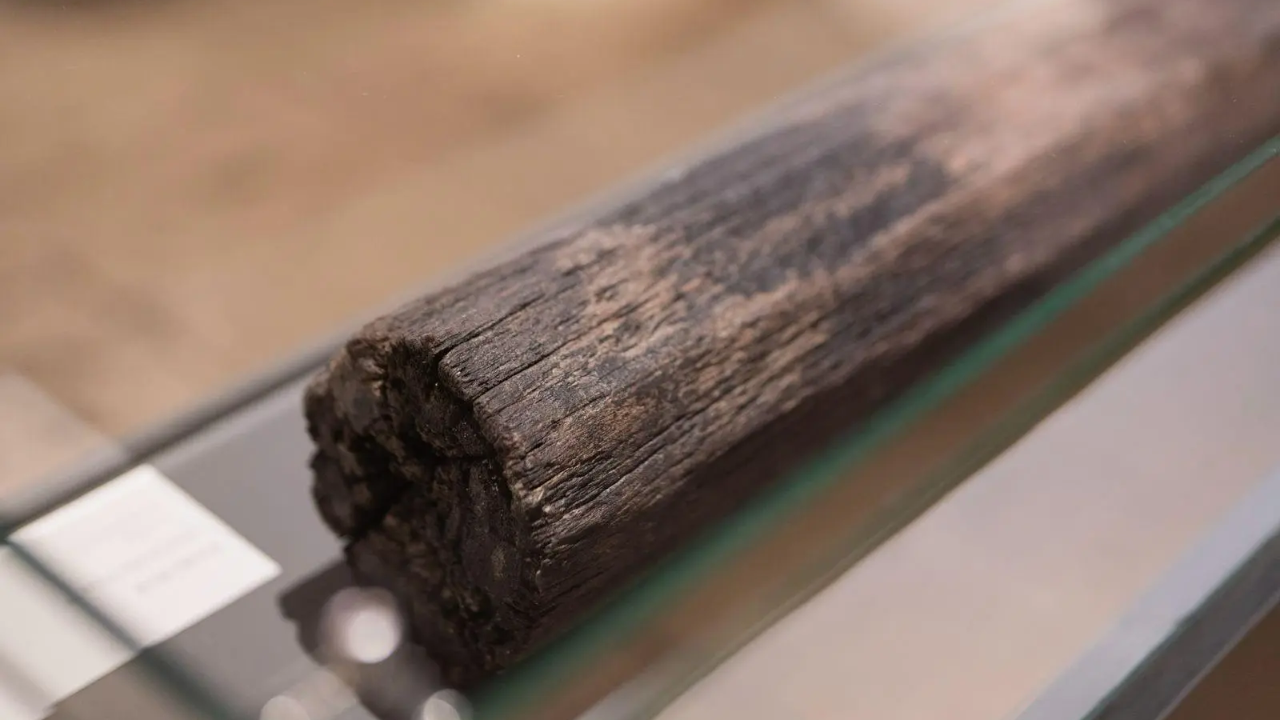
Ebony column/Image: SPA
Architectural evolution across seven phases
The mosque has undergone seven distinct architectural phases, all of which have now been digitally documented. This detailed documentation provides insight into how the structure adapted over time in response to changing needs and influences.The construction techniques observed across these phases highlight traditional coastal building methods, including:
- Use of coral stone as a primary material
- Integration of wooden structural elements
- Design adjustments suited to humidity and coastal weather conditions
Each phase represents a stage in the mosque’s development, whether through expansion, repair, or adaptation. These changes reflect both functional requirements and the influence of different historical periods.The digital preservation of these phases ensures that the mosque’s architectural history is recorded in detail, allowing researchers and visitors to better understand its transformation over centuries.
A living heritage site in modern Jeddah
Today, the Othman bin Affan Mosque continues to serve as both a place of worship and a cultural landmark. It has become a key destination along Jeddah’s cultural routes, attracting visitors interested in the city’s history and heritage.The site blends Islamic history with contemporary cultural activities, creating a space where the past is actively preserved while remaining relevant to the present. This approach supports broader efforts to maintain the Kingdom’s architectural identity and historical legacy.What makes the mosque particularly significant is its continuity. It is not a relic that has been abandoned or isolated. Instead, it remains an active part of the city, carrying forward a legacy that spans more than 1,300 years.
A continuous story of faith, trade and urban life
The discoveries at the Othman bin Affan Mosque offer a detailed narrative of Jeddah’s evolution. From its early days as a designated Islamic port to its role in global trade networks, the mosque reflects the city’s growth across centuries.Every layer uncovered, from coral stone foundations to imported ebony and porcelain, adds to this story. It shows how religion, commerce, and daily life intersected in one place, shaping both the mosque and the city around it.In simple terms, the site stands as a living record of history. It connects early Islamic foundations with medieval trade routes and modern preservation efforts, making it one of the most important cultural and historical landmarks in Jeddah today.
