
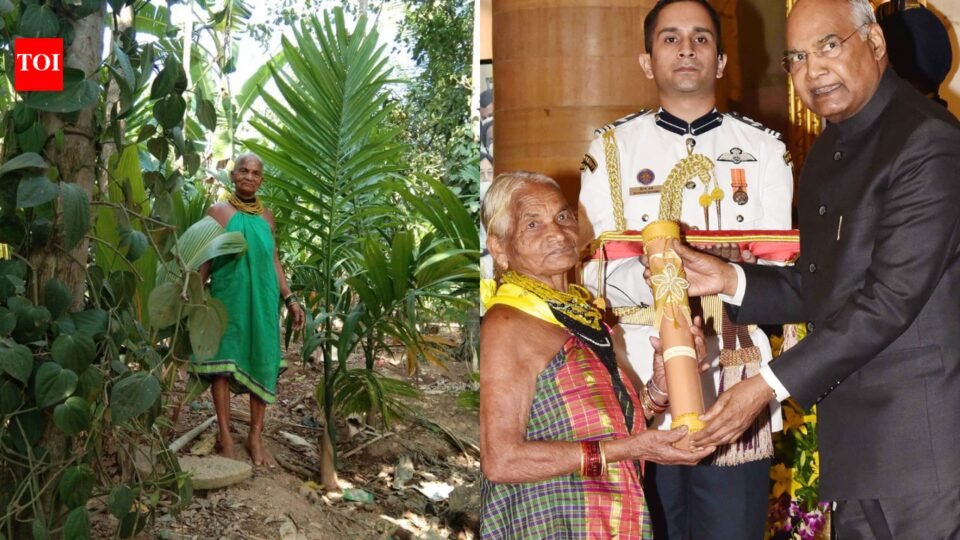
Tulsi Gowda’s life never followed the script of easy beginnings. Born into a Halakki tribal family in Honnalli village in Karnataka, she grew up far from the language of privilege and far from the kind of opportunities that usually shape public success stories. What she did have was an intimate, almost instinctive relationship with the natural world around her and a stubborn commitment to keep going, even when life gave her very little to work with. Scroll down to read more.A life rooted in struggle, not privilegeHer early years were marked by hardship. After losing her father when she was very young, Gowda began working alongside her mother, who also laboured at a nursery. Over time, that work became the centre of her life. She joined the Karnataka Forest Department as a daily wage worker and spent decades tending saplings, collecting seeds and learning, through experience rather than classroom instruction, how forests renew themselves.That detail matters, because Gowda’s story is not simply one of hard work. It is a reminder that expertise does not always arrive through certificates and degrees. In her case, it was built in the open air, with soil under her feet and trees as her teachers. She became known for her deep knowledge of indigenous plants, forest species and seed collection, and local accounts described her as an authority on more than 300 varieties of native plants and trees.Decades of quiet, unseen workFor years, Gowda worked in the background, doing the patient, repetitive labour that rarely attracts attention but quietly changes landscapes. Reports suggest that she spent nearly five decades at the forest department nursery in Honnalli, where she helped regenerate indigenous varieties and planted hundreds of thousands of trees. The same account noted that, even after retirement, she still returned to the nursery whenever she found a rare seed or sapling worth saving.
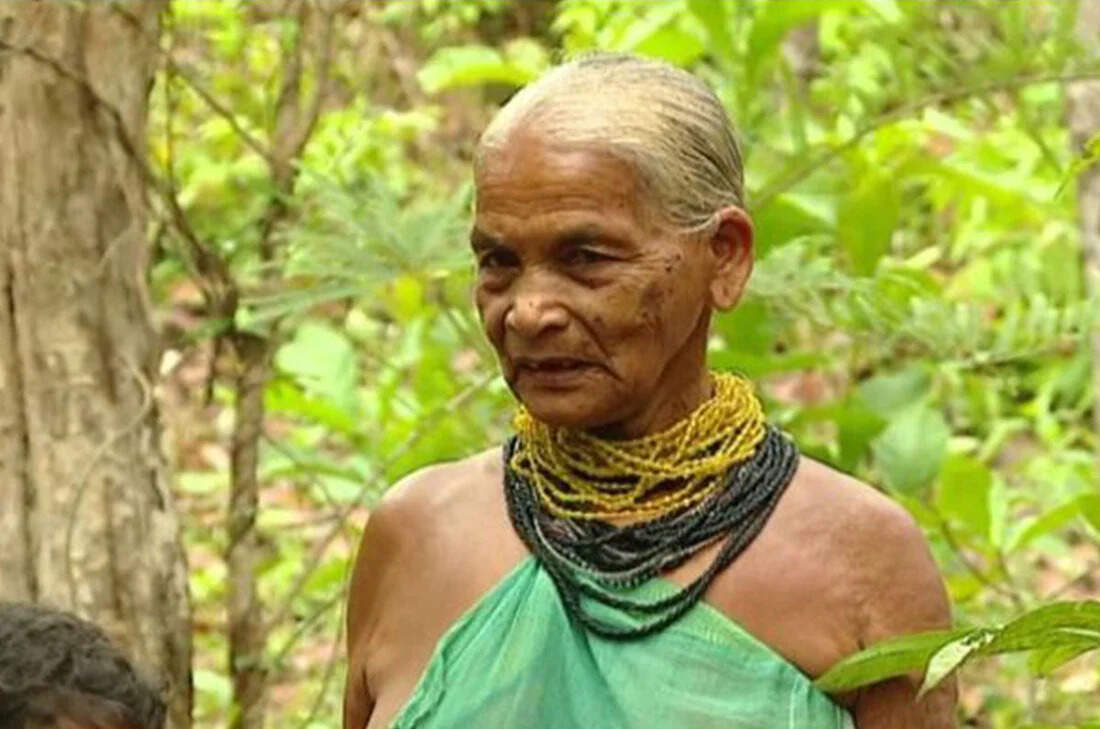
Her contribution was not only visible in the number of trees she planted, but in the way she understood them. Gowda was widely known as the “Encyclopedia of the Forest”, a title that captured the kind of memory and instinct many people in the forest department say she possessed. She was also called the “tree goddess” and “Mother of Trees” in tributes that followed her work and later her death. These were not decorative labels; they reflected how deeply her knowledge had taken root in the community around her.Recognition that came after a lifetime of serviceThe recognition arrived late, but it arrived powerfully. In the 2020 Padma Awards notification, published by the Government of India in November 2021, Tulsi Gowda was listed among the Padma Shri recipients for social work in Karnataka. By then, she had already spent a lifetime doing work that was never meant to be glamorous but proved far more lasting than glamour ever could be. The award placed her among the country’s most respected civilian honourees, but it did not change the quiet dignity with which she had lived all along.What makes Gowda’s journey so moving is the gap between her circumstances and her impact. She did not begin with money, formal education or social visibility. She began with survival. Yet from that starting point, she built a life that touched forests, communities and the larger environmental imagination of India. Various reports described her as someone who planted and nurtured tens of thousands of saplings every year and cared for lakhs of trees over her lifetime. That scale is remarkable on its own; what makes it unforgettable is that she did it through steady, uncelebrated labour over decades.There is also a moral clarity in Gowda’s story that feels especially relevant now. In an era that often rewards visibility over substance, she represents the opposite: a woman whose work mattered precisely because it was rooted, practical and deeply useful. She understood that conservation is not a slogan. It is repetition. It is memory. It is care. It is the refusal to treat nature as disposable and it is perhaps no surprise that, when the Padma Shri came, she said she valued forests and trees more.Tulsi Gowda passed away in December 2024, yet her enduring legacy continues to thrive through the numerous trees she lovingly nurtured and the countless generations she has inspired. Her incredible journey stands as a testament to the idea that true greatness does not always originate in moments of privilege or comfort. More often, it emerges from deep-rooted experiences of poverty, profound loss, and hard work that often go unnoticed by those around us. Just like a young sapling that takes its time to grow, her impact has slowly unfolded until the world finally recognizes that it has been living in the protective shade of something truly extraordinary all along.
