
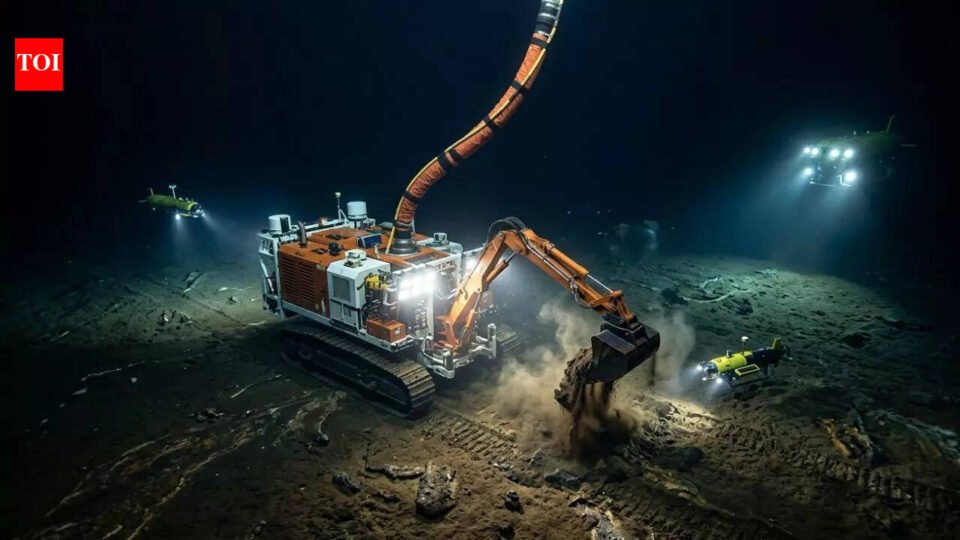
Japan has retrieved samples from a massive rare earth elements deposit located 6000 metres below the Pacific Ocean – referred to as the ‘rare earth giant’. The discovery identifies a deposit of over 16 million tons of specialised oxides, with successful extraction tests already underway from the Minamitorishima region, where the rare earth elements and yttrium muds were located; this is more than adequate to supply the global demand for yttrium and dysprosium for over 700 years. The University of Tokyo and the deep-sea drilling vessel Chikyuled a pioneering rare earth giant extraction mission that could dramatically alter the landscape of global resource security by providing alternative sources of critical materials at unprecedented depths. By utilising the rare earth giant-rich muds to meet the needs of producing electric vehicle motors, wind turbines, and advanced defence technologies for the next century, Japan plans on significantly reducing its current dependency on land-based suppliers.
What is the ‘rare rarth giant’ Japan found
Japan didn’t actually find a giant sea monster; they found a 16 million metric ton deposit of rare earth mineral-rich sediment, which consists of 17 different metals that serve as the ‘vitamins’ of 21st century technology. According to the University of Tokyo’s Kato Laboratory, which has shown that this area contains enough yttrium to satisfy all current levels of global need for 780 years and enough dysprosium to satisfy 730 years’ worth of dysprosium demand.
The discovery below 6,000 meters deep in the ocean
Minamitorishima is the site of an underwater discovery that lies almost 6 kilometres (nearly 4 miles) beneath the ocean surface, being subjected to approximately 600 times the pressure at sea level at that depth. Japan’s Chikyuis the most advanced deep-sea drilling ship in the world and was responsible for reaching this discovery. It confirmed that they used a specialised ‘riser’ pipe system to lift the mineral-enriched sediments from the seabed to the surface; this was performed during their 2026 research voyage.
Why does this matter in powering Tesla and Smartphones
These two minerals are necessary to make the world’s strongest permanent magnets. If it weren’t for the dysprosium and terbium in the aforementioned mud, there would be no way to manufacture high-efficiency permanent magnet motors used in top-tier electric vehicles (EVs) like Teslas, nor could we create generators that produce wind-generated electricity. Evidence provided by the International Energy Agency (IEA) demonstrates that deepwater minerals, as we transition to alternative energy sources apart from fossil fuels, will become the ‘new oil’ in the 21st century.
