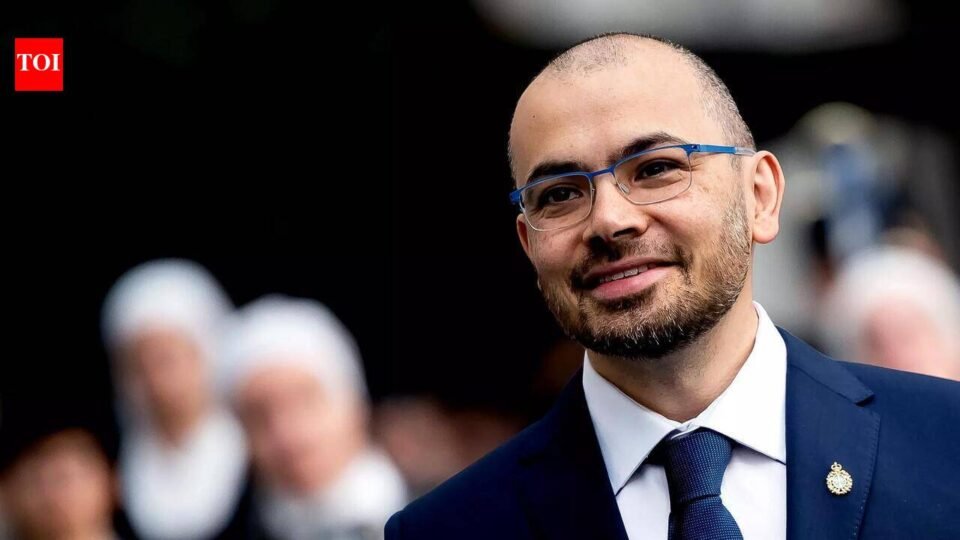

Before Google sealed its landmark acquisition of DeepMind in 2014, Mark Zuckerberg made his own play for the British AI lab, a report has said. He lost, not because of money, but because of a dinner conversation that told company co-founder Demis Hassabis everything he needed to know about who is more fitting of the tech giants to help him achieve his goal of building Artificial General Intelligence (AGI).As Google co-founder Larry Page was in talks about DeepMind in 2013, Hassabis and his co-founder Mustafa Suleyman were not sitting still. They hoped to get a better deal and a firm commitment Google, and for that they quietly opened a door to another suitor: Facebook, The Wall Street Journal reported based on an exclusive excerpt from an upcoming book, The Infinity Machine: Demis Hassabis, DeepMind and the Quest for Superintelligence, by journalist Sebastian Mallaby wherein he has detailed on how Google acquired DeepMind in 2014.
Zuckerberg was watching and Mustafa Suleyman’s meeting with Facebook
Zuckerberg had reportedly been watching rivals build up their AI capabilities and had begun scrambling to catch up, personally courting individual AI researchers despite running a company with 6,000 employees and a billion users.Suleyman flew to California to meet Facebook’s head of corporate development, Amin Zoufonoun, at his home. The report said that Facebook offered an under value for DeepMind’s shares, but compensate the founders and key colleagues with an enormous signing bonus, ultimately leaving them richer than a Google deal would.It was an interesting offer but Suleyman was concerned about AI governance and safety, which Zoufonoun brushed aside. The DeepMind duo already sensed what would later become well known – Facebook’s indifference to AI safety concerns, the report said.
The ‘Google dinner’ that decided DeepMind sale
After Suleyman talked to Hassabis, he travelled to the West Coast to have lunch with Larry Page. Zuckerberg got wind of the visit and moved quickly, inviting Hassabis to dinner at his Palo Alto home. The report said that Hassabis arrived with a quiet test in mind.The two men discussed AI and its potential, and Zuckerberg expressed genuine enthusiasm. But when Hassabis steered the conversation toward other emerging technologies: virtual reality, augmented reality, 3D printing, Zuckerberg lit up with equal excitement about all of them. For Hassabis, that was the tell.“That told me what I needed to know,” Hassabis said later, adding, “Facebook offered more money, but I wanted somebody who really understood why AI would be bigger than all these other things.”This suggested that for Hassabis, building AGI was not among other exciting technologies but was a consequential pursuit in human history yet. Hence, he needed a partner who understood that and not one who treated it as just another item on a list of shiny innovations.After dinner, Hassabis called Larry Page. “Let’s go further,” he told him. Google acquired DeepMind in 2014 for a reported $650 million, and company went on to produce AlphaGo, AlphaFold and some of the most celebrated breakthroughs in modern AI research.In 2023, Google merged Google Brain and DeepMind to form a consolidated Google DeepMind unit.
