

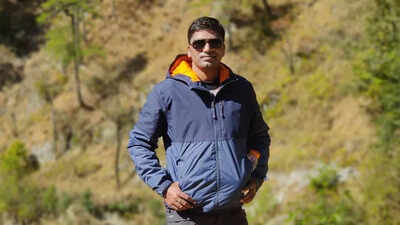
In a small village in Bihar, a boy sat down to study even when the electricity did not always cooperate. The light in the room was often weak, the circumstances were often uncertain, but the habit was fixed: keep reading, keep revising, keep going. That boy was Anshuman Raj, and years later he would clear the UPSC Civil Services Examination with All India Rank 107 in 2019. Scroll down to read more…
A childhood built around limitation
Raj’s story begins in Nawanagar block of Buxar district, where life was marked by ordinary hardship rather than dramatic breakthrough. Reports on his background say he studied under a kerosene lamp in his early years, while his family dealt with financial stress after his father’s rice mill business suffered losses. His mother, a government school teacher, became the steady center of the household.That kind of upbringing does not make success automatic. If anything, it makes every small academic step more expensive in effort. A stable study table, regular power supply, extra coaching, and spare time are conveniences many people never have to think about. Raj’s early life, as reported, was shaped by the opposite: making discipline do the work that comfort could not.
Schooling that kept moving forward
Raj studied at Jawahar Navodaya Vidyalaya in Buxar up to Class 10 and later continued at JNV Ranchi for Class 12. That detail matters because it shows a long academic climb, not a sudden leap. His path was built through public schooling and continued effort, not through the fast lane that many UPSC aspirants rely on.The story has endured partly because it resists polish. It is easy to turn a civil servant into a symbol after the fact. It is harder, and more honest, to remember the years that came before the rank list, when nothing was guaranteed and the next stage of life still depended on the next exam, the next revision session, the next attempt.The official UPSC result for the Civil Services Examination 2019 lists Anshuman Raj at rank 107. He reportedly reached that result after four attempts, which gives the achievement its real weight. It was not a single clean sprint. It was a long apprenticeship in failure, repetition and self-correction.That is why his success continues to resonate so widely. The civil services exam is known for its long preparation cycle and punishing selectivity. Against that backdrop, a rank is never just a rank. It becomes a record of time spent alone with books, notes, mock tests and doubt. In Raj’s case, the result also carried the added force of his background: a boy from a modest rural home, making it into one of India’s most competitive examinations.Stories like Raj’s are not popular only because they are inspiring. They matter because they challenge a very common assumption: that circumstance decides everything early and forever. His life suggests something more stubborn and more useful. Circumstances can slow a person down, but it does not always get the final word.There is also a quiet dignity in the way his story is usually told. The emphasis is not on sudden genius. It is on endurance. On a family that kept pushing education forward despite strain. On a student who continued even when conditions were far from ideal. On the kind of effort that does not look spectacular while it is happening but becomes remarkable only after the result arrives.Many evenings must have looked ordinary from the outside: a boy bent over books, a small pool of light on the table, the slow rhythm of study continuing while the world around him moved on. Yet those ordinary hours, repeated patiently over years, quietly built the foundation of something extraordinary.
More than a success story
Raj’s story is not about one magical night of study under a lamp. It is about years of steady work in imperfect conditions, and about the kind of determination that does not need an audience to exist.There were evenings when the light was dim, when the noise of daily life refused to fade, and when exhaustion sat heavily on the shoulders of a young student. Yet the books still opened. Page after page turned quietly, not with drama, but with habit.That is what gives the story staying power. A lamp can flicker. A room can go dark. A family can struggle. But a routine built on discipline can keep moving through all of it. In Raj’s case, that persistence eventually became a result sheet, a rank, and a life changed. The boy who studied by limited light did not simply escape the dark. He learned how to keep reading inside it.
