The line-up for the biggest ever World Cup is complete.
The tournament across America, Canada and Mexico will see 48 teams competing to become best in the world – up from the usual 32.
Dramatic playoffs saw Italy narrowly miss out on a spot in the finals for the third time in a row, while Iraq will return to the tournament for the first time in 1986.
Here’s everything you need to know.
When and where is the World Cup?
The tournament runs from 11 June to 19 July 2026 and will be played at 11 sites in America, three in Mexico and two in Canada.
104 games will be played overall – up from 64.
The host nations automatically qualify and will play all three of their group stage matches on home soil.
The final will take place at the New York New Jersey (MetLife) Stadium – home of the New York Giants and New York Jets.
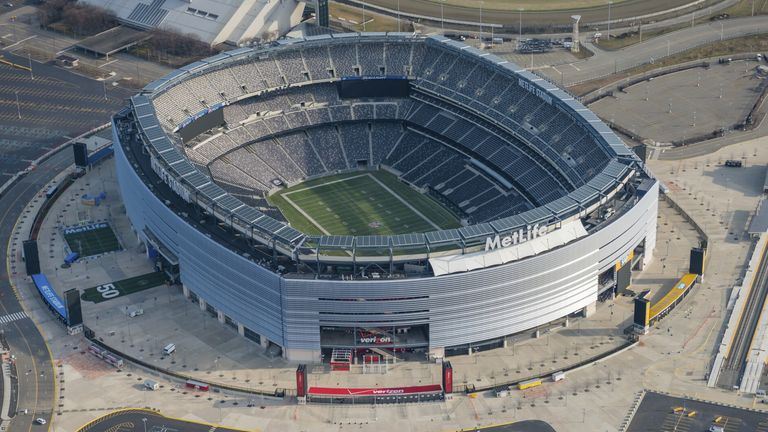
Aerial view of Metlife Stadium, where the final will be played. Pic: AP
The stadiums where games will be played are:
America:
• Atlanta Stadium
• Boston Stadium
• Dallas Stadium
• Houston Stadium
• Kansas City Stadium
• Los Angeles Stadium
• Miami Stadium
• New York New Jersey Stadium
• Philadelphia Stadium
• San Francisco Bay Area Stadium
• Seattle Stadium
Mexico:
• Estadio Azteca Mexico City
• Estadio Guadalajara
• Estadio Monterrey
Canada:
• Toronto Stadium
• BC Place Vancouver Stadium
How will the group stages work?
Due to the increased number of countries in the tournament, the format of the group stages has changed slightly. Instead of 32 teams being divided into eight groups, this year will see 12 groups of four.
The top two teams in each group, plus the eight best third-placed teams, will advance to a round of 32.
For the first time since 1998, Scotland have bagged themselves a place through qualifying while Jordan, Curacao, Cape Verde and Uzbekistan will all make their World Cup debuts.
Here’s the full list of groups:
800
When are England and Scotland playing?
England are in Group L and will begin their campaign on 17 June in Texas against Croatia, who knocked the Three Lions out of the 2018 World Cup.
Here’s England’s full fixture list:
• England vs Croatia – 17 June, Dallas, 9pm (UK time)
• England vs Ghana – 23 June, Boston, 9pm (UK time)
• Panama vs England – 27 June, New York-New Jersey, 10pm (UK time)
Scotland’s timetable is less favourable for fans, who will need to stay up through the night to watch their side take on opponents including five-time winners Brazil.
• Haiti vs Scotland – June 14, Boston, 2am (UK time)
• Scotland vs Morocco – June 19, Boston, 11pm (UK time)
• Scotland vs Brazil – June 24, Miami, 11pm (UK time)
Read more:
What to know about England’s opponents
Scotland’s 2am kick-off ‘difficult’ – what World Cup schedule means
Trump threatening to change host cities
Despite the stadiums already being selected, Donald Trump has threatened to remove the Democrat-run city of Los Angeles from hosting, along with the Boston area, where England and Scotland are playing some of their group stage fixtures.
“If we think there’s going to be a sign of any trouble, I would ask Gianni [Infantino] to move that to a different city,” Mr Trump said in November, as protests against his government have taken place in both cities.
The president later said the government would have to “force ourselves” on LA during the World Cup for security purposes.
He said: “We’re gonna have to do something when it comes to World Cup time, and we’re gonna have to force ourselves upon them, which we have the right to do, because we don’t want to have any crime, we don’t want to have any problems.”
FIFA has told Sky News the US government does have the right to determine if cities are safe for the World Cup.
In a statement, FIFA said: “Safety and security are the top priorities at all FIFA events worldwide.
“Safety and security are obviously the governments’ responsibility, and they decide what is in the best interest for public safety.
“We hope every one of our 16 host cities will be ready to successfully host and fulfil all necessary requirements.”
Scott LeTellier, who was managing director of the 1994 World Cup in America, suggested the cities in question shouldn’t worry about Mr Trump’s threats, as changing the stadiums would require “some kind of national emergency that would give the government the authority to cancel an event”.
“I don’t see even a remote chance of that happening,” he said.
How much are tickets?
FIFA says the cheapest tickets are from $60 (£45) in the group stage. But the most expensive tickets for the final are around $6,730 (£5,094).
Initially, FIFA suggested tickets would be sold using dynamic pricing, meaning fans would pay different prices according to demand.
Variable pricing – fluctuating based on demand – had never been used at a World Cup before, raising concerns about affordability.
FIFA later backed away from it, saying allocations would be set at a fixed price for the duration of the next ticket sales phase.
FIFA president Gianni Infantino previously boasted that there have been more than 500 million ticket requests for the tournament but, according to estimates by The Athletic, less than six million tickets are accounted for.
Will there be a half-time show?
Following in the footsteps of the NFL’s Superbowl, FIFA has confirmed that a half-time show will be performed during the World Cup final on 19 July.
Other finals have had musical acts before, but this will be the first half-time show.
Earlier this year, FIFA’s Mr Infantino said Coldplay will help pick the artists who will perform – none have been confirmed so far.
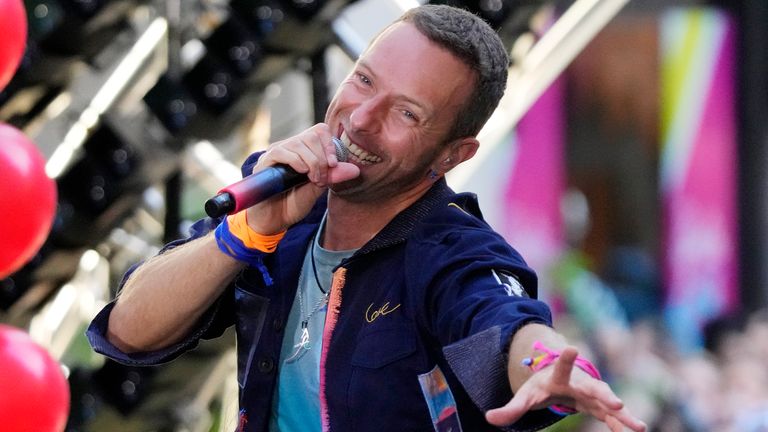
Coldplay’s Chris Martin will help decide who will perform at the World Cup half-time show. Pic: Charles Sykes/Invision/AP
Meet the mascots – and the ball
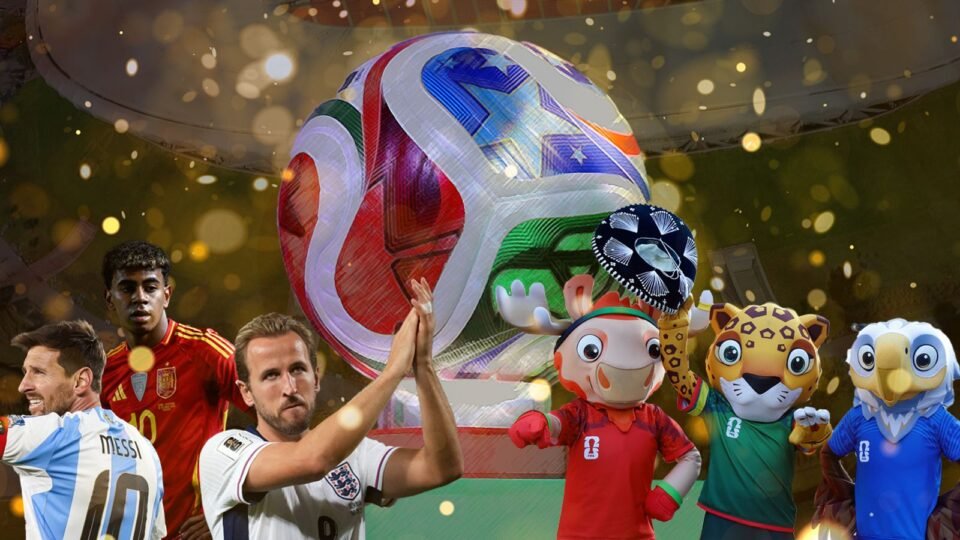
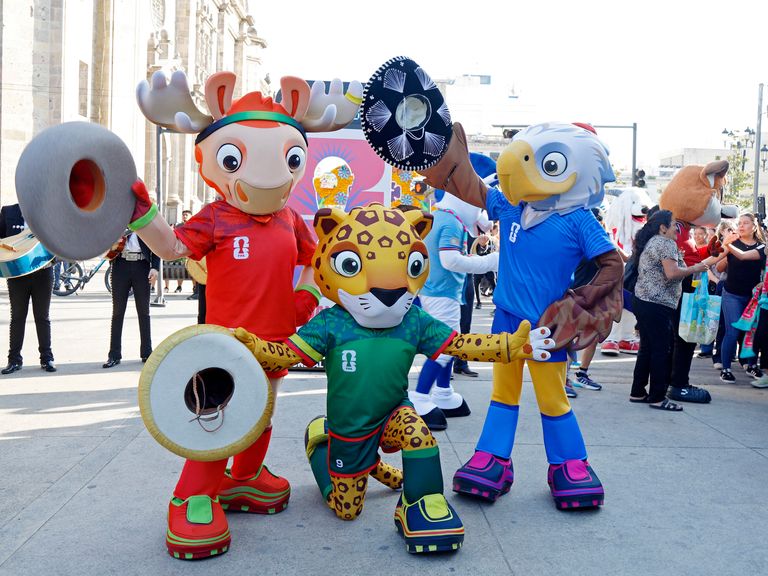
As there are three host nations, this year’s World Cup also comes with three mascots.
Maple the moose, Zayu the jaguar and Clutch the bald eagle will represent host countries Canada, Mexico and America respectively.
Pic: Reuters
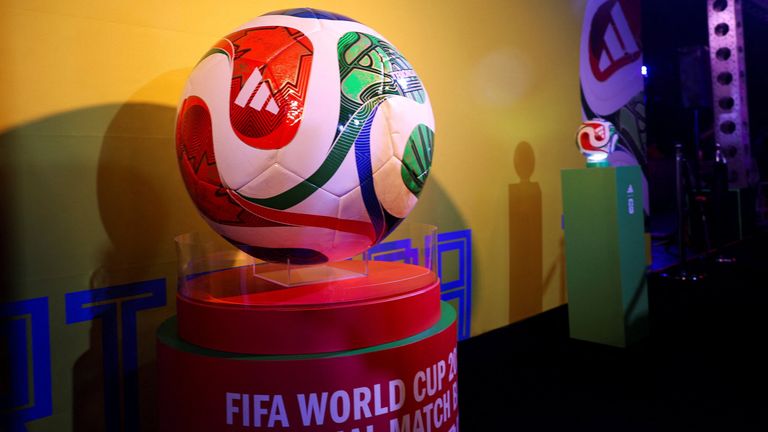
The official ball of the 2026 FIFA World Cup named Trionda. Pic: Reuters
Also reflecting the three co-hosts is the official World Cup match ball – Trionda – which means three waves in Spanish.
The ball features a swirled pattern incorporating red, green and blue, with each section representing a host nation.
