
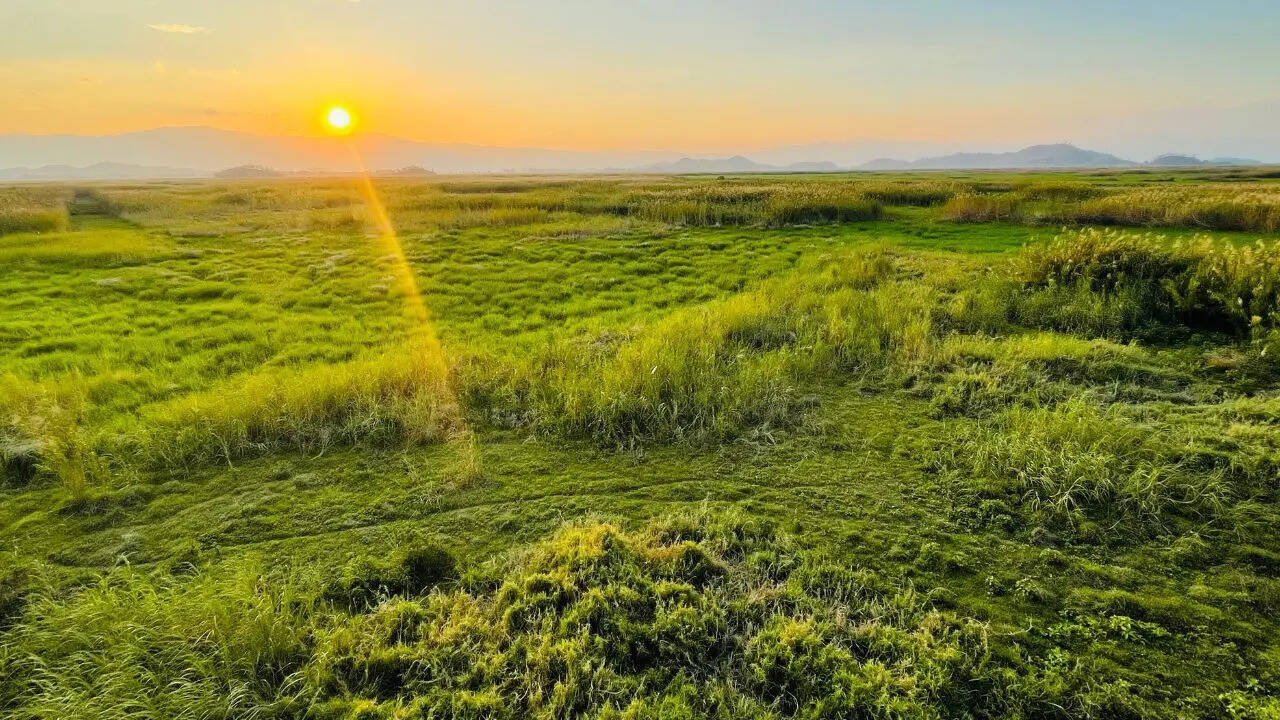
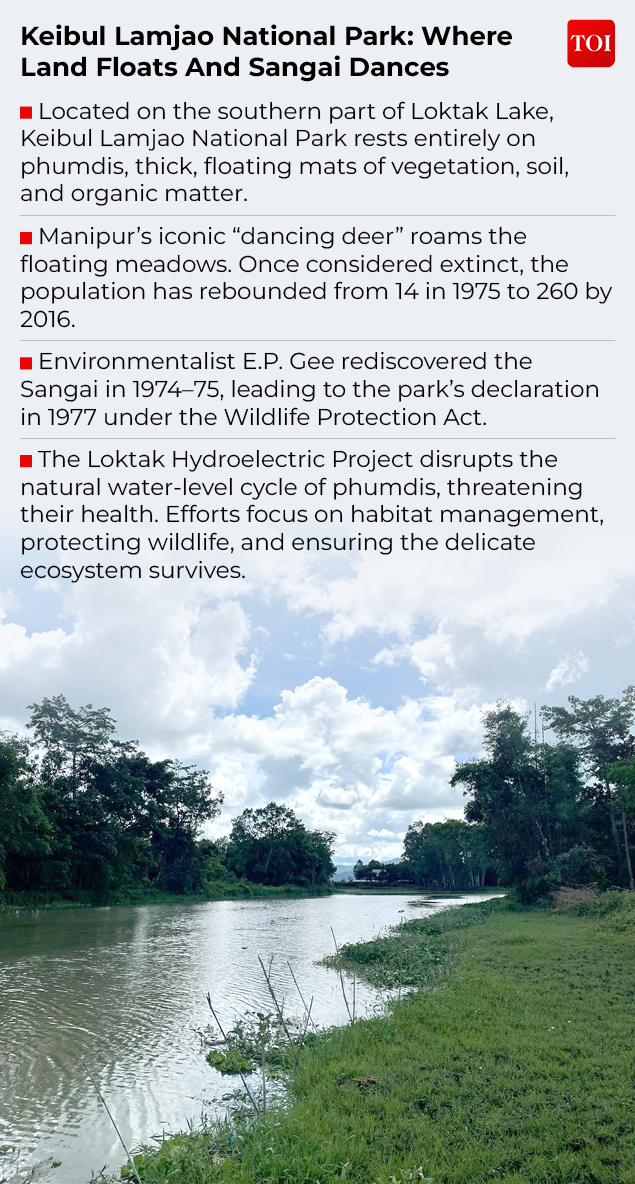
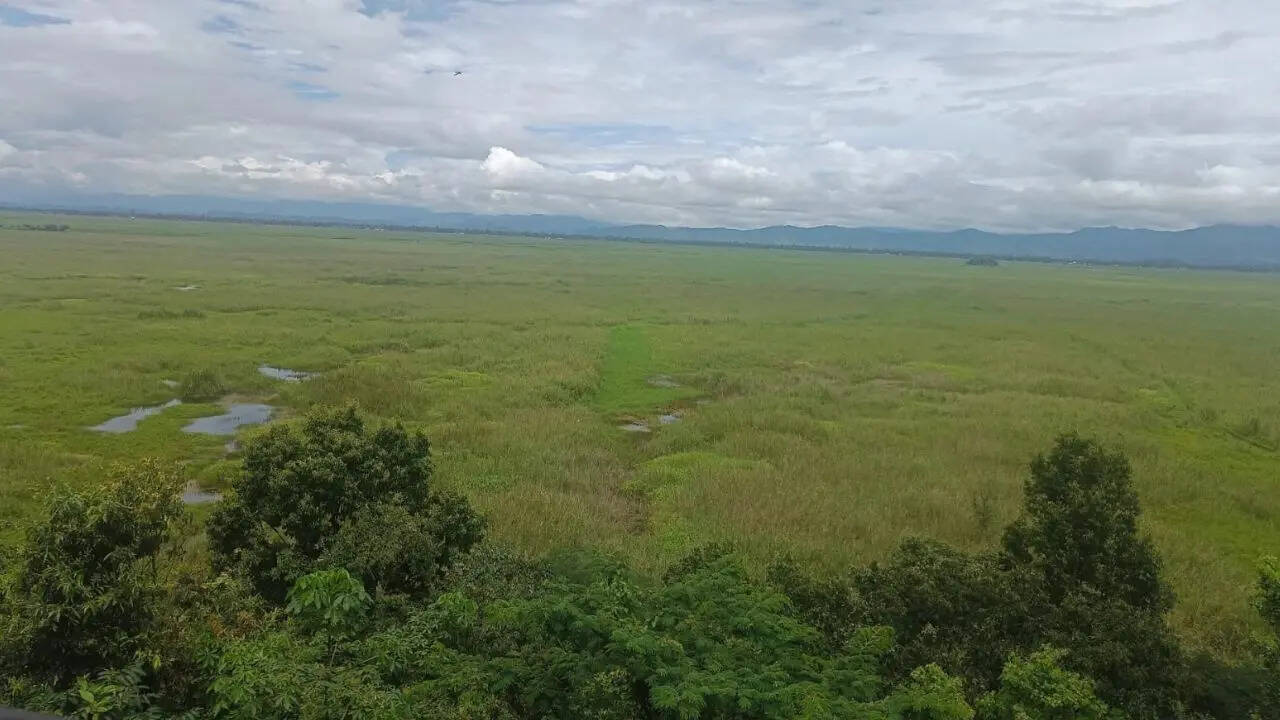
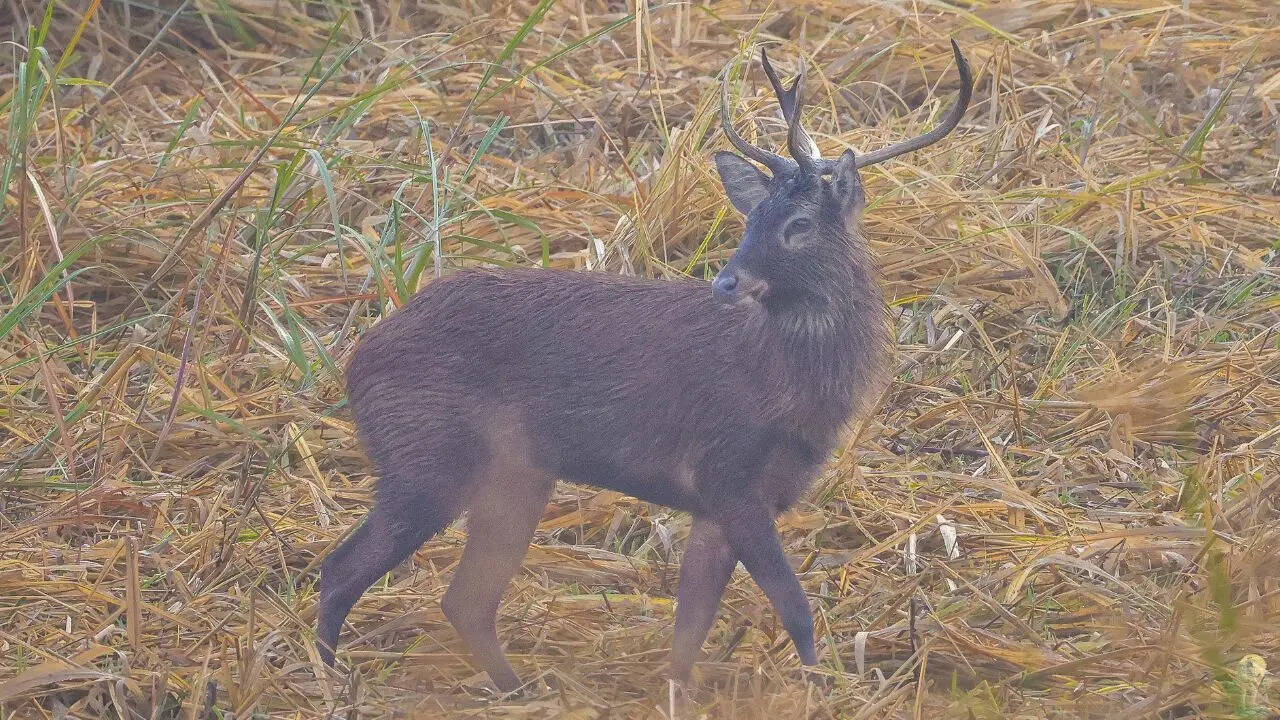
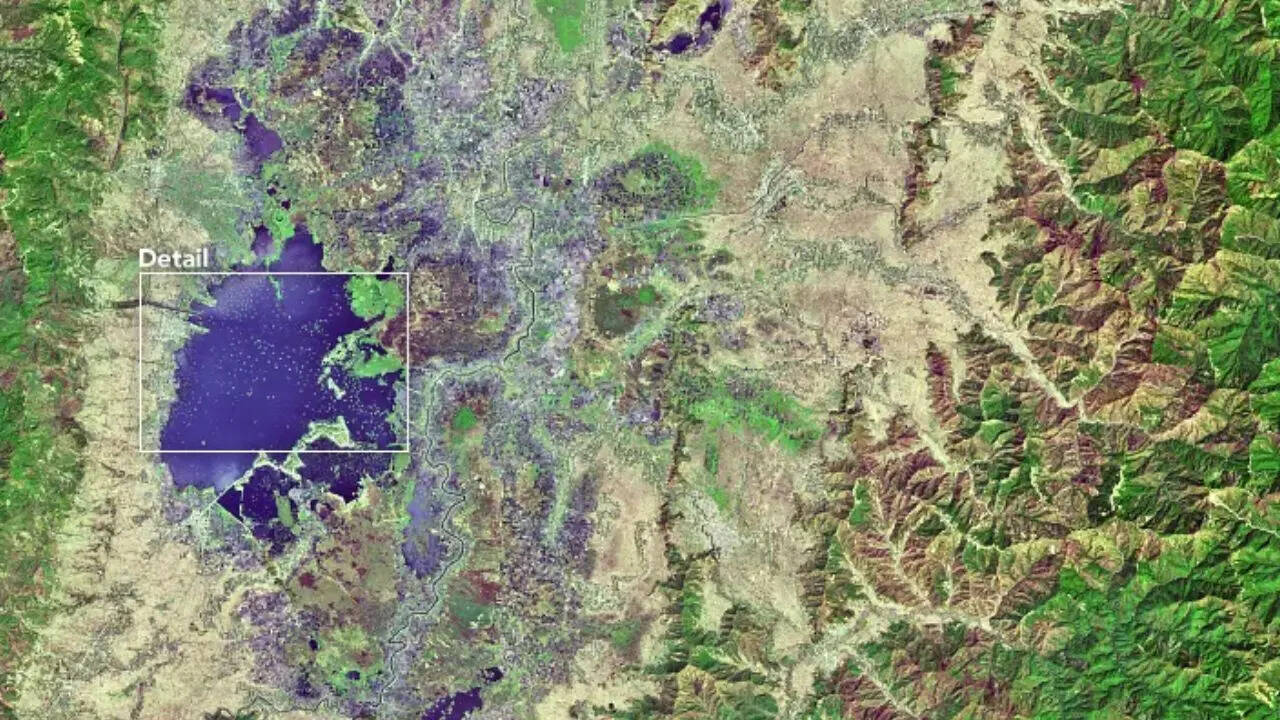
IMPHAL: Keibul Lamjao National Park — the world’s only floating national park — floats delicately on the southern expanse of Loktak Lake in Manipur. Here, the very ground beneath your feet is alive, swaying with thick, buoyant mats of vegetation, soil, and organic matter known as phumdis. It is a place where nature has rewritten its rules, creating a fragile, floating kingdom. Amid this ethereal landscape roams the Sangai, Manipur’s “dancing deer,” whose steps across the floating meadows are as graceful as they are fleeting. Once thought lost to the world, these creatures embody a story of survival, resilience, and the tenuous thread that connects life to the unique rhythms of this watery wilderness. In the stillness of the marshes, every movement matters, every step is a testament — not just to the deer, but to an ecosystem that exists nowhere else on Earth.
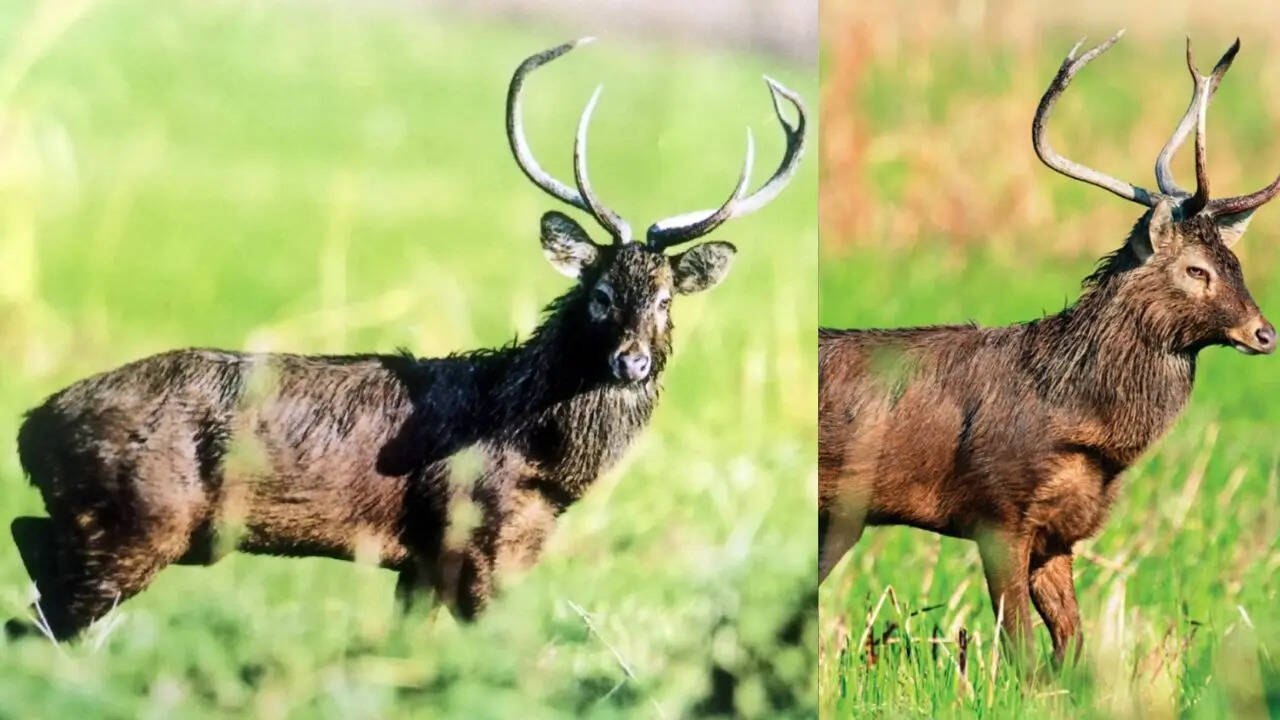
Rediscovery And Conservation Of The SangaiBy 1954, the species was considered extinct, a result of extensive hunting and habitat degradation. For nearly two decades thereafter, the animal faded from public and administrative attention. However, a turning point came during an aerial survey conducted between 1974 and 1975, when a small population of approximately fourteen individuals was rediscovered within the floating marshes of Keibul Lamjao.Its rediscovery in Keibul Lamjao by environmentalist E.P. Gee sparked renewed conservation efforts. From a mere 14 individuals in 1975, the population rose to 155 in 1995 and further to 260 by 2016. Known as the “dancing deer” for its delicate gait across the floating phumdis, the Sangai’s survival remains inseparable from the health and stability of these unique floating meadows.
Following this rediscovery, the government of Manipur and the government of India declared the area a national park in 1977 under the Wildlife Protection Act 1972.Principal chief conservator of forests, Manipur, Anurag Bajpai told TOI, “this legal protection was crucial and notification as a national park was essential to enhance the conservation strategy.”According to Bajpai, the Sangai is not just a species but “a culturally rooted animal that has adapted to this habitat over thousands of years,” reflecting a deep relationship between the landscape and the people of Manipur.
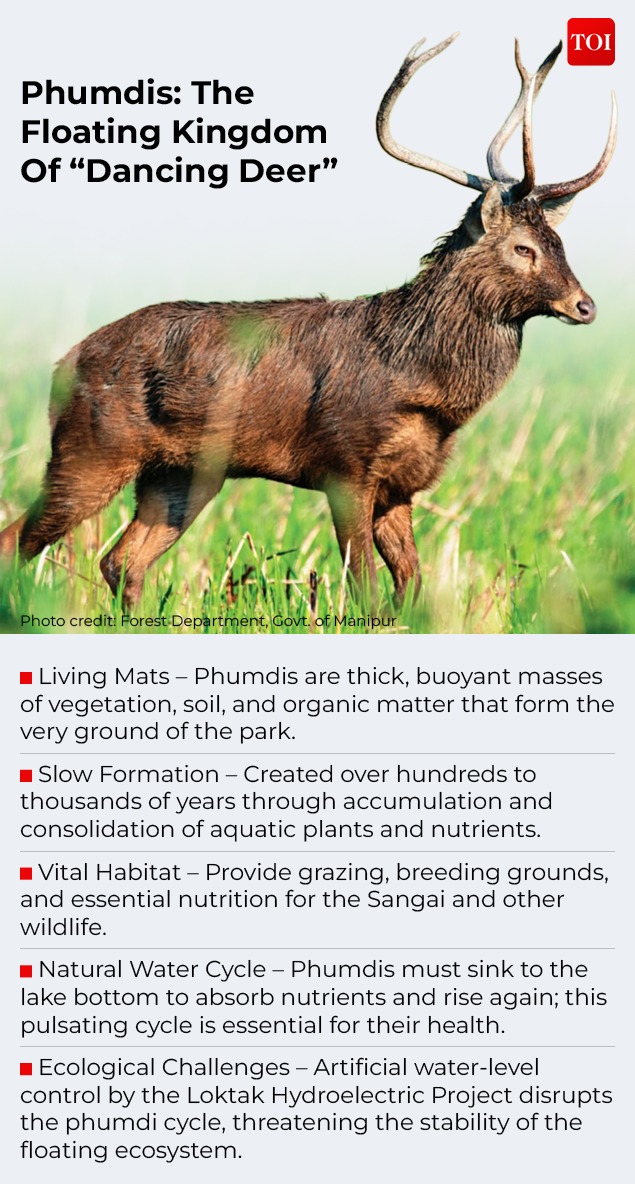
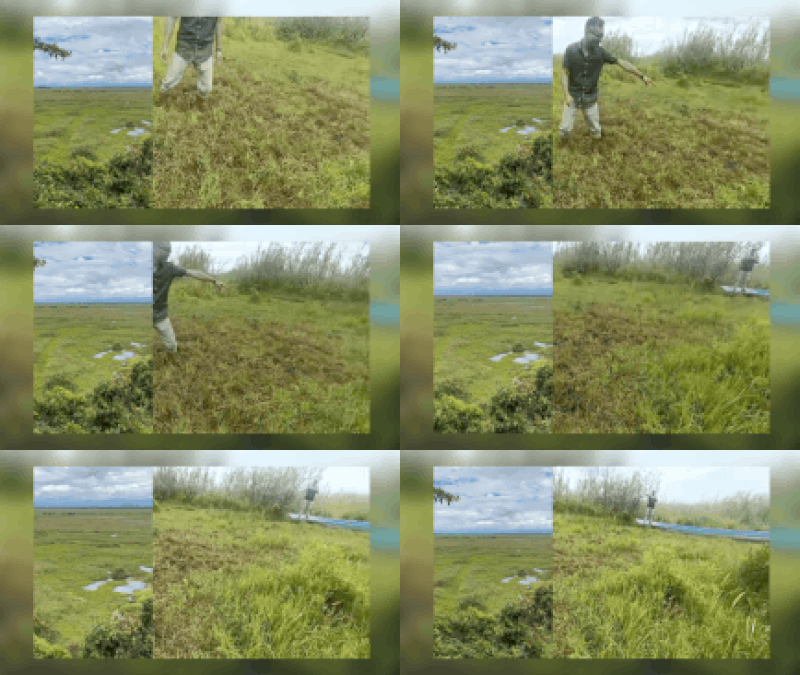
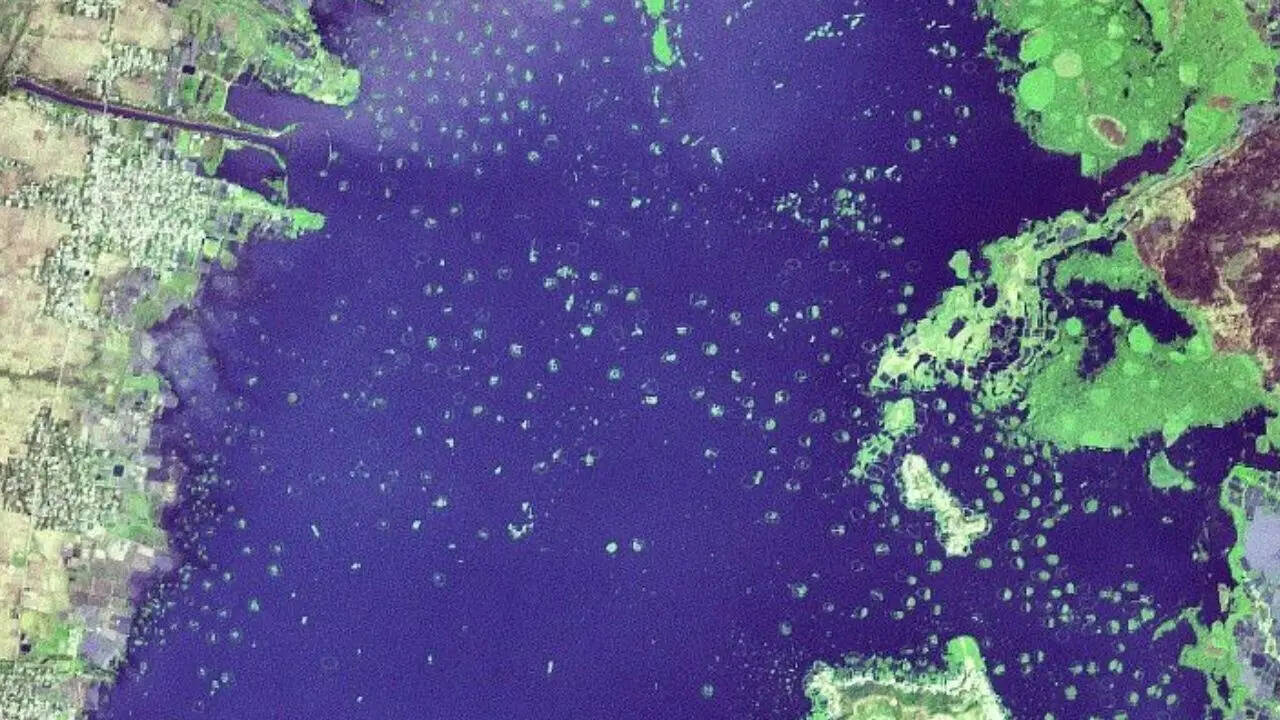
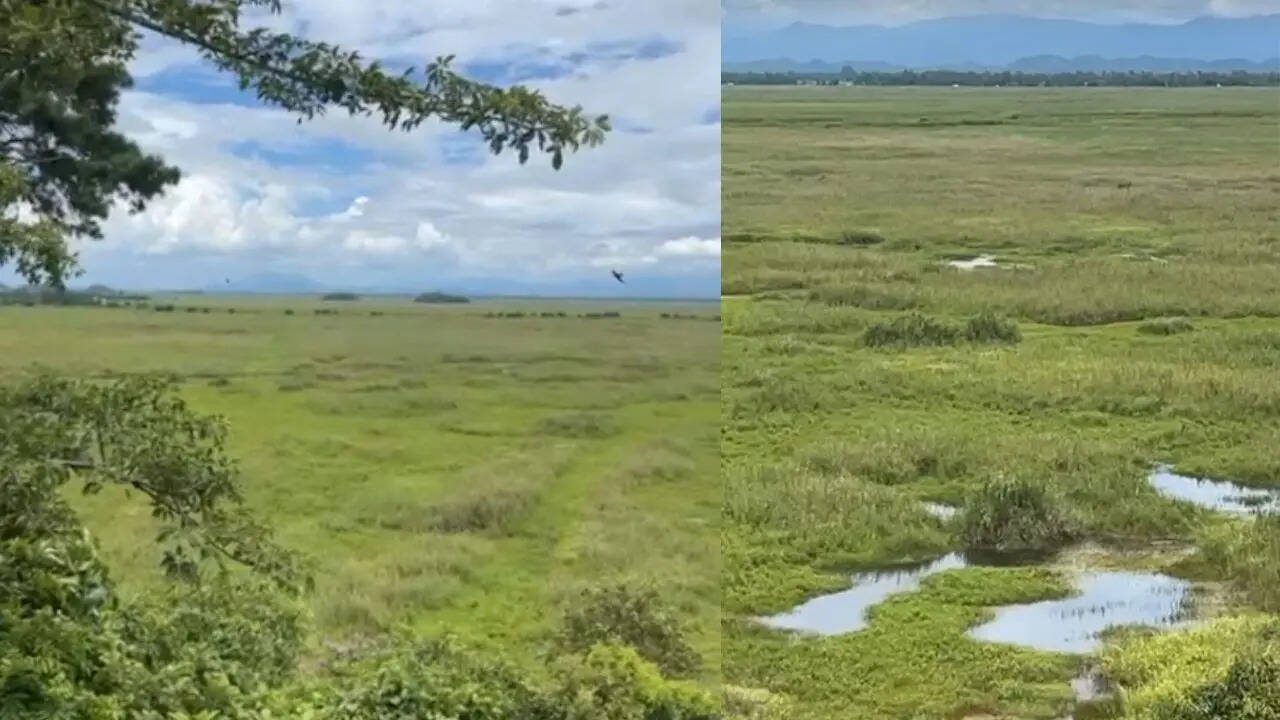
The Floating Phumdis: Habitat Of “Dancing Deer”The defining feature of the park lies in its floating ecosystem, which form the very ground on which the Sangai survives. Phumdis are not merely patches of vegetation but complex, living structures formed over long periods through the accumulation of plant material, soil, and nutrients. Their formation begins with aquatic vegetation such as azolla and other lower plants. Over hundreds and even thousands of years, these materials consolidate into thick, buoyant masses capable of supporting large animals. For the Sangai, the phumdis serve as habitat, grazing ground, and breeding site. The grasses that grow on them provide essential nutrition throughout the year.Bajpai describes their formation as a slow, natural process. “It takes years together, even thousands of years, for the biomass to become thick enough.”Equally important is the natural cycle of phumdis. The PCCF explains that “the phumdi has to go down to the bottom of the lake, collect nutrients, and then come up,” a process essential for maintaining its health. However, this cycle has been disrupted by the Loktak Hydroelectric Project, which keeps water levels artificially stable. “For the sustainability of phumdi, we want pulsating water levels,” he notes, identifying this as a key ecological challenge.
Active Habitat Management And Wildlife ProtectionSince the park’s notification, conservation has focused on managing habitat, protecting wildlife, and balancing ecological pressures. Bajpai likens conservation to maintaining a home: “When you stay at your home, you clean it, repair it, improve it. Similarly, for an animal, its habitat must be maintained.” This includes ensuring adequate food, space, and protection from both natural predators and human interference.Forest Department efforts extend to active habitat management. Phumdis are sometimes transported from other parts of the lake and attached to existing ones to increase their area and stability. Bajpai explains, “We bring phumdi from other parts of the lake, tie it with the existing one to increase stability and area.”
Vegetation is regularly monitored to ensure that adequate food resources are available for the Sangai throughout the year. Fire management is another crucial aspect, particularly during the dry season when forest fires can spread rapidly across the floating vegetation. Fire lines are created and maintained to prevent the spread of such fires, and emergency measures are taken when necessary to safeguard wildlife, he added.The challenges within the park are not limited to habitat alone. The presence of other species creates ecological competition and predation risks. Bajpai points out that hog deer compete with Sangai for food, while wild boars and pythons pose threats, particularly to fawns. “Area is limited,” he stresses, highlighting the importance of managing carrying capacity within the ecosystem.
Community Involvement And Future Conservation StrategiesEqually important is the role of local communities in the conservation process. Historically, communities around the park depended on its resources for their livelihoods, which created pressure on the ecosystem. In recent years, efforts have been made to reduce this dependency by promoting alternative livelihood options. Ecotourism has emerged as a key strategy, with nearby areas such as Chingmei and Chingthi being developed to attract visitors while keeping the core habitat undisturbed.While encroachment has largely been controlled, occasional entry by local people for resource collection continues. Bajpai acknowledges this reality, stating that “out of ten, you will find one person who will do something wrong,” but emphasises that strict enforcement of the law is in place to address such issues.At the same time, the Forest Department has adopted a community-oriented approach to conservation. Efforts are being made to reduce dependence on the park by providing alternative livelihoods. Initiatives include training in hospitality, photography, handloom weaving, and natural dye production. Women’s participation has been particularly significant in these programmes.
Monitoring the Sangai population remains a key component of management. The 2018 census recorded around 250 individuals, a significant increase from the fourteen recorded in the 1970s. A recent census conducted in February this year after an eight-year gap has yielded encouraging preliminary observations. Bajpai expresses optimism, stating that “we are encouraged with the preliminary results, the report is yet to be finalised but we are hopeful of something good.”Despite these achievements, significant challenges remain. One of the most critical issues is that the Sangai exists as a single isolated population in the world. This makes the species highly vulnerable to diseases, natural disasters, and genetic issues such as inbreeding. Inbreeding can weaken the genetic health of the population, reducing its resilience over time. To address this, efforts are being made to identify and develop alternative habitats such as Pumlen Pat and Yawa Lamjao where small groups of Sangai can be translocated, thereby creating multiple populations and reducing the risk of total extinction. Bajpai appeals for public support, emphasising that creating multiple populations is essential for long-term survival.Efforts are also underway to establish a conservation breeding centre near the park, which would facilitate research and controlled breeding under expert supervision, he said.
Climate Change May Shrink Sangai Habitat To Core Area By 2070A new study has raised serious concerns about the future of Manipur’s iconic brow-antlered deer, or sangai (Rucervus eldii eldii), warning that its already limited habitat could shrink drastically in the coming decades due to climate change.The endangered species, found only in Keibul Lamjao National Park (KLNP) on the fringes of Loktak Lake, survives in a unique floating ecosystem of phumdis—thick, floating masses of vegetation, soil, and organic matter that act as natural platforms for the deer to move, graze, and breed.The study, conducted by researchers from the National Institute of Technology Manipur, including Prof Bakimchandra Oinam and Dr Vicky Anand (currently a research scientist at the University of Tokyo), and published in Environmental Monitoring and Assessment, projects that suitable habitat for the sangai will shrink and become largely confined to the park’s central core by 2050–2070. Monsoon rainfall and isothermality—variations in temperature patterns—emerge as key factors influencing habitat suitability.
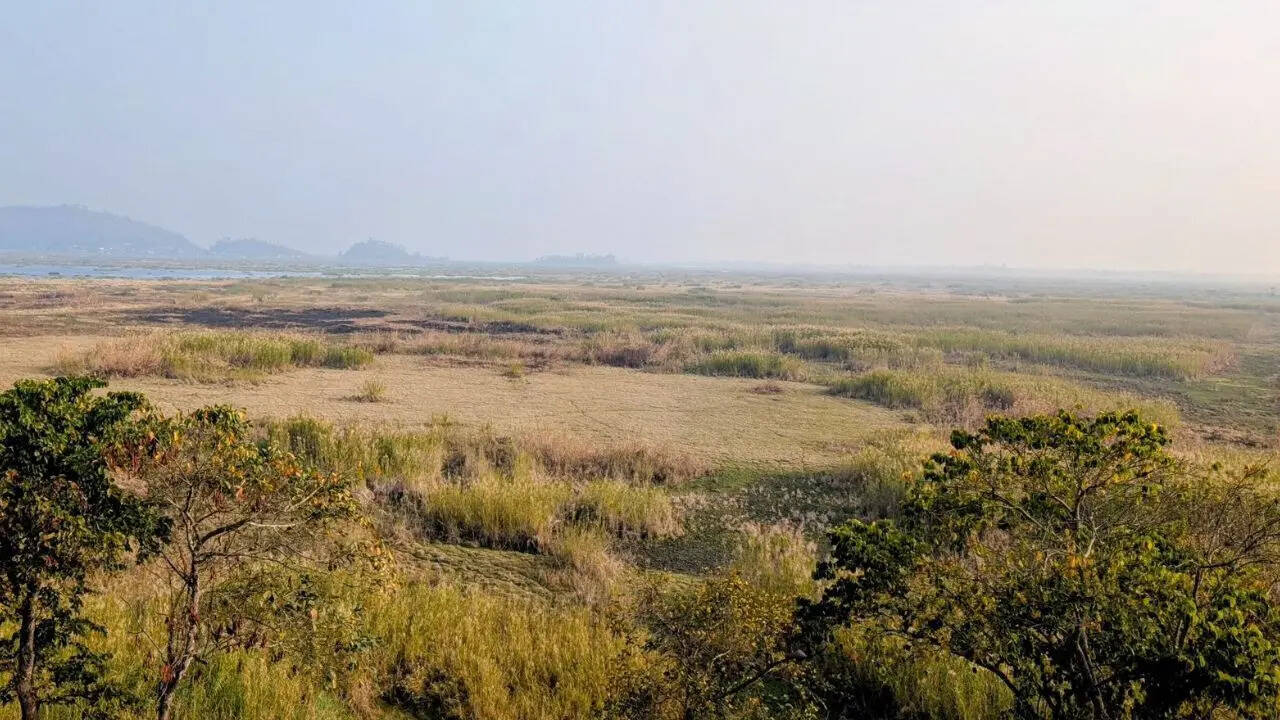
A major concern is the limited availability of “hardground,” or firm land areas. In KLNP, these include just three small hillocks and a narrow 100–200 metre strip locally known as Thangbral-yangbi. These are the only stable surfaces where the deer can rest and take shelter, especially during heavy rains and floods.During the monsoon, rising water levels in Loktak Lake submerge or destabilise the phumdis, forcing the deer to crowd onto these scarce hardgrounds. This makes the suitable habitat extremely confined during critical periods.The study also reveals that highly suitable habitat zones are declining, particularly in the northeastern parts of the park, while shifting from the periphery towards the already limited central core area.Researchers warn that if such trends persist, the Sangai’s natural habitat could degrade beyond recovery. They recommend urgent conservation measures, including ex-situ conservation, identification of alternative habitats with similar conditions, and stricter regulation of human activities to reduce ecological pressure.
Cultural Significance And The Future Of SangaiThe cultural connection between the Sangai and the people of Manipur remains a strong pillar of conservation. Bajpai points out that this cultural linkage helps in sensitising communities and fostering cooperation. Special emphasis is placed on engaging children, whom he describes as “the best campaigners,” capable of spreading awareness within their families and communities.Keibul Lamjao National Park stands as a rare ecological marvel and a testament to sustained conservation efforts. Its floating phumdis create a habitat unlike any other, while the recovery of the Sangai from near extinction to a growing population reflects decades of dedicated work.
However, the park’s fragility demands continuous vigilance, adaptive management, and sustained community involvement. The future of this floating national park and its iconic deer will depend on maintaining ecological balance, strengthening conservation strategies, and ensuring active participation from both authorities and local communities.
