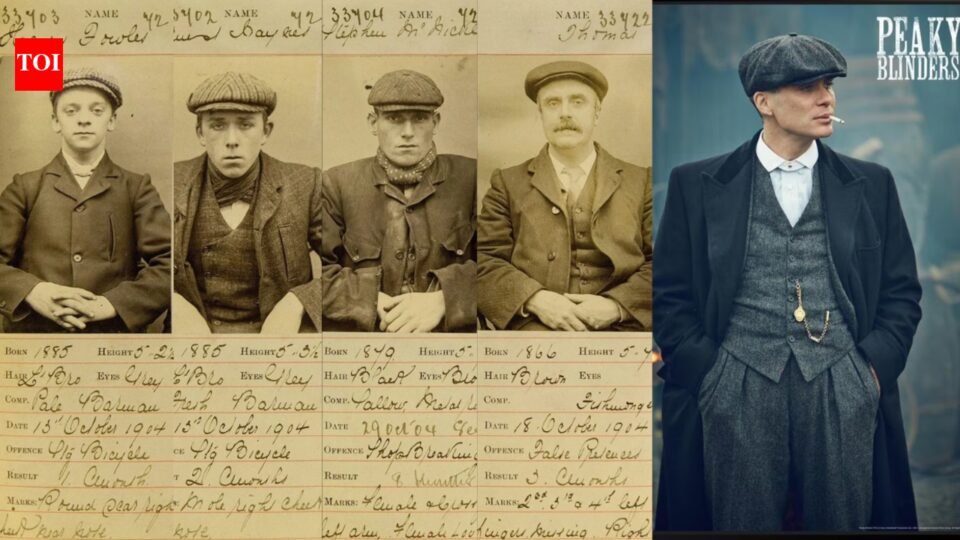
With Peaky Blinders: The Immortal Man now streaming on Netflix and a new sequel series already in development for a likely 2027 release, Peaky Blinders has returned to the centre of attention. The film revisits Tommy Shelby in wartime Britain, while the upcoming series is set to move the story into the 1950s with a new generation of the Shelby family. But the renewed spotlight has revived a question that has followed the series since it began: how much of Peaky Blinders is actually true, and how much has been constructed for television? The answer sits somewhere in between. The world of the Shelbys draws from real people, real places and real tensions, but reshapes them into something far more cohesive and expansive than what existed.
The world of the series, and where the film fits
The original series followed Tommy Shelby, played by Cillian Murphy, as a First World War veteran building a criminal empire in post-war Birmingham. Across its run, the story expanded from street-level betting operations into political influence, international dealings and confrontations with fascism. The 2026 film shifts that timeline forward into the Second World War. It finds Tommy older and largely withdrawn, living in isolation as the Blitz reshapes Britain. The central conflict is no longer just about control of territory or business, but about legacy. His son Duke’s growing role in the family business draws him back in, placing him against new threats, including Nazi-linked forces, while forcing him to reckon with the consequences of his past decisions. This transition matters because it highlights how the series itself has evolved. What began as a story grounded in local crime has expanded into something broader and more symbolic, stretching across decades and historical moments. The planned sequel series, set in the 1950s and created by Steven Knight, will continue that trajectory, focusing on a new generation rather than repeating Tommy’s rise.
What the real Peaky Blinders actually were
The real Peaky Blinders were not a single family, nor were they a unified or centrally organised criminal enterprise. The name referred to a loose collection of street gangs that operated in Birmingham in the late 19th and very early 20th century, particularly in working-class districts such as Bordesley and Small Heath. These were neighbourhood-based groups, shaped by local conditions rather than by any overarching structure or leadership.Most of their members were young, often teenagers or men in their early twenties, growing up in areas marked by overcrowding, poverty and limited opportunity. Their activities reflected that environment. They were involved in street-level violence, fights with rival groups, theft, intimidation, and small-scale gambling scams. These were not coordinated operations across cities or regions, but localised acts, often opportunistic and limited in scope.
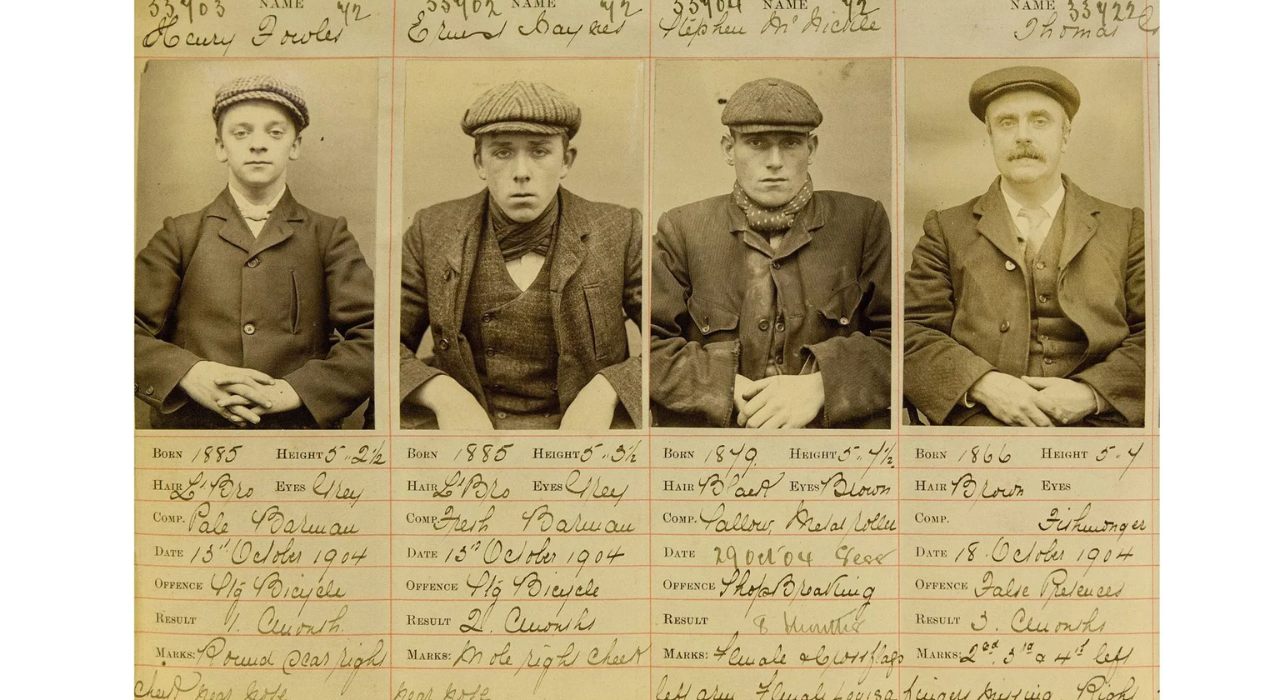
Mugshots depicting members of the original Peaky Blinders gang | SWNS
There is no evidence that they operated anything resembling the structured, hierarchical organisation depicted in Peaky Blinders. They did not control large betting networks, nor did they run protection rackets or maintain long-term criminal enterprises that extended beyond their immediate surroundings. By the 1920s, groups such as the Birmingham Boys had already overtaken them, and later the Sabini gang became dominant in organised crime, particularly around racecourses.
Style and identity, what the show gets right
Where the series aligns more closely with history is in how these men presented themselves. The real Peaky Blinders were noted for their appearance, and that reputation forms a significant part of their historical identity. They dressed in a way that set them apart — tailored jackets, waistcoats, bell-bottom trousers, silk scarves, and steel-capped boots were all part of their look. Their peaked caps, worn at an angle, became their defining feature.The name itself is widely understood to derive from this style: “Peaky” referring to the caps, and “Blinder” being local Birmingham slang for someone striking or well-dressed. Their clothing was not incidental; it was a deliberate assertion of identity and status in an environment where both were otherwise limited.One of the most persistent elements of the show, the idea that razor blades were sewn into those caps, does not hold up historically. Historian Carl Chinn has addressed this directly, noting in the Birmingham Mail that razor blades were only beginning to circulate in the 1890s and were considered a luxury item. He pointed out that it would have been both impractical and unlikely for street gangs to use them in that way, adding that embedding a blade into the soft fabric of a cap would not provide the control or force required in a fight. The image, he suggests, belongs more to later storytelling than to the period itself.
Characters, who is real and who is not
The Shelby family, Tommy Shelby, Arthur, John and Polly, unfortunately, does not exist in the historical record. They are fictional constructions created for Peaky Blinders, though elements of their world draw from real accounts. Steven Knight has said the idea came in part from stories told by his parents about Birmingham, including relatives linked to the Sheldon family, who were involved in illegal horse-betting operations at a time when such activity was not permitted.Around that fictional core, the series places a number of real historical figures, many of whom did play central roles in British organised crime or politics during the late 19th and early 20th centuries.Billy Kimber, portrayed in the series as a major rival to the Shelbys, was in reality one of the most powerful crime bosses in England. He led the Birmingham Boys (also known as the Brummagem Boys), a group that dominated racecourse betting and protection rackets. Unlike the show, where his story ends in a violent confrontation, Kimber died after a prolonged illness.Alfred Solomon is the real-life figure behind Alfie Solomons, played in the series as a volatile Jewish gang leader operating in London. While the character is heavily stylised, the historical figure was indeed involved in criminal activity connected to racecourses and protection networks.Darby Sabini, depicted as another rival, was a real Italian-born crime boss who led the Sabini gang. He clashed with Kimber and his organisation over control of racecourse betting, and his group eventually became one of the dominant forces in that space as earlier gangs declined.The series also incorporates major political figures. Oswald Mosley appears as a rising political force aligned with fascism in Britain. He was the founder and leader of the British Union of Fascists and, during the Second World War, was interned by the British government as a threat to national security. His wife, Diana Mosley, is also portrayed. She came from an aristocratic family, shared her husband’s political views, and was likewise interned during the war. Historical records show that British authorities considered her an even greater security risk than her husband.Other real figures also appear across the series’ timeline, including Winston Churchill, who is depicted in various stages of his political career. Churchill was, of course, a central figure in British politics and later served as Prime Minister during the Second World War.These individuals are drawn from real history, but the series places them into direct and sustained interaction with the fictional Shelby family. In reality, there is no evidence that these figures intersected in the way the show presents. Their timelines, relationships and conflicts are rearranged and condensed to fit a single narrative thread, bringing together people who operated in overlapping but not necessarily connected worlds
Crime and scale, the biggest difference
The most significant departure from history lies in the scale of operations. In the series, the Peaky Blinders are portrayed as a sophisticated and expanding criminal organisation, moving into illegal betting networks, protection rackets, political influence and even international dealings.There is no historical basis for that level of organisation or reach.The real Peaky Blinders remained local and fragmented. Their activities did not extend into national networks or sustained enterprises, and they did not hold influence across industries or political structures. Their presence was tied to specific neighbourhoods and limited forms of crime. As organised crime in Britain developed into more structured systems — particularly around racecourses and betting — it was other groups, not the Peaky Blinders, that came to dominate.
Where history ends and the series begins
What the series draws from history is specific and identifiable: the existence of street gangs in Birmingham, their distinctive style, the presence of figures such as Billy Kimber, and the social conditions that shaped those environments.Beyond that, the central elements of the story, the Shelby family, their sustained rise, the scale of their operations, and their longevity into later decades, are constructed for the screen. The series brings together real names, places and fragments of history, but arranges them into a continuous narrative that did not exist in that form.
