
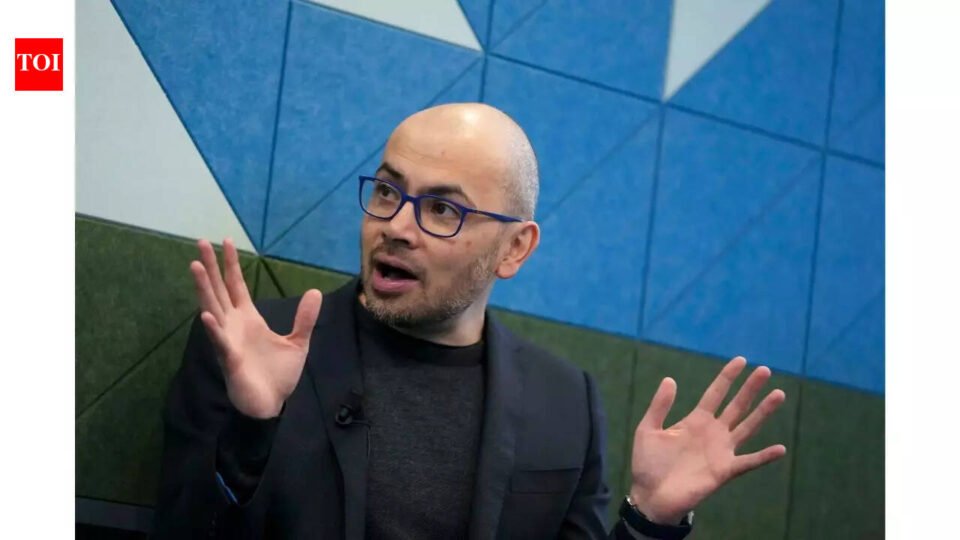

Google DeepMind CEO Demis Hassabis says his AI lab clawed its way back to the frontier over the past two to three years by doing something counterintuitive for a unit inside a $2 trillion company—acting like a startup. Speaking on the 20VC podcast with Harry Stebbings, Hassabis described a deliberate cultural and structural reset after the 2023 merger of DeepMind and Google Brain, one that gave the lab unified access to Google’s compute infrastructure and forced it to ship faster in what he called the most “ferocious” competitive environment veteran employees had ever seen.
Google combined fragmented AI teams and compute into a single push
The core of the shift, Hassabis explained, was consolidation. Before the merger, Google had multiple teams building overlapping models with separate resources. “We’ve basically helped put together all the talent from around the company, sort of pushing in one direction,” he said on the podcast. That meant one model effort instead of two or three, and—critically—access to compute at a scale DeepMind hadn’t previously enjoyed. Alphabet spent $91.4 billion on capex in 2025 and has guided for up to $185 billion in 2026, with supply constraints, not cash, described as the bottleneck.
Hassabis claims 90% of modern AI’s foundations came from Google and DeepMind
In one of the podcast’s more pointed moments, Hassabis said roughly 90% of the breakthroughs underpinning today’s AI industry came from Google Brain, Google Research, or DeepMind. The transformer architecture, reinforcement learning from human feedback, and AlphaFold—which won Hassabis a Nobel Prize in Chemistry in 2024—all trace back to those labs. Whether the 90% figure holds up to scrutiny is debatable, but the academic record does back a substantial share.
The startup playbook is now a survival strategy, not a branding exercise
Hassabis framed the cultural shift as existential, not aspirational. “Acting almost like a startup, really, to get back to the frontier,” he said. And there’s evidence it’s working—Gemini crossed roughly 750 million monthly active users by the end of Q4 2025. But the competitive window isn’t widening. OpenAI’s aggressive push into enterprise and consumer products, Anthropic’s rapidly scaling revenue, and the sheer pace of model releases across the industry mean Google can’t coast on legacy contributions. For a lab that helped invent modern AI, the irony is sharp: the only way to stay ahead is to run like it’s 2010 again.
