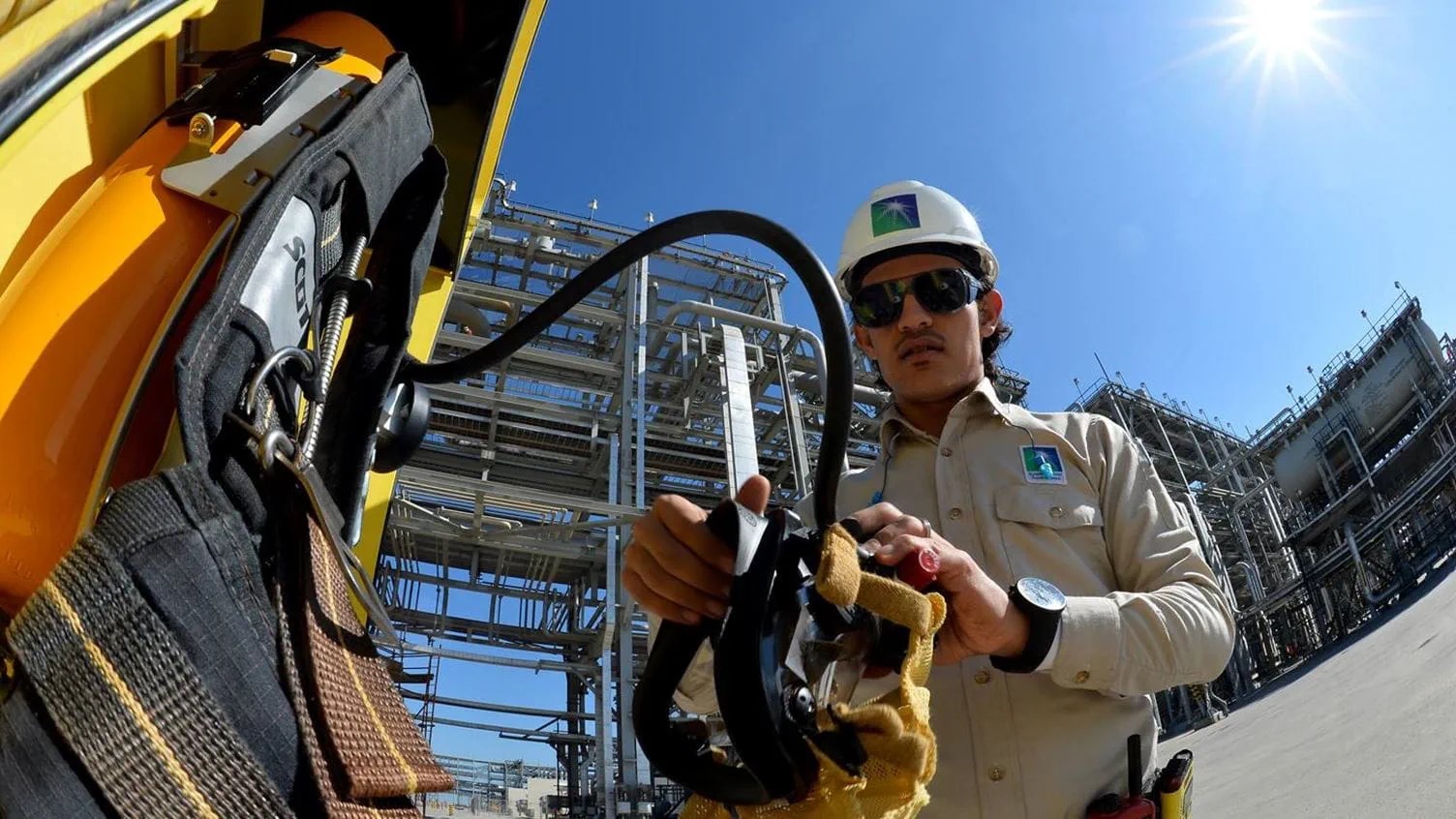
Iranian attacks on 9 April resulted in the loss of 700,000 b/d of crude throughput capacity on the East-West pipeline and 300,000 b/d of production capacity at the Manifa oil field; both have since been fully restored
Saudi Arabia’s Ministry of Energy has announced the restoration of full capacity at critical oil and gas infrastructure damaged in attacks by Iran on 9 April.
The attacks led to the loss of approximately 700,000 barrels a day (b/d) of crude pumping capacity on the East-West oil pipeline, which has been restored to its optimum capacity of 7 million b/d, the ministry said on 12 April.
The Manifa oil field development in the kingdom’s Eastern Province, which lost 300,000 b/d of production due to the attacks, has also had its output capacity reinstated “within a short period of time”, the ministry said.
The ministry added that work is still ongoing to restore full production capacity at the Khurais oil field, which also lost 300,000 b/d of capacity in the attacks.
“This quick recovery reflects the high operational resilience and crisis management efficiency of Saudi Aramco and the kingdom’s energy ecosystem as a whole, thereby enhancing the reliability and continuity of supplies to local and global markets, and supporting the global economy,” the Ministry of Energy said.
Along with the East-West pipeline and the Manifa and Khurais oil field developments, the attacks on 9 April also targeted oil refineries, petrochemical complexes and electricity units in Riyadh, the Eastern Province and Yanbu on Saudi Arabia’s Red Sea coast.
These assets include the Saudi Aramco Total Refining & Petrochemical Company (Satorp) facility in Jubail, Aramco’s Ras Tanura refinery, the Saudi Aramco Mobil Refinery Company (Samref) complex in Yanbu, and the Riyadh refinery, directly affecting exports of refined products to global markets.
Processing facilities in Juaymah in the Eastern Province were also affected by fires, impacting exports of liquefied petroleum gas (LPG) and natural gas liquids.
The ministry’s 12 April statement did not provide updates on the status of those facilities.
Prior to the 9 April attacks, Saudi authorities reported explosions in Jubail industrial city on 7 April. Saudi air defence systems intercepted seven ballistic missiles targeting the Eastern Province that day, with debris landing near energy facilities, primarily in Jubail.
Jubail is one of the world’s largest petrochemical production hubs, with annual output of about 60 million tonnes, accounting for an estimated 6%-8% of global supply. A large part of majority state-owned Saudi Basic Industries Corporation’s (Sabic) operations is based in Jubail.
Jubail also hosts major downstream oil, gas and petrochemical assets operated by Aramco, US-based Dow and France’s TotalEnergies, underscoring the industrial zone’s international significance.
 READ THE APRIL 2026 MEED BUSINESS REVIEW – click here to view PDF
Economic shock threatens long-term outlook; Riyadh adjusts to fiscal and geopolitical risk; GCC contractor ranking reflects gigaprojects slowdown.
Distributed to senior decision-makers in the region and around the world, the April 2026 edition of MEED Business Review includes:

