
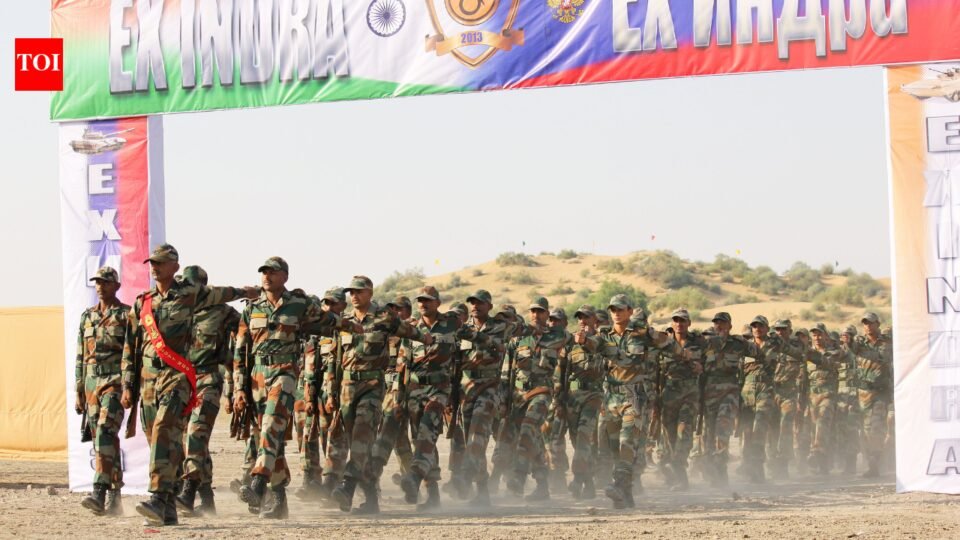
NEW DELHI: India and Russia can now station 3,000 troops and a limited number of naval ships and aircraft in each other’s territory as part of an agreement that was signed between New Delhi and Moscow in Feb 2025 and that has been in force since Jan 12 this year, Russia’s official legal information portal published on Friday. The law ratifying the agreement was passed by Russia in Dec 2025.The Indo-Russian Reciprocal Exchange of Logistics Agreement (RELOS) will allow ‘five warships, ten aircraft and three thousand troops to be simultaneously stationed in the territory of the partner country for a period of five years, and if both parties agree, it can be extended for another five years,” first deputy chairman of International Affairs Committee Vyacheslav Nikonov recently confirmed to State Duma in Moscow after Russian Parliament ratified it.The operationalisation of the pact strengthens long-term military cooperation, particularly for servicing India’s Russian-origin military equipment and enabling longer deployments.The pact also covers joint military exercises, training and humanitarian missions. The RELOS agreement, which carries deep significance amid the West Asia conflict and Ukraine war, not only regulates deployment of military personnel and equipment but also governs logistics. The exchange of logistics includes a range of specific services provided by the receiving country. For warships, this entails port and repair services, as well as delivery of water, food, technical resources and other supplies. In the case of military aircraft, it involves air traffic control, aeronautical data, the processing of flight requests, use of military navigation systems and aircraft parking and security. Aviation fuel, lubricants and special fluids, along with restoration of failed equipment, are offered on a reimbursable basis.The pact allows reciprocal access to military facilities, including airbases and ports, to support ships, aircraft and personnel. It provides India access to Russian naval and air bases, including in the Arctic, and allows Russia broader access to Indian facilities. The agreement specifically covers “deployment of military formations”, allowing for joint training, disaster relief and joint operations.The agreement is designed to boost defence cooperation in Indo-Pacific and Arctic regions, enhancing interoperability between the armed forces of the two nations.
