


A sweet treat feels harmless. A dessert after dinner, a sugary drink in the afternoon, or even a plate full of refined carbs can seem like small choices. But inside the body, things move fast. Within just 30 minutes, sugar begins to set off a chain reaction that affects energy, mood, and long-term health. Understanding this short window can change how food is seen, and how choices are made every day.
The first 30 minutes: A sudden sugar surge
The moment sugar enters the body, digestion begins quickly. Glucose gets absorbed from the intestine into the bloodstream, raising blood sugar levels at a rapid pace.Dr Anusha Handral, Consultant – Diabetes and Endocrinology, Manipal Hospital Whitefield, explains it clearly, “When a person consumes sugar food, either sugary drinks, desserts or sweet, there is significant amount of sugar in all these food items which can lead to sharp rise in the blood glucose levels after the absorption of sugar from the intestine. The sharp rise in the blood glucose level is followed by release of insulin from the pancreas which helps in metabolizing the glucose levels.”This rise is not gradual. It is quick and steep, especially with refined sugars and processed foods.
The insulin response : Your body steps in
Once glucose spikes, the pancreas releases insulin. This hormone acts like a key, helping sugar move from the blood into the cells.In a healthy system, this keeps things balanced. But when sugar intake is frequent, the body starts working overtime. Over months and years, this can lead to insulin resistance, where cells stop responding properly.The study shows a rising burden of diabetes and prediabetes in India, largely linked to dietary patterns and lifestyle changes.

This is followed by an energy crash, especially in people with insulin resistance. Over time, repeated spikes from sugar and refined carbs can increase the risk of diabetes and heart disease.
The dopamine hit: Why sugar feels addictive
That quick bite of sweetness does more than raise blood sugar. It lights up the brain.Dr Handral notes, “The spike in blood glucose levels creates a temporary feeling of pleasure by activating the reward systems which are largely mediated by dopamine in the brain.”This is the same pathway linked to pleasure and reward. It explains why sugary foods feel comforting and why cravings return.
The crash: When energy suddenly drops
The high does not last long. After insulin pushes glucose into cells, blood sugar can fall quickly.“This is followed by a phase where the blood glucose levels are low which can lead to low energy which is considered as energy crash or fatigue, weakness, lethargy which usually people complain. Now this is exaggerated in patients with insulin resistance.” Dr Handral adds.This is the moment many people reach for another snack or cup of tea with sugar. The cycle quietly repeats.
Not just sweets: Hidden sugar in everyday foods
It is not only desserts that cause this spike. Foods like white rice, refined flour rotis, bread, potatoes, and packaged snacks behave in a similar way.“This is also true when a person consumes huge amount of food rich in only carbohydrates like rice, rotis and bread, potatoes and starch.”Over time, repeated spikes can damage blood vessels and organs.According to the UNICEF, rising obesity and blood sugar levels are now seen even in younger populations.This trend links strongly to modern diets that are high in refined carbohydrates and low in fiber.
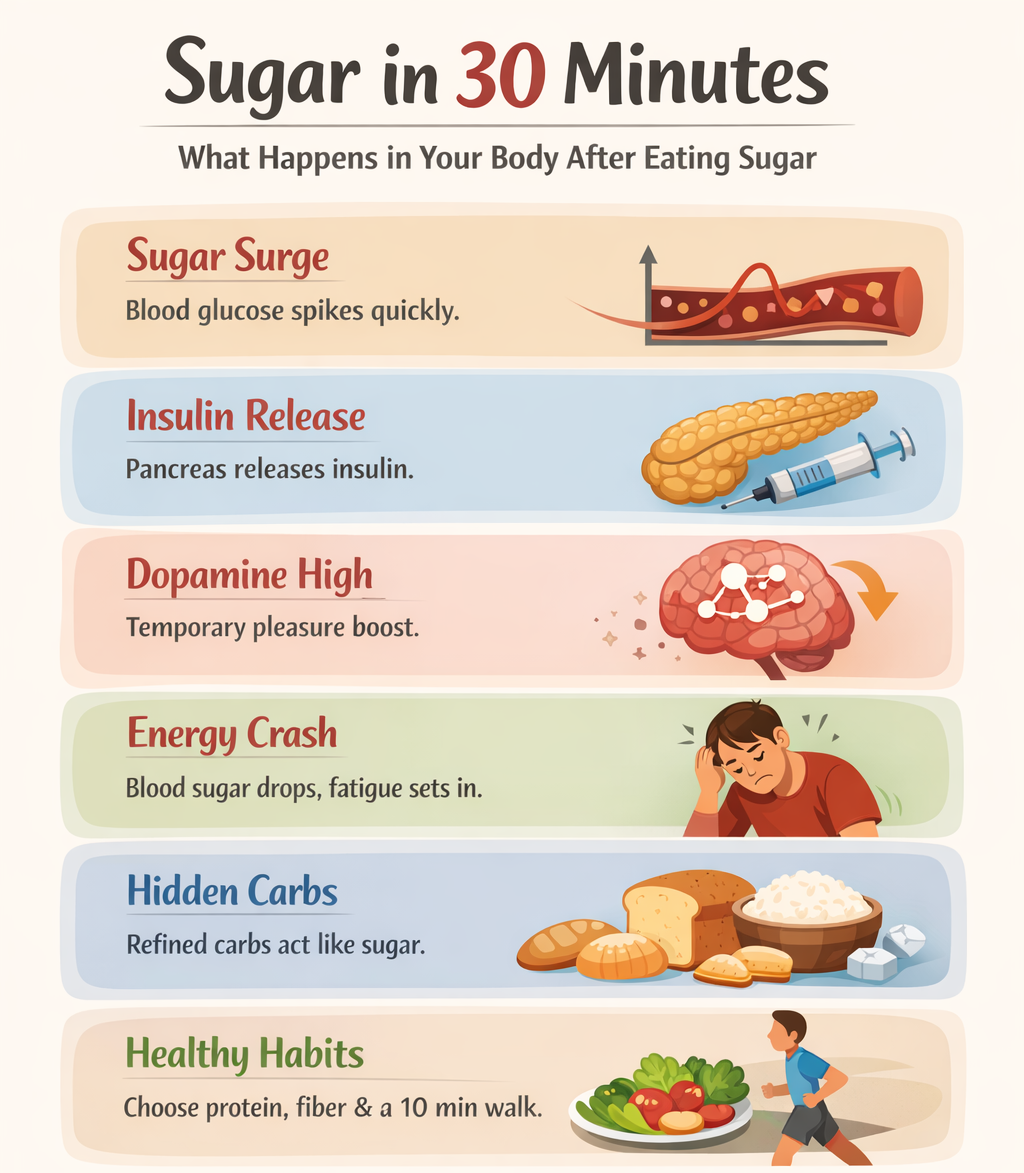
Balanced meals, reduced sugar intake, and post-meal movement can help manage these effects.
What can be done differently
The solution is not about cutting sugar completely overnight. It is about smarter habits that keep blood sugar steady.Dr Handral suggests practical steps, “Avoid sugary drinks as much as possible, sweets and desserts. Moderate the quantity.”“Whenever you are having excess carbohydrates in the diet, please increase the proteins and fiber.”“Post consumption of sugar food or carbohydrate rich food, it is advisable…to have a quick walk of 10 to 15 minutes. During walking, there is muscle contraction and there is uptake of glucose into the muscle.”A short walk after meals may sound simple, but it directly helps the body use sugar more efficiently.Small shifts, like adding dal, vegetables, or nuts to meals, can slow sugar absorption. These are not drastic changes, but they make a visible difference over time.
A small window, a big impact
Thirty minutes may seem like a short time. Yet, in that window, the body experiences a rise, a rush, and often a fall. Repeat this cycle daily, and it begins to shape long-term health.The idea is not to fear sugar, but to understand it. Because once the body’s response is clear, better choices follow naturally.
Medical experts consulted
This article includes expert inputs shared with TOI Health by:Dr Anusha Handral, Consultant – Diabetes and Endocrinology, Manipal Hospital Whitefield.Inputs were used to explain what happens inside the body within minutes of consuming sugar, how it affects blood glucose, energy levels, and hormones, and why frequent spikes can impact long-term metabolic health.
