
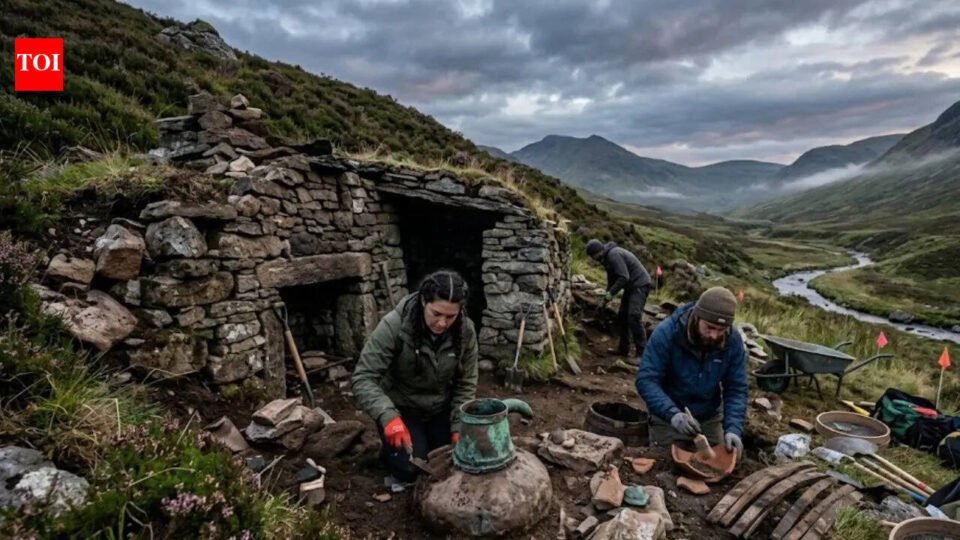
Deep in the rugged landscape of Ben Lawers National Nature Reserve, archaeologists uncovered rare proof of Scotland’s secretive whisky trade from the 19th century. They found an ‘An Gearradan,’ a copper alloy collar, which connected a still to its cooling equipment. Copper cost a lot back then, so finding this piece left behind at an isolated bothy hints at a dramatic escape by illegal distillers who likely rushed away to dodge oncoming excise officers. This artefact offers a direct connection to the ongoing chase between Highland smugglers and government tax collectors. It sheds new light on the sophisticated underground economy that thrived in the Scottish Highlands during the industrial age.
Hidden in the hills: The discovery of a secret bothy in the Scottish highlands
Archaeologists and volunteers teamed up with the National Trust for Scotland and found an old whisky ‘bothy’ hidden in Ben Lawers’ rugged terrain. People once built these small, primitive structures in out-of-the-way spots to dodge the watchful eyes of excise officers (Gaugers), the excise officers who collected taxes on spirits. This particular site was a secret distillery, where locals could make whisky away from the law’s reach.
The mystery of the abandoned copper
At the site, they found something really important: a rare piece called an ‘An Gearradan’. This object acted as a link between the copper still and the lyne arm, which is the pipe going to the cooling worm, as noted in the report published by the National Trust for Scotland. Copper was super valuable and pricey in the 1800s. So, coming across such an item left behind is quite unusual. Normally, distillers would either take their gear with them or stash it safely between uses to keep it secure and not lose money.
Why valuable gear was left behind
The discovery of the copper collar hints at a sudden and dramatic end for this distillery. Instead of being carefully stored, it was discarded. Archaeologists think that the smugglers were likely caught off guard by excise officers, prompting a hasty escape. The distillers left behind their valuable equipment to evade the harsh punishments outlined in the 1823 Excise Act. This decision resulted in a lasting archaeological record of their illicit activities.
The economic reality of illegal distillation
This excavation is part of the broader Ben Lawers Historic Landscape Project, which looks into the social and economic past of the Highlands. In the 1700s and 1800s, illegal distillation wasn’t just breaking the law; it served as a crucial economic support for Highland communities dealing with high rents and changes in farming, as noted in a study published on ResearchGate. This find sheds light on how these hidden networks functioned and used the mountains’ natural features to sustain their livelihoods.
