


MUMBAI: With credit growth at 14.5% outpacing deposit growth at 11.9% as of Feb 28, banks have stepped up reliance on certificates of deposit, with their share rising to 2.6% of total deposits, the highest in a decade, reflecting a widening structural gap between asset creation and liability mobilisation.The Indian banking system is navigating a sustained imbalance between credit expansion and deposit accretion, which is forcing lenders to recalibrate balance sheet strategies to bridge the funding gap. Certificates of deposit are growing 29% year-on-year, highlighting the increasing use of wholesale funding as core deposits lag.
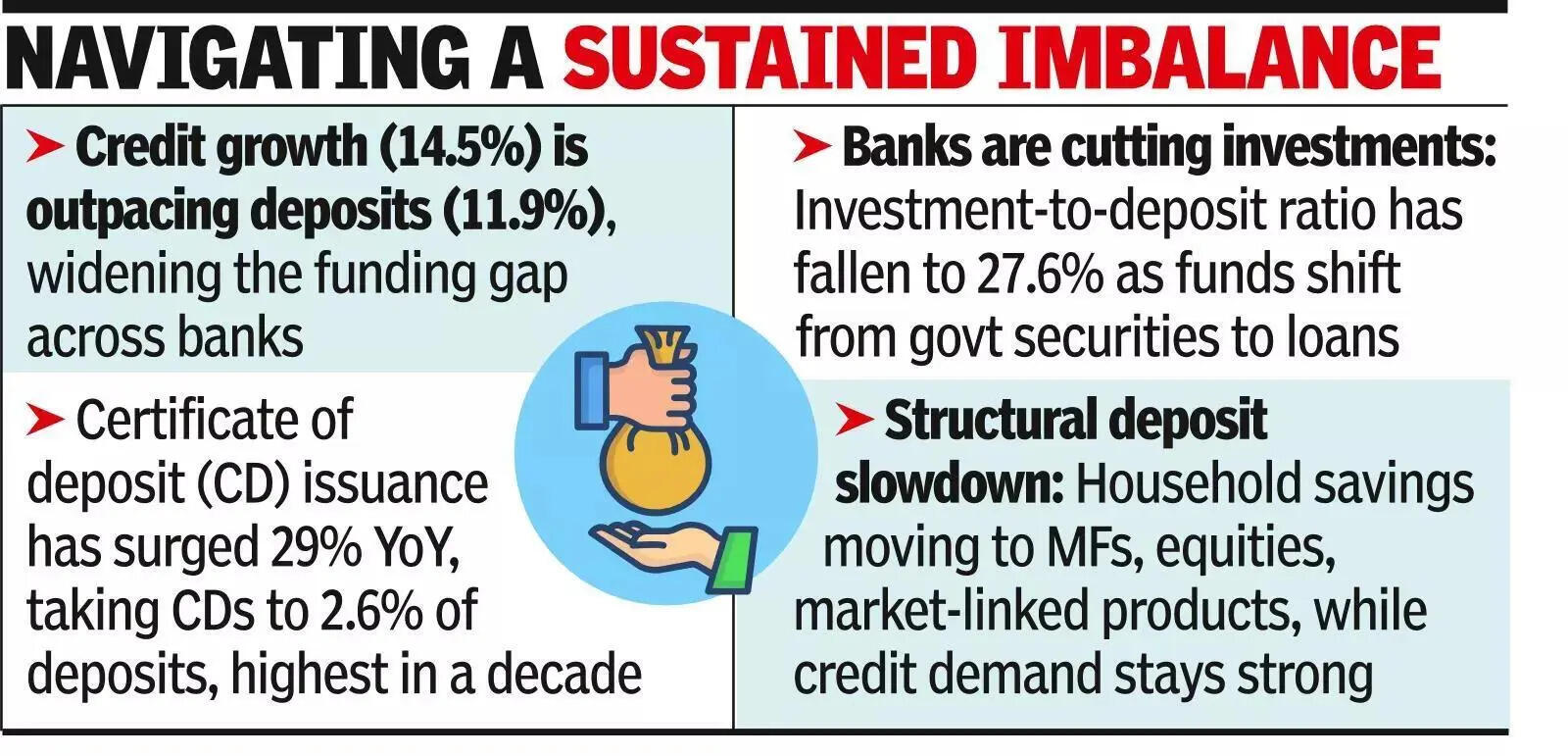
During the year, the gap between credit and deposit growth has remained between 150 and 300 basis points, pushing the systemic credit-deposit ratio above 82%, close to historic highs. According to a decadal comparison, credit and deposit growth had moved broadly in tandem over the past ten years, averaging between 10% and 12%. The current divergence is near the peak of the decade, while the lowest point occurred during the pandemic years when deposit growth exceeded credit demand by over 400 basis points due to risk aversion and fiscal support.According to Sachin Sachdeva, vice president, sector head – financial sector ratings, ICRA, CDs had last seen such a high share in total resource mobilisation in 2016. “While this has supported near term liquidity management, the increasing dependence on CDs warrants close monitoring from an asset-liability and funding cost perspective,” he said.Banks have turned to bulk and short-term wholesale markets as retail and CASA deposit growth has trailed loan demand. Outstanding CDs rose to a record Rs 6.6 lakh crore by late Feb 2026, taking their ratio to aggregate deposits to around 2.6%. Over the past decade, reliance on CDs had remained subdued at around 1% to 1.5% of deposits as surplus liquidity and stable deposit growth supported lending.Banks are also reallocating capital away from government securities to sustain credit growth. The investment-to-deposit ratio declined to 27.6% by Feb 2026, even as total government investments stood at around Rs 69.5 lakh crore. This marks a drop from the decadal average of 29% to 30%, which had risen to 31% to 32% during periods of weak credit demand. The current decline indicates that banks are reducing surplus statutory liquidity ratio holdings and moving closer to regulatory minimums to support loan growth.The deposit slowdown reflects structural changes in household savings patterns, with flows shifting towards mutual funds, equities, and other market-linked instruments. At the same time, credit demand remains strong across retail, MSME, and corporate segments.
