
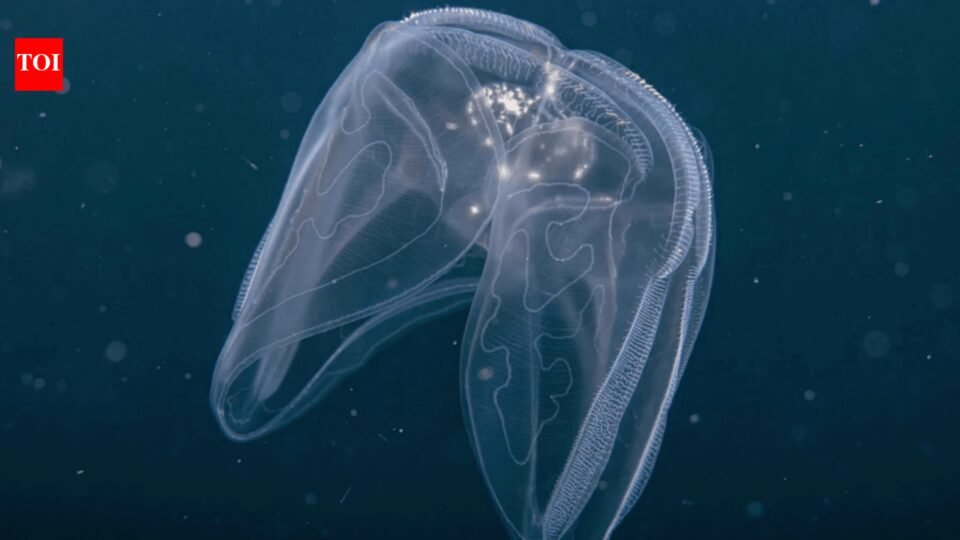
Scientists working in Colombian waters have documented 15 species of comb jellies, translucent marine animals known scientifically as ctenophores, including six not previously recorded in the region. The findings come from surveys led by researchers at INVEMAR, who used underwater photography and field observation rather than specimen collection. The work adds new detail to debates about how nervous systems first evolved. Separate genomic research on the species Pleurobrachia bachei suggests that ctenophores may represent the earliest branch of the animal tree. If correct, their nervous systems may have evolved independently from those of other animals. That possibility continues to reshape discussion about the origins of complex life in the oceans more than 500 million years ago.
Colombian comb jellies linked to origins of complex ocean life 500 million years ago
The survey expands scientific records for the Caribbean coast of Colombia. Researchers observed the animals drifting in open water, their bodies almost invisible except for shifting bands of refracted light. Six species had not been listed in regional data before.The team relied on imaging because comb jellies are fragile. Nets often destroy them. Careful visual documentation allowed identification without damage. The images now sit in a growing archive of regional marine biodiversity.
Comb jellies differ from jellyfish
Ctenophores are often mistaken for jellyfish, but they belong to a separate lineage. They do not possess stinging cells. Instead they use sticky cells called colloblasts to catch prey.Eight rows of tiny cilia run along their bodies. These beat in sequence and move the animal through the water. The movement bends light and creates the shifting rainbow effect often seen in photographs. The colours are structural, not produced by pigment.Some species are small and spherical. Others are elongated and almost ribbon like. Most are active predators despite their delicate appearance.
Genome research places ctenophores at the base of animal evolution
A separate body of research has examined the genome of the Pacific species Pleurobrachia bachei. Comparative analysis suggests that ctenophores may have split from other animals very early in evolutionary history.Researchers report that many genes linked to classical neurotransmitters in bilaterian animals are either absent or not expressed in the same way. Certain gene families, including HOX genes and components of canonical microRNA machinery, appear reduced or missing.This has led to the suggestion that neural systems in ctenophores evolved independently. If that view holds, nervous systems may have arisen more than once.
Debate continues over early animal history
The position of ctenophores in the animal tree remains debated. Some analyses support their status as the earliest branching lineage within Metazoa. Others place sponges at the base. Fossils resembling modern comb jellies date back around 550 million years. That makes them among the oldest complex animals known from the record.In Colombian waters, however, the focus is less abstract. The animals drift, feed and reproduce in present conditions. Their evolutionary history stretches far back, but their presence is immediate. They are part of today’s marine systems, moving quietly through warm surface currents, still not fully understood.
