
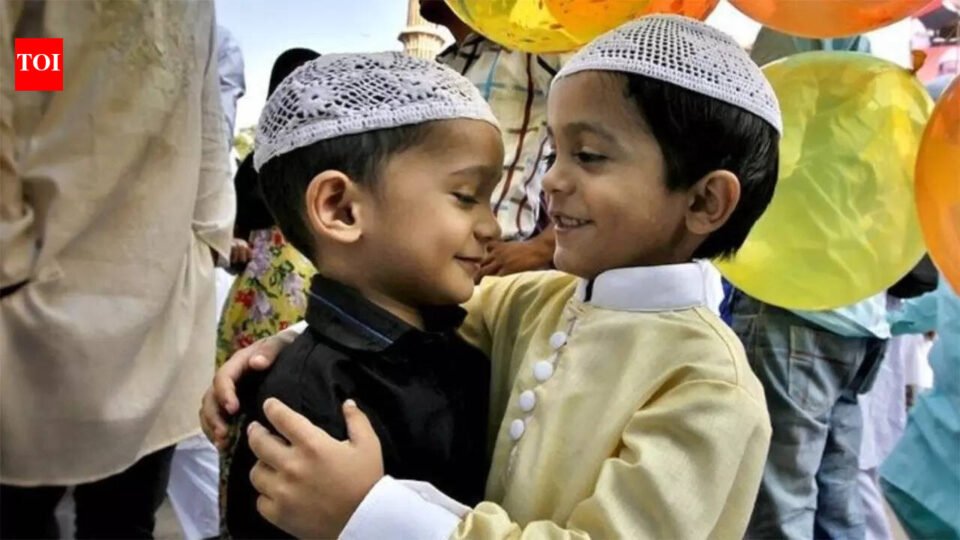
As much of the Muslim world prepares to celebrate Eid ul Fitr on Friday, March 20, South Africa has officially aligned with countries observing the festival on Saturday, March 21, 2026, highlighting once again the fascinating global divide in how Eid dates are determined. From Africa to Asia, the difference of just one day reflects a deeper story, one shaped by moon sighting traditions, scientific calculations and regional interpretations of Islamic law.
Why South Africa is celebrating Eid ul Fitr 2026 on March 21
In South Africa, Islamic organisations have indicated that Eid will most likely fall on Saturday, March 21, as the crescent moon marking the end of Ramadan is unlikely to have been visible on the previous evening. Astronomical data plays a key role here. Experts noted that at sunset on March 19, the moon would be too young, less than 15 hours old, to be seen with the naked eye, making a Friday Eid unlikely. As a result, Muslims in South Africa are expected to complete a full 30 days of Ramadan, pushing Eid to the following day.The decision places South Africa alongside several other countries that are celebrating Eid on March 21, including India, Pakistan, Malaysia and Indonesia. Meanwhile, countries like Saudi Arabia, UAE, Qatar, Morocco, Belgium and Egypt have confirmed Friday, March 20 as Eid, following their own moon-sighting processes. This creates a familiar global pattern. Gulf countries will be celebrating a Friday Eid while South Asia and parts of Africa will mark a Saturday Eid. While this may seem like a contradiction, it is actually a normal outcome of the lunar calendar system.
Eid ul Fitr 2026 in South Africa: A community celebration
Despite the one-day difference, Eid in South Africa remains a deeply significant and vibrant celebration. Across cities like Johannesburg, Cape Town and Durban, Muslims gather for early morning Eid prayers, family visits and festive meals and charity and community outreach. Large congregational prayers, often held in mosques or open grounds, bring together diverse communities, reflecting the country’s multicultural fabric.The split between different dates of Eid always sparks curiosity. Every year, discussions around “why dates differ” trend widely online. While it may seem unusual, this split is actually quite common. In most years, Gulf countries celebrate Eid first and South Asia and parts of Africa follow a day later. This pattern is due to the westward movement of the moon, meaning it is often visible earlier in the Middle East than in regions further east or south.
The science behind the Eid ul Fitr date difference
At the heart of the variation lies one key factor and that is of moon visibility. Eid ul Fitr begins on the first day of the Islamic lunar month of Shawwal, which is determined by the sighting of the crescent moon. If the moon is not visible on the 29th night of Ramadan, the month completes 30 days automatically.In South Africa’s case, the moon was astronomically too young, weather conditions in some regions made visibility even harder and religious authorities preferred certainty over assumption. This led to the decision to celebrate Eid on Saturday. Not all countries follow the same method for determining Eid. Countries like South Africa rely heavily on physical sighting within their own borders. Some nations accept sightings from nearby regions or internationally. Others incorporate scientific predictions alongside traditional methods. These differences are rooted in centuries-old interpretations of Islamic jurisprudence—and they continue to shape how Eid is observed today.The difference in dates often raises a broader question: Why can’t the entire Muslim world celebrate Eid on the same day? The answer lies in the balance between unity of faith and diversity of interpretation. Islam allows for multiple valid methods of determining lunar months, meaning that variations are not seen as divisions but as legitimate differences within the tradition. Even though Eid is being celebrated on different days, the essence of the festival remains the same across the world.Whether on Friday or Saturday, Eid represents the end of fasting, gratitude and reflection, charity and generosity and community and togetherness. For many families with relatives across countries, this also means two days of celebrations, as they connect with loved ones observing Eid at different times. In a world that is increasingly connected, these differences are more visible but they also highlight the rich diversity within a shared global faith.South Africa will celebrate Eid Al Fitr on Saturday, March 21, 2026, joining several countries that mark the festival a day after the Gulf as moon was not visible locally on Thursday, March 19. Hence, Ramadan completes 30 days and Eid ul Fitr shifts to Saturday. Whether celebrated on Friday or Saturday, Eid remains a moment of unity, guided by the same moon, even when seen on different nights.
