
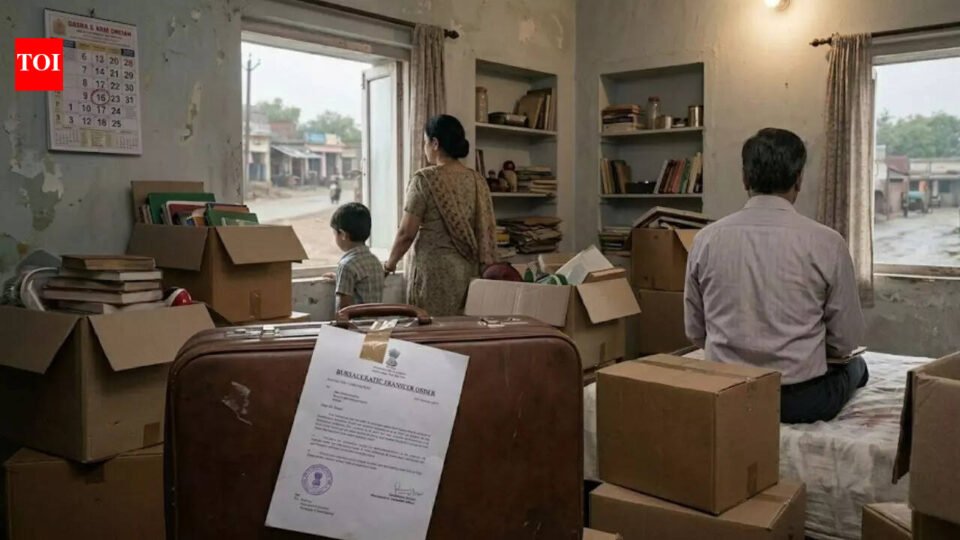

The recent controversy surrounding the transfer of senior officials during the West Bengal Assembly elections has once again brought into focus the expansive powers of the Election Commission of India (ECI) and the delicate balance it must maintain in a federal polity. With over 20 senior IAS and IPS officers, including the Director General of Police and the Kolkata Police Commissioner, being shifted ahead of the polls, the question is not merely about administrative reshuffles. It is about constitutional authority, electoral integrity and the limits of institutional power. As the saying goes, “power tends to test its own limits,” and it is precisely in such moments that constitutional boundaries must be carefully examined.At the heart of this debate lies Article 324 of the Constitution of India, which vests in the ECI the “superintendence, direction and control” of elections. Over decades, this provision has been interpreted expansively, enabling the Commission to act as the ultimate guardian of free and fair elections. The transfer of officials, particularly those directly involved in election duties, has become a standard tool in its arsenal to ensure neutrality.Why the ECI transfers officialsElections in India are not merely logistical exercises; they are deeply political contests often marked by intense competition. In such an environment, the neutrality of the administrative machinery becomes critical. The ECI’s decision to transfer officials is rooted in a simple objective: to prevent any perception or reality of bias. After all, “justice must not only be done, but must also be seen to be done,” and the same principle applies to electoral administration.Once the Model Code of Conduct comes into force, the Commission assumes a heightened supervisory role over governance structures. Civil servants and police officials engaged in election-related duties are expected to function impartially, free from political influence. Transfers, therefore, are often used as a preventive measure, removing officers who may be perceived as aligned with the ruling dispensation or any political formation.This is not a novel practice. Similar large-scale transfers were undertaken during the 2024 General Elections across several states. The logic remains consistent: distance the electoral process from local administrative loyalties and ensure a level playing field. In matters of democracy, “a stitch in time saves nine,” and preventive measures often serve to avert larger institutional crises.The legal backbone: deputation and controlThe ECI’s authority in this regard is not merely conventional but has a firm statutory foundation. Section 13CC of the Representation of the People Act, 1950 provides that officers engaged in election work are deemed to be on deputation to the Commission. During this period, they fall under its control, superintendence and discipline. This provision effectively places such officials outside the direct administrative control of state governments for the duration of election duties.It empowers the Commission to transfer, suspend or replace them if necessary. From a legal standpoint, therefore, the framework is clear and unambiguous.The West Bengal flashpointThe current controversy, however, highlights the friction such powers can generate. The West Bengal Chief Minister has criticised the transfers as “sweeping” and “unilateral,” raising concerns about the absence of consultation with the state government and the lack of specific allegations against the officers concerned.Traditionally, the ECI has, in many cases, sought panels of officers from state governments before effecting transfers. This consultative approach helps maintain cooperative federalism and reduces friction. However, it is equally clear that such consultation is a matter of convention, not a legal requirement. The law is unambiguous: during elections, the Election Commission’s authority overrides that of the state in matters relating to election administration.From a strictly legal standpoint, therefore, the Commission’s actions fall well within its mandate. Yet, as the proverb reminds us, “law is one thing, perception is another,” and in a democracy, perception often shapes legitimacy.The federal fault lineLegality does not automatically translate into political acceptance. The controversy exposes an enduring tension between central institutions and state governments. In a federal democracy, the perception of overreach by a central authority, even a constitutional one, can trigger resistance.State governments often argue that abrupt transfers disrupt administrative continuity and undermine governance. On the other hand, the ECI maintains that any compromise on neutrality could erode the credibility of elections themselves. Between these competing claims lies a fragile balance, for “too much control can breed resistance, and too little can invite disorder.”This tension is not unique to West Bengal. Similar disagreements have surfaced in other states during past elections. The recurring nature of these disputes suggests that the issue lies not merely in individual decisions but in the structural dynamics of India’s electoral federalism.Neutrality vs stability: A delicate trade offThe core dilemma is straightforward yet complex: how to balance administrative neutrality with institutional stability. Frequent or large-scale transfers, even for a short duration during elections, can create uncertainty within the bureaucracy. Officers may find themselves abruptly shifted, affecting long-term governance planning.Moreover, the absence of publicly stated reasons for such transfers can fuel perceptions of arbitrariness. At the same time, the stakes of elections demand an uncompromising commitment to fairness. Even the slightest suspicion of bias can delegitimise outcomes and weaken public trust in democracy.The ECI, therefore, operates in a high-stakes environment where every decision is scrutinised, both legally and politically. In such a setting, “walking the tightrope” is not a choice but a necessity.The way forward: Transparency and trustThe solution does not lie in curtailing the powers of the Election Commission. On the contrary, a strong and independent ECI is indispensable for India’s democracy. However, the exercise of such powers must be accompanied by greater transparency and institutional dialogue.First, the Commission could consider providing brief, reasoned explanations for major transfers. While not legally necessary, such disclosures can enhance credibility and reduce speculation. Second, a structured consultative mechanism with state governments, without diluting the ECI’s final authority, could help preserve the spirit of cooperative federalism. Third, clear, publicly available guidelines on the criteria for transfers would ensure consistency and predictability in decision-making.After all, “sunlight is the best disinfectant,” and transparency often strengthens institutions rather than weakens them.ConclusionThe power of the Election Commission to transfer officials during elections is both constitutionally valid and democratically necessary. It serves as a crucial safeguard against administrative bias and electoral malpractice. However, its exercise must strike a careful balance, assertive yet measured, independent yet transparent.The West Bengal episode is a reminder that institutions do not operate in a vacuum. Their authority is strengthened not just by law, but by public trust. As India continues to conduct elections on an unprecedented scale, the credibility of its electoral machinery will depend on how well this balance is maintained.Free and fair elections are the bedrock of democracy. Ensuring them requires not just power, but prudence in its exercise. For in the end, “power earns respect not merely by its reach, but by its restraint.”
