
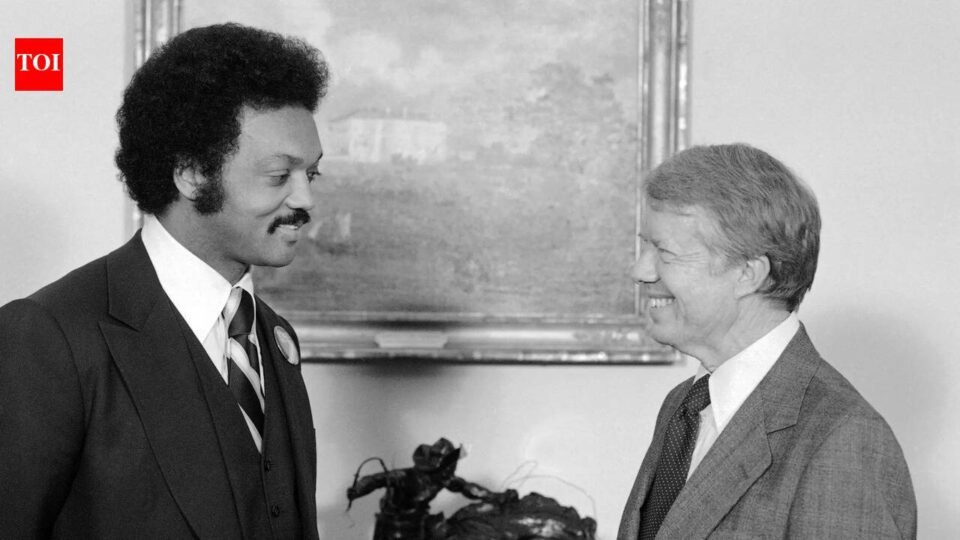
In July 2008, as Barack Obama stood on the threshold of history, Jesse Jackson was caught on a hot microphone whispering words that sounded as raw as they were shocking. Angered by Obama’s Father’s Day speech urging Black fathers to take responsibility, Jackson complained that Obama was “talking down to Black people” and said he wanted to “cut his nuts off.” Within hours, the remark ricocheted across American television screens. Jackson apologised publicly, saying his words were “hurtful and divisive,” yet the episode lingered because it seemed to symbolise something deeper than personal resentment. It felt like a moment in which history itself had cracked open, revealing the tension between two generations of Black political leadership.What that moment obscured, however, was the larger truth that Jesse Jackson’s life had already changed the course of American politics in ways that made Obama’s rise possible. The crude whisper that shocked viewers was also the voice of a pioneer confronting the unsettling reality that the future he had struggled to imagine was now unfolding without him at its centre. To understand Jesse Jackson’s legacy requires stepping beyond that fleeting controversy and tracing the longer arc of a life that stretched from the moral thunder of the civil rights movement to the electoral triumph that reshaped the American presidency.
The preacher who transformed protest into political power
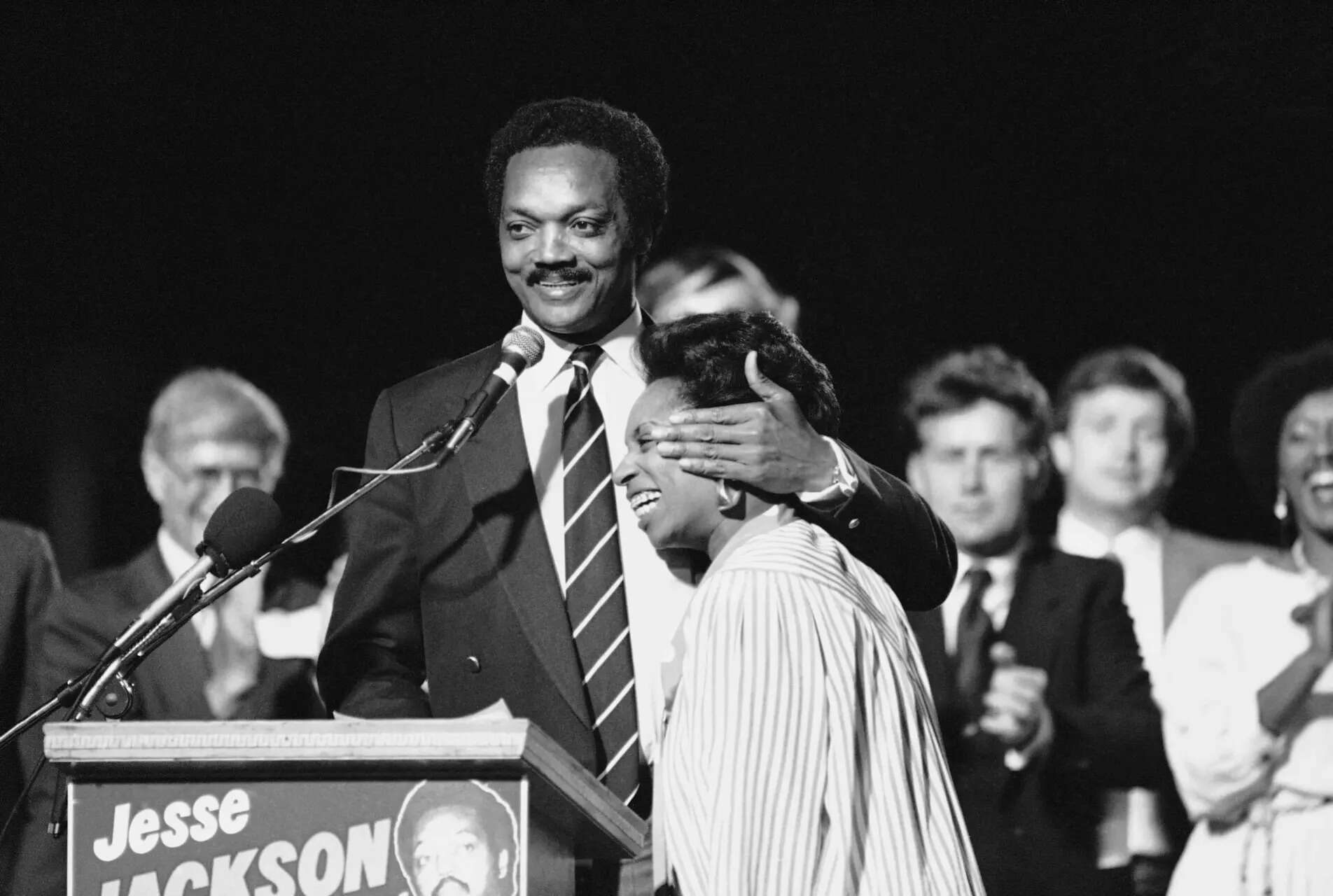
FILE – Democratic presidential candidate Jesse Jackson gives his wife Jacqueline a warm embrace as he takes time out from his political stumping in Los Angeles, May 18, 1984. (AP Photo/Lennox McLendon, File)
Jesse Jackson was born in 1941 in Greenville, South Carolina, into a segregated America where racial hierarchy was enforced not only by law but by daily humiliation. His early life was shaped by poverty, exclusion and the quiet brutality of systemic inequality. When he entered the civil rights movement in the early 1960s, he brought with him not only anger at injustice but also an instinctive understanding that political change required more than moral arguments. It required visibility, mobilisation and emotional connection.Jackson quickly emerged as one of the most dynamic organisers within Martin Luther King Jr’s Southern Christian Leadership Conference. He possessed a preacher’s cadence and a showman’s intuition, turning rallies into events that fused religious fervour with political urgency. His famous call-and-response chant, “I am somebody,” was more than a slogan; it was a declaration of psychological liberation for millions who had been taught by society that they were invisible.Jackson once explained the purpose behind his activism with characteristic clarity, saying, “We have to build a movement that lifts people up, that gives them dignity and the power to shape their own destiny.” This emphasis on dignity became central to his political philosophy. He did not view civil rights solely as a legal struggle but as a transformation of self-worth, and he understood that this transformation required constant public affirmation.
The complicated bond with Martin Luther King Jr
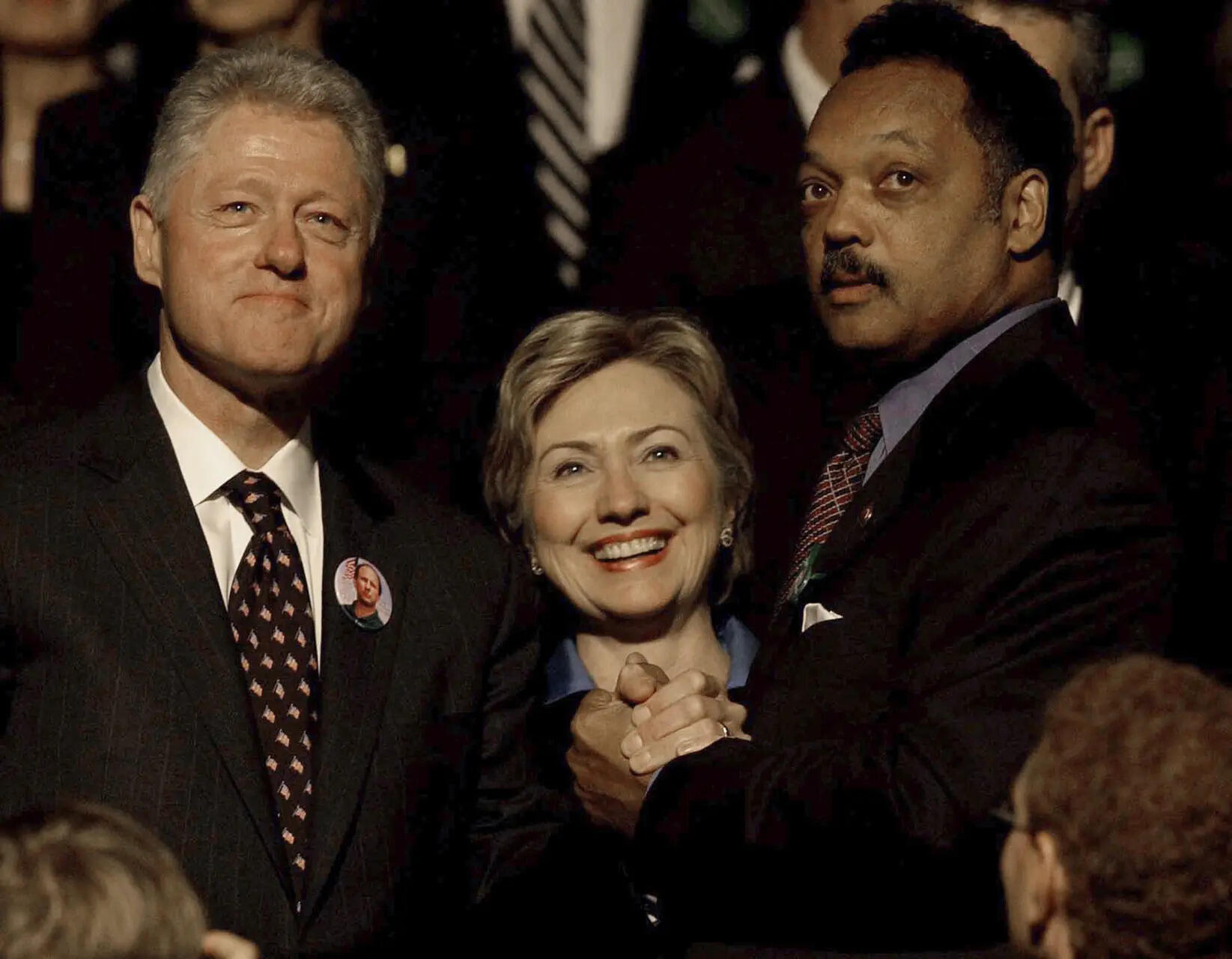
FILE – Former President Bill Clinton and his wife, U.S. Sen. Hillary Rodham Clinton, greet Jesse Jackson before a public memorial service, Oct. 29, 2002, in Minneapolis for U.S. Sen. Paul Wellstone, his wife, daughter and three staff members who died in a plane crash. (AP Photo/Stacy Wescott, Pool, File)
Jackson’s relationship with Martin Luther King Jr defined the early trajectory of his career while also revealing the differences in their political instincts. Jackson joined King’s inner circle during the final years of the civil rights movement, working closely on economic justice campaigns such as Operation Breadbasket, which sought to pressure corporations to hire Black workers and invest in Black communities.King recognised Jackson’s charisma and organisational skills, yet their approaches diverged in subtle ways. King believed in disciplined nonviolence rooted in moral persuasion and spiritual authority. Jackson shared that commitment but also believed in the necessity of political leverage and negotiation. He was less concerned with maintaining moral distance from power than with engaging power directly.After King’s assassination in 1968, Jackson stepped forward to fill a leadership vacuum that many believed could never be filled. He often spoke about King’s influence with reverence, once reflecting that “Dr King taught us that the arc of the moral universe bends toward justice, but he also taught us that it does not bend on its own. It bends because people pull it.” Jackson’s own career would be defined by that act of pulling, by an unrelenting insistence that justice required not only moral clarity but also political strategy.
The man who reshaped the Democratic Party
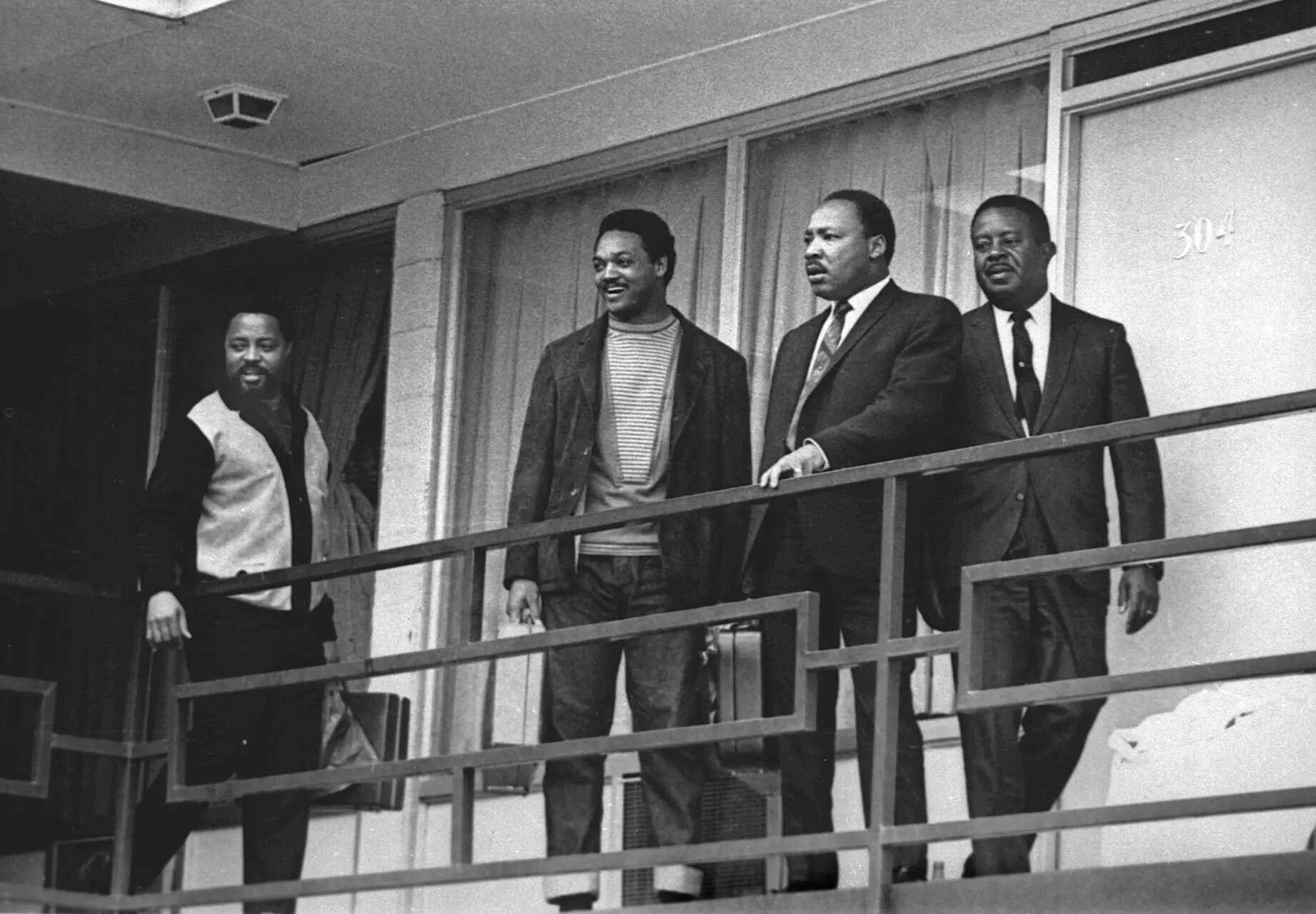
FILE – Rev. Martin Luther King Jr., second from right, stands with Hosea Williams, left, Jesse Jackson, second from left, and Ralph Abernathy, right, on the balcony of the Lorraine Motel in Memphis, Tenn., a day before he was assassinated at approximately the same place, April 3, 1968. (AP Photo/Charles Kelly, File)
Jesse Jackson’s most profound impact on American politics came through his presidential campaigns in 1984 and 1988, which fundamentally altered the Democratic Party’s coalition model. When Jackson first ran for president, many observers dismissed his candidacy as symbolic, assuming that a Black candidate could not build a viable national coalition.Jackson proved them wrong. He constructed what he called the Rainbow Coalition, an alliance that brought together African Americans, Latinos, labour unions, progressive whites and other marginalised communities. His campaign reframed American politics around inclusion rather than identity fragmentation, emphasising shared economic interests and social justice.In 1988, his second presidential run demonstrated the full power of this coalition. Jackson won several state primaries, secured millions of votes and finished second in the Democratic race. For the first time in American history, a Black candidate had shown that a presidential campaign could command widespread electoral support.During that campaign, Jackson delivered the line that would become synonymous with his legacy: “Keep hope alive.” He later explained that hope, for him, was not optimism but resilience, saying, “Hope is not a lottery ticket you can sit on the sofa and clutch, feeling lucky. Hope is an axe you break down doors with in an emergency.” Through his campaigns, Jackson forced the Democratic Party to broaden its vision of political representation and laid the groundwork for future candidates who would build on that foundation.
A personality defined by charisma and contradiction
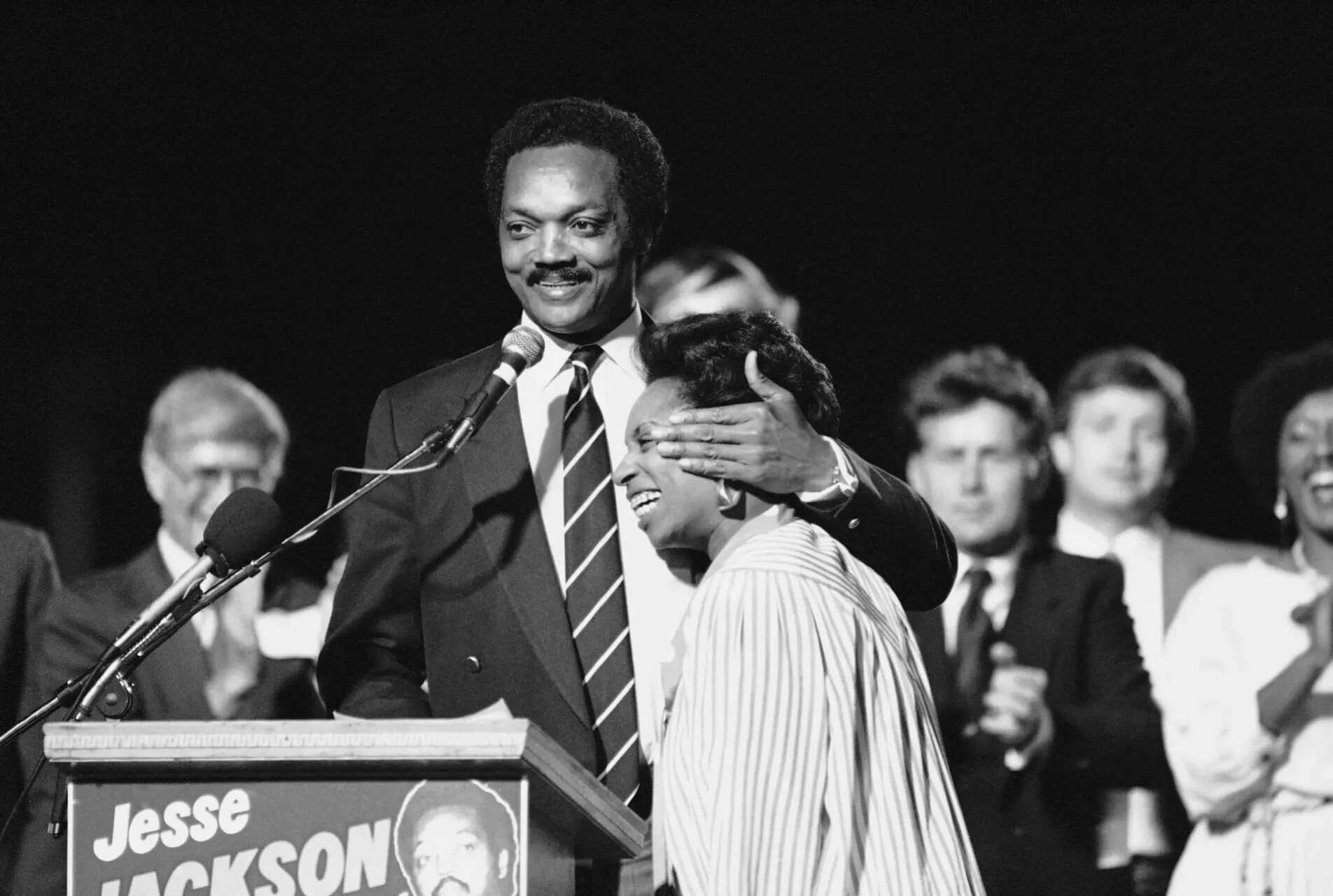
FILE – Democratic presidential candidate Jesse Jackson gives his wife Jacqueline a warm embrace as he takes time out from his political stumping in Los Angeles, May 18, 1984. (AP Photo/Lennox McLendon, File)
Jesse Jackson’s public persona combined extraordinary charisma with relentless ambition. He thrived in the spotlight, understanding instinctively how media visibility could sustain political relevance. His speeches often blended biblical imagery with contemporary policy debates, creating a rhetorical style that was both inspirational and pragmatic.Supporters admired his courage and his willingness to confront injustice directly. Critics accused him of theatricality and self-promotion. Jackson himself acknowledged this tension, remarking that “if you are not controversial, you are not making enough noise to be heard.” His career reflected a belief that political change required constant pressure, negotiation and visibility.Jackson also engaged in international diplomacy, negotiating with foreign leaders to secure the release of political prisoners and hostages. These efforts reinforced his image as a global advocate for human rights, even as they sometimes provoked criticism for appearing overly dramatic.Yet it was precisely this larger-than-life presence that kept racial justice issues at the forefront of American political discourse long after the civil rights movement’s peak.
The parallels and contrasts with Barack Obama
Despite the generational gap between them, Jesse Jackson and Barack Obama shared striking similarities. Both were gifted orators who drew heavily from the rhetorical traditions of Black churches, both emphasised coalition-building across racial lines and both framed their political visions around unity and inclusion.Obama acknowledged this lineage explicitly during his presidential campaign, stating, “Jesse Jackson paved the way. He showed that people from every background could come together in a coalition for change.” The parallels between the two men were unmistakable. Each represented a different phase in the evolution of Black political leadership, moving from protest to participation within mainstream institutions.Yet their differences were equally significant. Jackson’s political identity was rooted in confrontation with entrenched power structures, while Obama’s was shaped by his ability to navigate those structures from within. Jackson spoke as an outsider demanding justice; Obama spoke as a candidate promising effective governance. Jackson’s rhetoric often emphasised struggle; Obama’s emphasised consensus.Together, they represented successive chapters in the same historical narrative, illustrating the transformation of Black political leadership from exclusion to integration.
The culmination of a long struggle
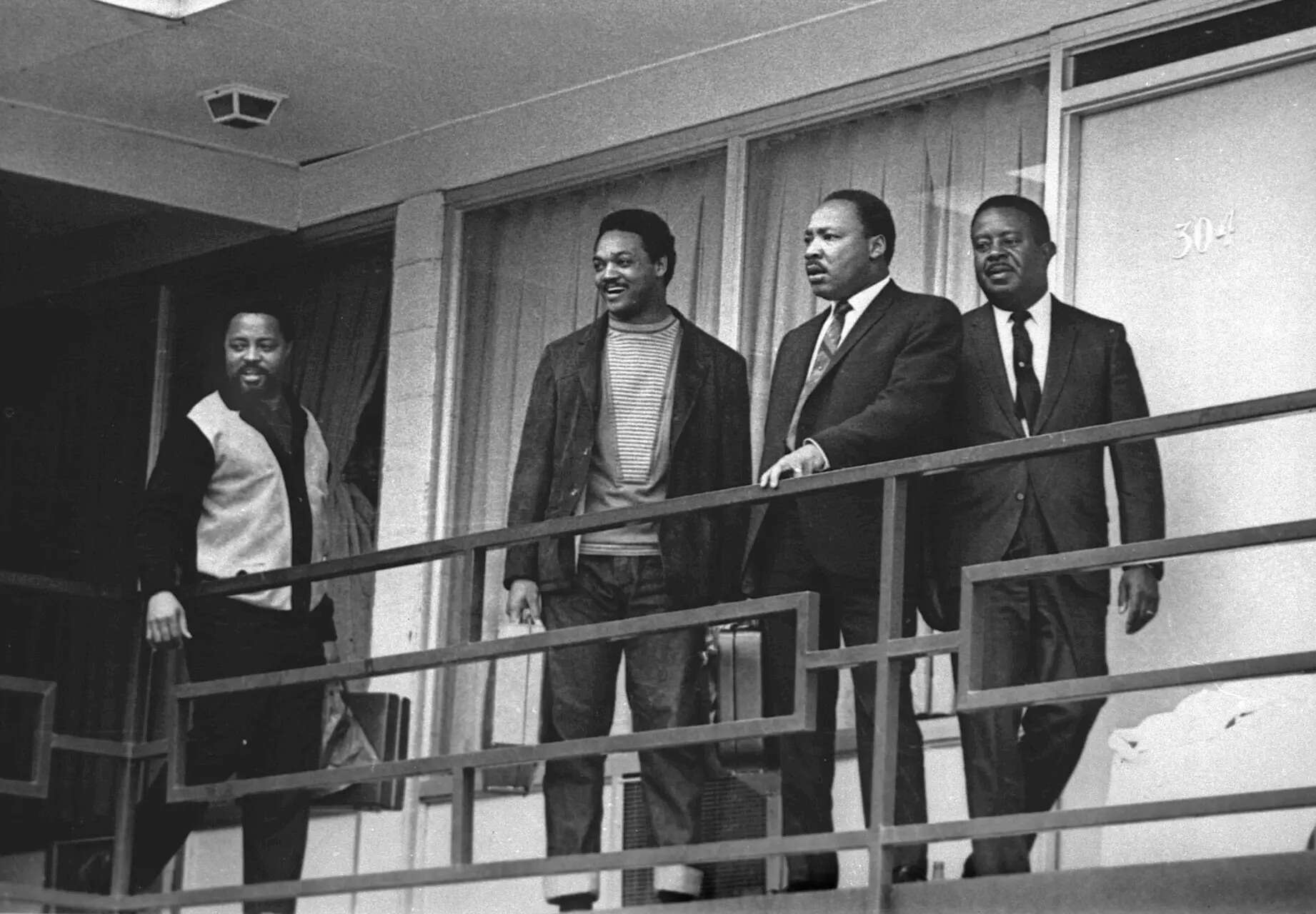
FILE – Rev. Martin Luther King Jr., second from right, stands with Hosea Williams, left, Jesse Jackson, second from left, and Ralph Abernathy, right, on the balcony of the Lorraine Motel in Memphis, Tenn., a day before he was assassinated at approximately the same place, April 3, 1968. (AP Photo/Charles Kelly, File)
By the time Barack Obama ran for president in 2008, the political landscape had been profoundly shaped by Jesse Jackson’s earlier efforts. The Democratic Party had become more diverse, minority political representation had expanded nationwide and the idea of a Black presidential candidate was no longer considered radical.Obama’s victory thus represented not only a personal achievement but also the culmination of decades of civil rights activism and electoral transformation. It was the moment when the possibility Jackson had fought to create became an undeniable reality.Jackson himself recognised the significance of this shift, later reflecting that “what we struggled for in the streets is now being decided in the ballot box.”
The deeper meaning of that infamous whisper
Returning to that uncomfortable moment in 2008 reveals its deeper historical resonance. Jackson’s remark about Obama was not simply an expression of jealousy. It was the voice of a revolutionary grappling with the reality that the world he had helped transform no longer required the same kind of revolutionary leadership.Jackson had spent his life challenging the system from the outside, demanding access to power structures that excluded Black Americans. Obama’s rise demonstrated that those structures could now be entered and reshaped from within.The tension between the two men reflected the distance America had travelled over half a century, moving from segregation and protest to representation and governance.
The legacy of a pioneer
Jesse Jackson’s life cannot be measured solely by electoral victories or political offices. His most enduring contribution lies in his expansion of American political imagination. He transformed civil rights activism into a pathway toward electoral power, reshaped the Democratic Party’s coalition-building strategies and bridged the moral revolution of Martin Luther King Jr with the electoral revolution represented by Barack Obama’s presidency. Jackson once said, “Leadership is about falling in love with the people you serve and serving them even when it is not convenient.” His career embodied that philosophy, marked by relentless advocacy, strategic innovation and an unwavering commitment to expanding the boundaries of democracy.Jesse Jackson walked through doors that had never been opened before. Barack Obama ran through those doors and reached the White House. History will remember Obama as the first Black president of the United States. It will remember Jesse Jackson as the man who made that presidency possible, the pioneer whose footsteps reshaped the path for generations to follow.
