
Iran targets Gulf countries after US-Israel
The Trump administration is facing growing frustration from its allies in the Gulf, who claim they were not adequately warned about the scale of Iranian retaliation following US-Israeli strikes on Tehran, news agency Associated Press reported. Officials from two Gulf countries said their governments were disappointed with how Washington handled the conflict, particularly the initial attack on Iran last Saturday.
According to AP sources, officials claimed their countries were not given advance notice of the US-Israeli strikes and that the US had ignored their warnings that such a move could trigger widespread retaliation across the region.They further said that Gulf governments were frustrated that the US military response appeared focused on defending Israel and American forces while leaving regional partners to deal with the consequences of Iranian attacks.The official said there was growing concern in the region that air defence systems were being stretched thin, adding that his country’s stock of interceptors was “rapidly depleting.”
White House defends Operation Epic Fury
Responding to the criticism, White House spokeswoman Anna Kelly defended the US military campaign and said the strikes had significantly weakened Iran’s ability to retaliate.“Iran’s retaliatory ballistic missile attacks have decreased by 90 per cent because Operation Epic Fury is crushing their ability to shoot these weapons or produce more. President Trump is in close contact with all of our regional partners, and the terrorist Iranian regime’s attacks on its neighbours prove how imperative it was that President Trump eliminate this threat to our country and our allies,” AP quoted Kelly as saying.Prince Turki al-Faisal, the former Saudi intelligence chief, suggested that Israeli Prime Minister Benjamin Netanyahu had pushed the United States into the conflict.“This is Netanyahu’s war,” he told CNN. “He somehow convinced the president (Trump) to support his views.”
Iran’s retaliation spreads across Gulf
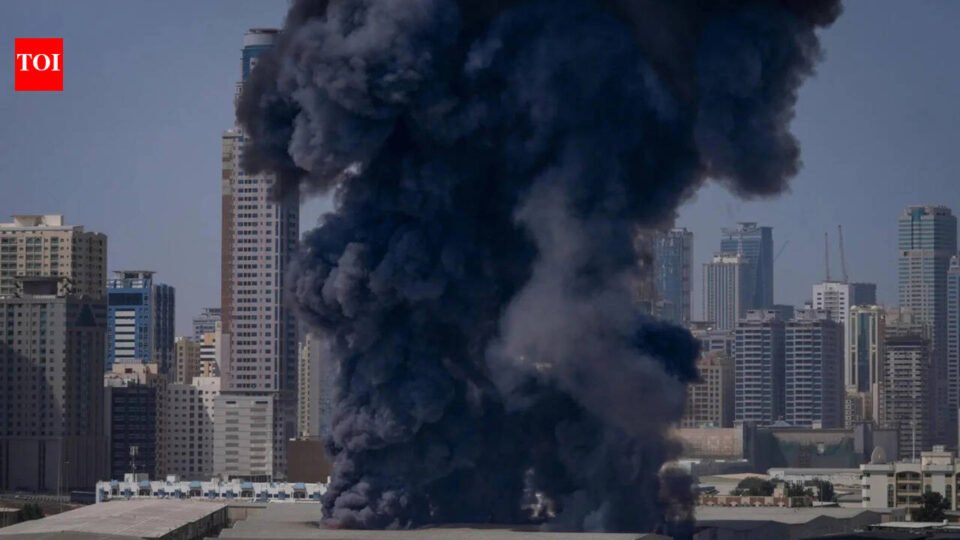
Iran’s retaliatory campaign has increasingly targeted Gulf countries that host American troops and infrastructure. Since the start of the conflict, Tehran has fired barrage of missiles and drones at five Gulf Arab countries including Dubai, Kuwait and Bahrain. Michael Ratney, a former US ambassador to Saudi Arabia, said Gulf countries have mixed feelings about the war. While many would welcome a weakened Iran, they remain deeply concerned about the broader economic and security fallout.“What comes next?” said Ratney, now a senior adviser at the Center for Strategic and International Studies. “The countries of the Gulf will have to bear the brunt of whatever that is.”Iran’s retaliation has extended across the Persian Gulf, with drones and missiles targeting several cities and military sites in countries including the United Arab Emirates, Kuwait, Qatar and Bahrain. Explosions and interceptions have been reported near major urban centres such as Dubai and Abu Dhabi, while airspace restrictions and flight disruptions have affected some of the world’s busiest aviation hubs, stranding passengers and forcing airlines to reroute services.The conflict between Iran on one side and the United States and Israel on the other has now entered its seventh day, with both sides continuing to exchange strikes across the Middle East. Iranian forces have launched hundreds of missiles and drones at US assets and allied states in the Gulf, while US and Israeli forces have intensified attacks on Iranian military infrastructure, raising fears that the fighting could widen into a broader regional conflict.
