
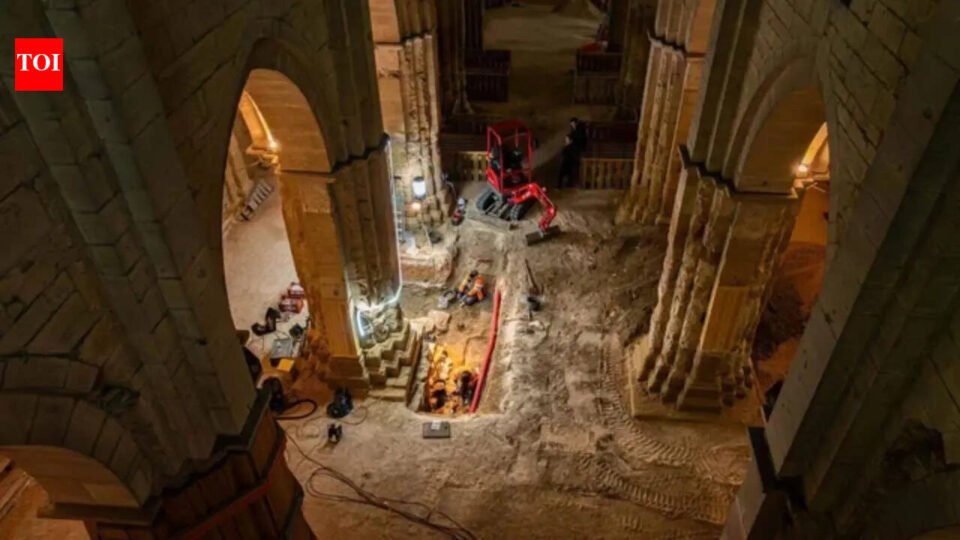
A routine renovation of the Garden Museum- previously the medieval St Mary-at-Lambeth church- took place in London, England, back in 2016, as a result of lifting a stone that weighed several tons, workers discovered a staircase that had been concealed for centuries. This unexpected architectural feature led directly down into a brick-vaulted area underneath the church (‘the Great Vault’), containing thirty lead coffins that have not been disturbed since installation; these include five former Archbishops of Canterbury (the most notable one being Richard Bancroft – he supervised the publication of the King James Bible in 1611). According to the Archaeology Magazine, the accidental discovery also had not appeared on any modern surveys; therefore showing an important part of London’s ecclesiastical history that has been underground three meters from the chancel’s floor for many centuries.
Inside the Great Vault: What the archaeological find revealed
When the stone was finally lifted off the floor no one knew what a huge finding it really was. The ‘Great Vault’ was not an ordinary small cellar; it is a large chamber lined with bricks and ‘lost”’ for centuries. Most of the crypts in London were filled with dirt and other materials in the 19th century, but this particular one remains air-sealed from the 17th century due to lack of disturbance and has not been exposed to modern contaminants or humidity.The lead coffins located inside of the vault were in such good condition that the remains could be identified by the engraved lead nameplates and burial clothing found on top of the coffins, allowing for a non-intrusive historical assessment of the interred individuals.
Mystery of the hidden underground staircase
According to Garden Museum official archive, for those who were working on restoring the church, the biggest surprise was the fact that they had uncovered a hidden staircase. Architectural drawings and surveys completed during the 19th century show no hollow area underneath; however, architects during the 1851 restoration paved over the entrance with York stone to level the chancel floor, effectively entombing the chamber. Therefore, when the restoration team uncovered this ‘connection to the past,’ they also missed out on over 160 years of lost documentation.
How the site is protected today
The decision to not disturb the dead by removing the bodies or coffins was made in accordance with ecclesiastical law and the Faculty Jurisdiction of the Church of England regarding consecrated remains. Therefore, the museum utilized non-invasive technologies (such as lowering cameras through the opening created by the workers into the vault) in order to view the remains of the deceased. In order to commemorate this event, the museum has installed a glass panel in the floor to allow visitors to stand directly above where the workers were standing and look down into the vault at the numerous layers of history that are buried just under three meters beneath their feet.
