
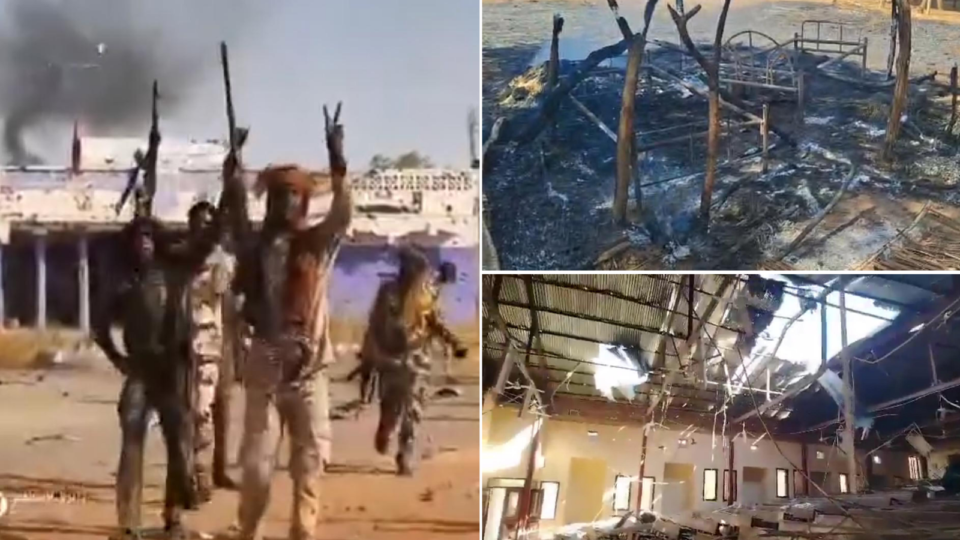
A drone is circling in the skies above Zaki Ramadan when he takes my call. As a humanitarian worker in Sudan’s southeastern Blue Nile state, he is helplessly watching aid dwindle and civilians be killed by the meteoric rise in drone strikes.
“We stopped all humanitarian activity. We cannot work. All the offices are closing because of the drones – some of the area has been evacuated. WFP staff left two days ago from the area, anticipating drone strikes,” he says.
Drone warfare has made Sudan’s war a death trap for a population of more than 46 million people as the Rapid Support Forces (RSF) and Sudanese Armed Forces (SAF) battle for territory.
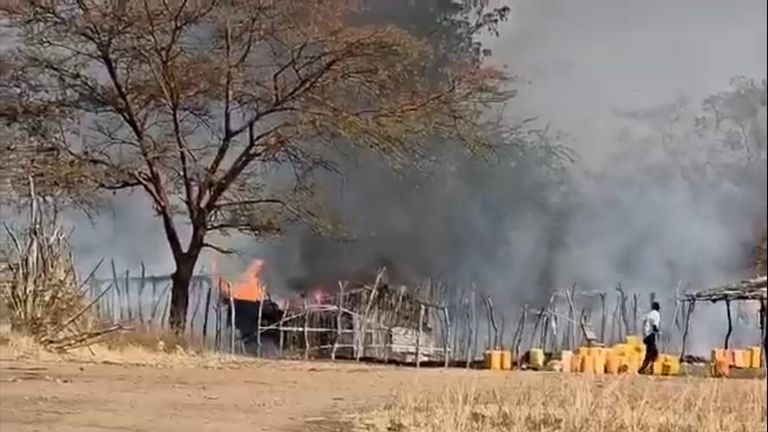
Drone attacks by Rapid Support Forces (RSF) have been stepped up
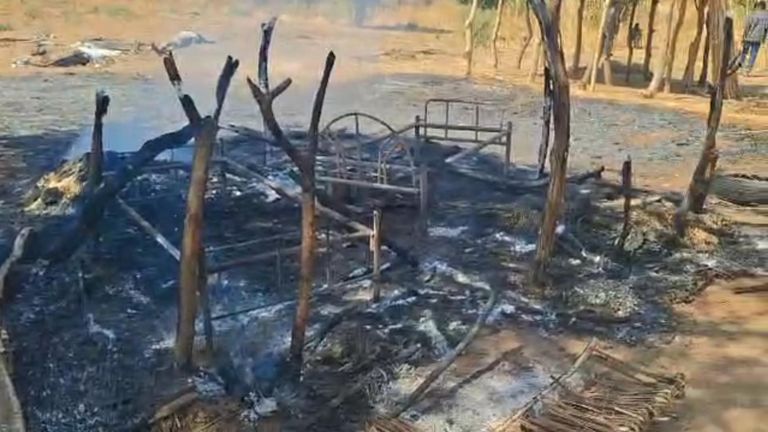
Charred debris following a drone strike on a market in South Kordofan
The Armed Conflict Location & Event Data, an independent global monitor, has documented at least 198 drone strikes in Sudan launched by both sides in the first two months of 2026. At least 52 of them involved civilian casualties, killing 478 people.
“For us, when we hear the sound – we just rush and hide ourselves. We run to the river, and sometimes we can go into our foxhole. We go to the town and go to where there are no buildings sometimes,” says Zaki.
The area he operates in has been ravaged by armed rebellion and state violence for decades, but this time is different.
A dangerous new depth to warfare
“This war is quite different. This time they are using too many drones. Before – 20 years or 30 years ago – they did not use these drones, it was just a normal clash,” he says.
Drone warfare has added dangerous depth to Sudan’s humanitarian catastrophe by making safe aid delivery and emergency response virtually impossible in some of the hardest-hit areas.
“No food, no medical care, no sanitation,” says Zaki. People scrambling to safety are left with little to no option of sanctuary.
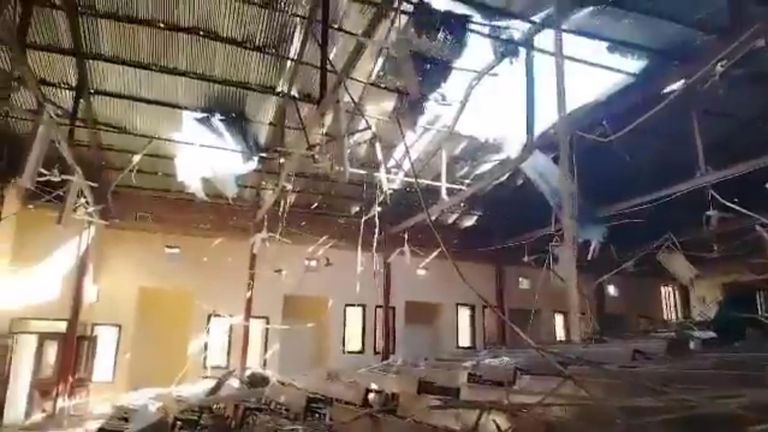
Drones hits the University of Kordofan. Pic: Darfur Network for Human Rights
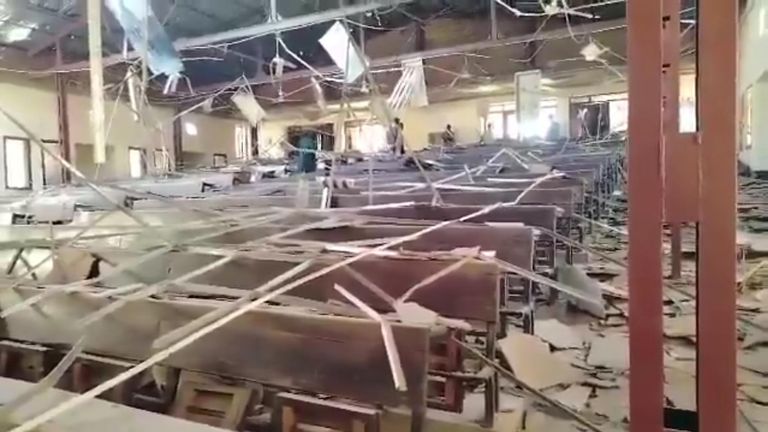
Lecture halls are damaged in the strike. Pic: Darfur Network for Human Rights
:: Have drones changed war forever?
Sky News analysis and mapping of ACLED data has found that deadly drone attacks are spread across Sudan and the number of civilian casualties is rapidly rising.
For the third consecutive day of new drone strikes on the southern White Nile state, an RSF drone hit a secondary school and shelter killing at least 17 people – mostly school girls – and injuring 10 others on Wednesday.
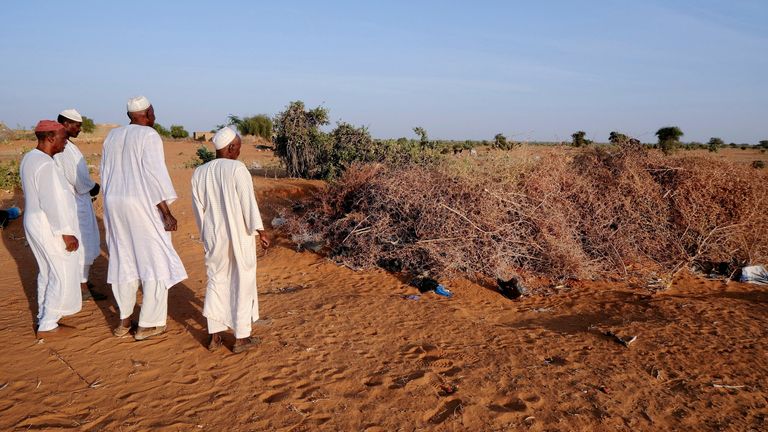
A burial site in North Kordofan, where victims of a drone strike were laid to rest. Pic: Reuters
In just a two-day window in mid-February, more than 60 people were reported to have been killed by drones launched by both sides, with at least 15 children killed in a single Sudanese military drone strike on a shelter.
In January, a drone strike on N’djamena market in South Kordofan’s Dilling county killed 13 people and a month earlier, a triple drone strike by the RSF on a kindergarten and hospital in the same state killed 114 people – including 43 children.
Detentions and deportations
The walls are closing in on civilians dealing with escalating violence as borders close. Drone strikes are spread across the eastern border to the west – even hitting the territory of neighbouring Chad which hosts close to a million Sudanese refugees.
Chad recently closed its border with Sudan after multiple cross-border attacks by the RSF. Other neighbouring countries like South Sudan, Ethiopia, and Libya are dealing with the danger of their own civil wars and are increasingly unsafe for refugees.
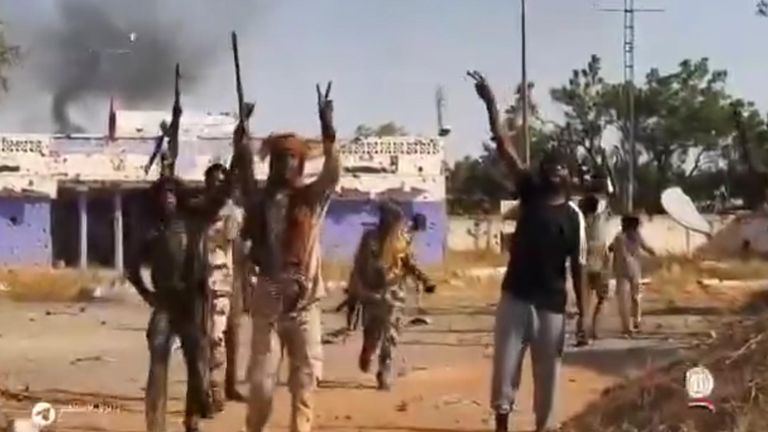
Sudan’s Rapid Support Forces (RSF) paramilitary group
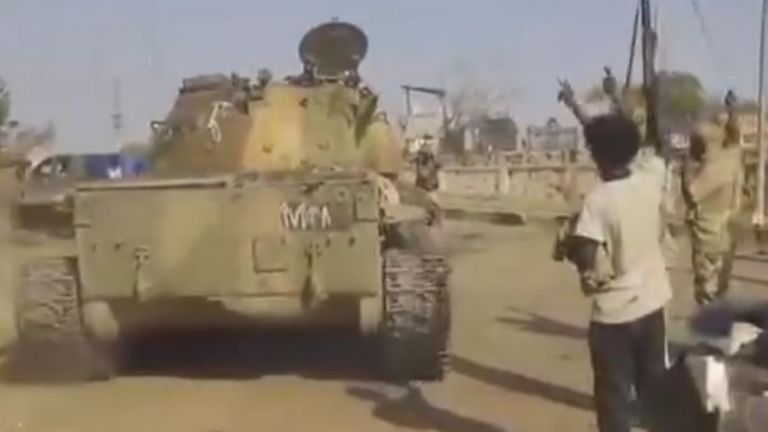
Countries are closing their borders because of the threat from RSF
Egypt, a key safe haven for Sudanese refugees, is now deporting them en masse. Hundreds of thousands are now facing fear of detention, deportation, and death as Egyptian authorities unleash a brutal crackdown. The Sudanese embassy in Cairo has said that 578 Sudanese citizens have been deported back to Sudan in December and January.
Affected families have told Sky News that their status as asylum seekers with the United Nations Refugee agency (UNHCR) is often ignored as their loved ones are picked up. Dozens of missing person posts are being shared on Facebook to trace those suspected of being detained or deported.
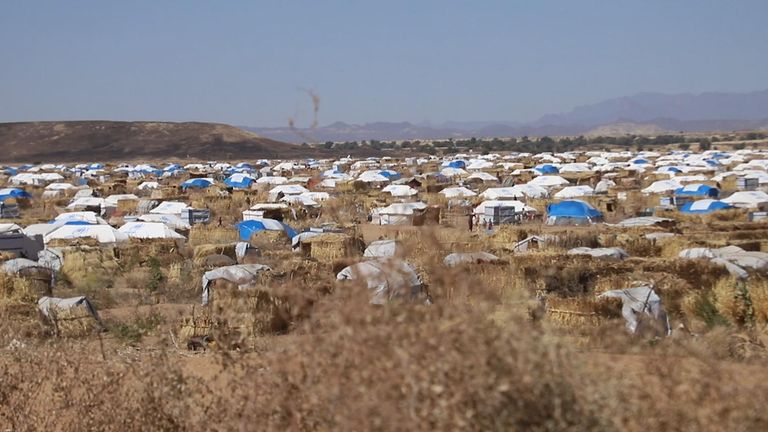
People, fleeing the fighting, have set up camp in North Darfur
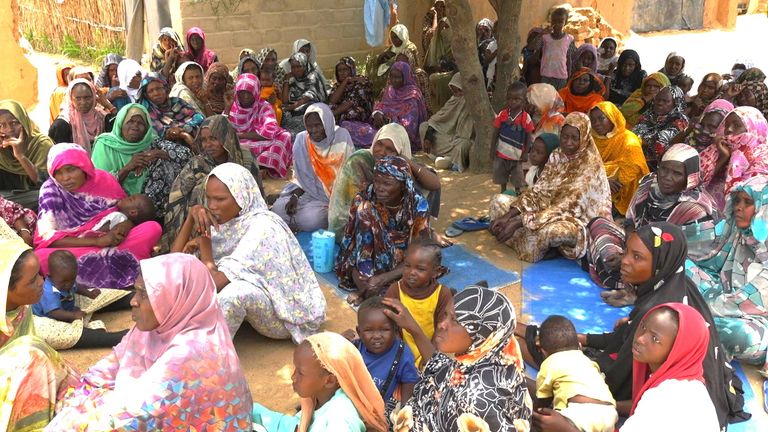
Thousands have been forced to leave Al Fashir, the capital of North Darfur
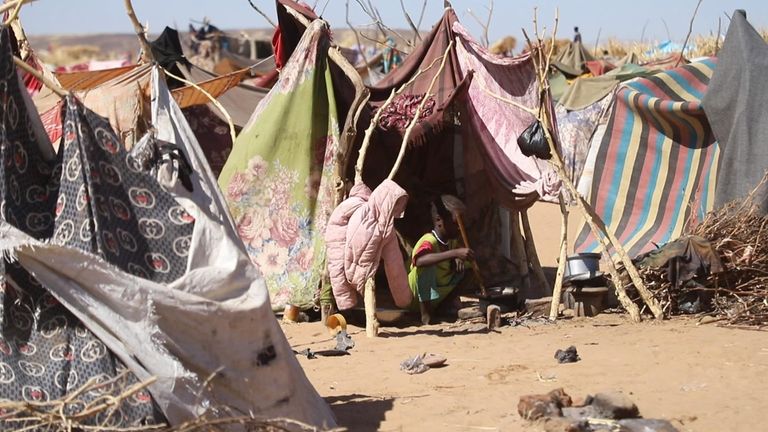
Refugees are living in makeshift tents
“They took us to prison, and we were terrified. I have never been imprisoned before – in Sudan or elsewhere – and was shocked by the sight of the prison. It felt like we were in a soap opera,” a Sudanese refugee who was detained by the Egyptian authorities told Sky News.
He was a taxi driver in the Sudanese city of Al Fashir. He eventually fled the regional capital – where the RSF are accused of committing genocide and killing 6,000 people in just three days of capture – and went to Egypt for his safety.
“They split us up into four groups, and we were around 110 to a single cell. There was violence from the police and then violence within the cell from embedded guards. You are constantly dodging both.”
An 18-year-old called Al-Nazeer Al Sadiq was also kept in one of these cells. He was arrested from a neighbourhood in Cairo and the three friends with him at the time were deported. He eventually died in detention.
“He did not have any illness – he was healthy when they picked him up,” his brother tells us from Sudan’s capital Khartoum.
“The first day my mother visited him he was mentally exhausted and not at peace. There were three visits and each time he was deteriorating more and more – right until he died.”
Al-Nazeer’s family have returned to Sudan, despite the risks. The Egyptian government did not respond to our request for comment.
Read more from Sky News:
Thousands killed in three days
1,000 days of war in Sudan
UN sees ‘hallmarks of genocide’
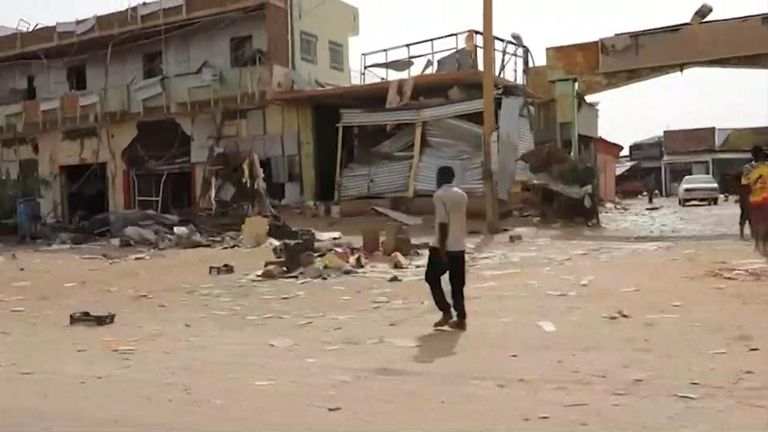
There has been extensive devastation in Khartoum
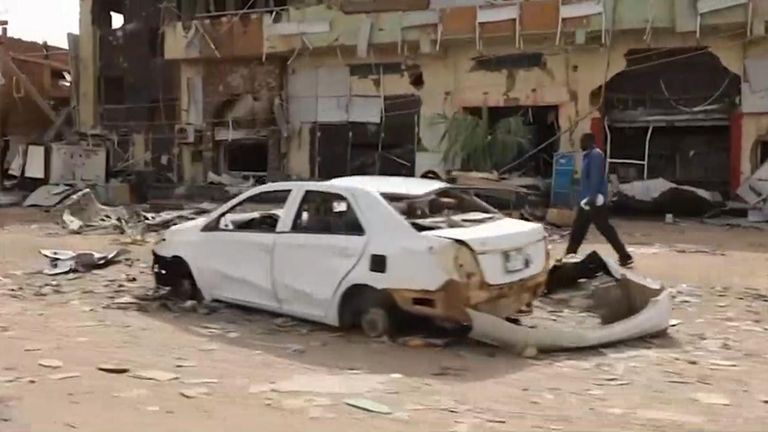
The capital has seen some of the fiercest battles
UK’s asylum crackdown brought into focus
Here in the UK, Home Secretary Shabana Mahmood implemented an emergency ban on study visas for students from Afghanistan, Myanmar, Cameroon, and Sudan to slow asylum claims. This has meant that Sudan’s best and brightest minds – at least 210 students – are being prevented from pursuing scholarships to some of the UK’s best universities.
At least 22 of them were meant to study at the University of Oxford, and 39 of them were accepted in a UK government-funded Chevening scholarship for emerging leaders.
On the ban, Ms Mahmood said: “Britain will always provide refuge to people fleeing war and persecution, but our visa system must not be abused. That is why I am taking the unprecedented decision to refuse visas for those nationals seeking to exploit our generosity. I will restore order and control to our borders.”
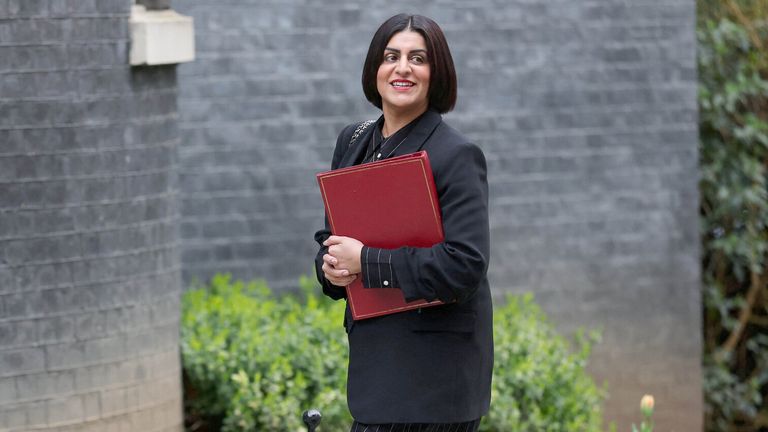
The home secretary’s restriction on study visas is affecting Sudan’s best and brightest minds. Pic: Reuters
But the students impacted believe that they are facing the compounded cruelty of Sudan’s war.
‘It’s heartbreaking’
“What’s especially painful about the current situation is that the data simply doesn’t justify a blanket decision like this,” says Rawan, who has been blocked from enrolling in her dream masters programme in international health at the University of Oxford after being accepted.
“The Home Office has pointed to a 300% increase in asylum claims from Sudanese students, from 30 to 120 cases over five years. But when you look at the bigger picture, those 120 cases represent only about 0.1% of total asylum claims in the UK.”
She continued: “It’s heartbreaking to see how we’re also villainising the students who sought asylum as they are not manipulating the system, they are fleeing one of the worst humanitarian crises in the world, with more than 14 million Sudanese people displaced by the war.
“There is definitely a general sense of helplessness.”
This war is becoming a dead end as borders close and drones stalk the skies. Aid workers like Zaki do not know what to tell the people scrambling for safety.
“They get confused about where they can go to feel peace – they go to South Sudan, there is a problem. They go to Ethiopia, there is a problem,” says Zaki.
