


Most people crave something sweet once in a while. A piece of chocolate after dinner or a sugary drink on a tiring day often feels comforting. But when the urge for sweets appears several times a day, it may signal something deeper happening inside the body.Persistent sugar cravings are rarely just about willpower. The body often uses cravings as a signal. Hormones, blood sugar swings, and gaps in nutrition can all influence how often someone feels drawn to sweet foods.
According to Dr Monika Sharma, Senior Consultant – Endocrinology, Aakash Healthcare, the body’s internal chemistry plays a large role in this pattern.“Having the occasional sugar crave is common to many individuals, yet having the constant desire to have something sweet may be the result of some form of disbalance in their diet or hormones. Chronic cravings of sugar are usually the way that the body is trying to tell you about the variation in blood sugar levels, deficiency of certain nutrients or hormonal changes.”Understanding these signals can help people manage cravings instead of constantly fighting them.
The blood sugar roller-coaster many people don’t notice
One of the most common triggers behind frequent sugar cravings is unstable blood sugar.When meals contain a large amount of refined carbohydrates, such as white bread, sugary snacks, or sweet drinks, blood glucose rises quickly. The body releases insulin to move this glucose into cells. Soon after, blood sugar can fall sharply.That sudden drop creates fatigue, irritability, and a strong urge for quick energy. Sweet foods are the fastest option the brain recognizes.Research from the US National Institutes of Health (NIH) explains that repeated spikes and crashes in blood glucose can increase hunger signals and preference for high-sugar foods.Skipping meals can also trigger the same cycle. When the body goes too long without energy, it often demands the fastest fuel available. Sugar fits that description.

Endocrinologists explain that these cravings are signals from the body rather than simple habits. Food Stylist: Rebecca Jurkevich. (Joseph De Leo/The New York Times)
Hormones quietly shaping the craving cycle
Hormones act as the body’s chemical messengers. Several of them influence hunger, energy use, and food choices.Dr Sharma explains that hormones such as insulin, cortisol, and thyroid hormones affect how the body handles energy.When these hormones move out of balance, the body may begin searching for quick fuel more often.For example:Insulin regulates blood sugar levels. When the body becomes less sensitive to insulin, cravings for sweet foods may increase.Cortisol, the stress hormone, can raise appetite and drive the desire for high-sugar comfort foods.Thyroid hormones influence metabolism. Low thyroid activity can leave people feeling tired, which sometimes leads them to reach for sugary snacks for a quick lift.Hormonal changes and insulin resistance can influence hunger signals and food preferences. When these hormonal patterns persist, cravings may feel constant rather than occasional.
Diet gaps that leave the body unsatisfied
Sometimes cravings appear not because of excess sugar, but because meals lack balance.Meals that are low in protein, fibre, or healthy fats often fail to keep the body satisfied for long. The stomach may feel full at first, but energy levels drop quickly.Protein and fibre slow digestion and keep blood sugar stable. Without them, hunger signals return earlier.Dr Sharma notes that diet imbalance is a common trigger behind recurring cravings, “The patterns of diet may play a role as well. Inadequate intake of protein, fiber, or healthy fats may cause individuals to experience unsatisfaction following meals and these may trigger recurrent desires to eat sweet food.”Highly processed foods can worsen the problem. These foods often deliver calories quickly but provide little long-lasting satiety.The result is a cycle of eating, crashing, and craving again.
Stress, sleep and lifestyle factors that fuel the sweet urge
Lifestyle habits can quietly amplify sugar cravings.Chronic stress raises cortisol levels. Higher cortisol pushes the brain toward quick energy foods, particularly sugar and refined carbohydrates.Sleep deprivation has a similar effect. Research from the US Centers for Disease Control and Prevention (CDC) shows that poor sleep can disrupt hunger hormones such as ghrelin and leptin, increasing appetite and cravings.When sleep drops, the body often looks for instant energy to compensate for fatigue. Sweet snacks become an easy option. Even dehydration can sometimes mimic hunger signals. The body may interpret mild thirst as a need for food, especially sugary foods that provide fast energy.
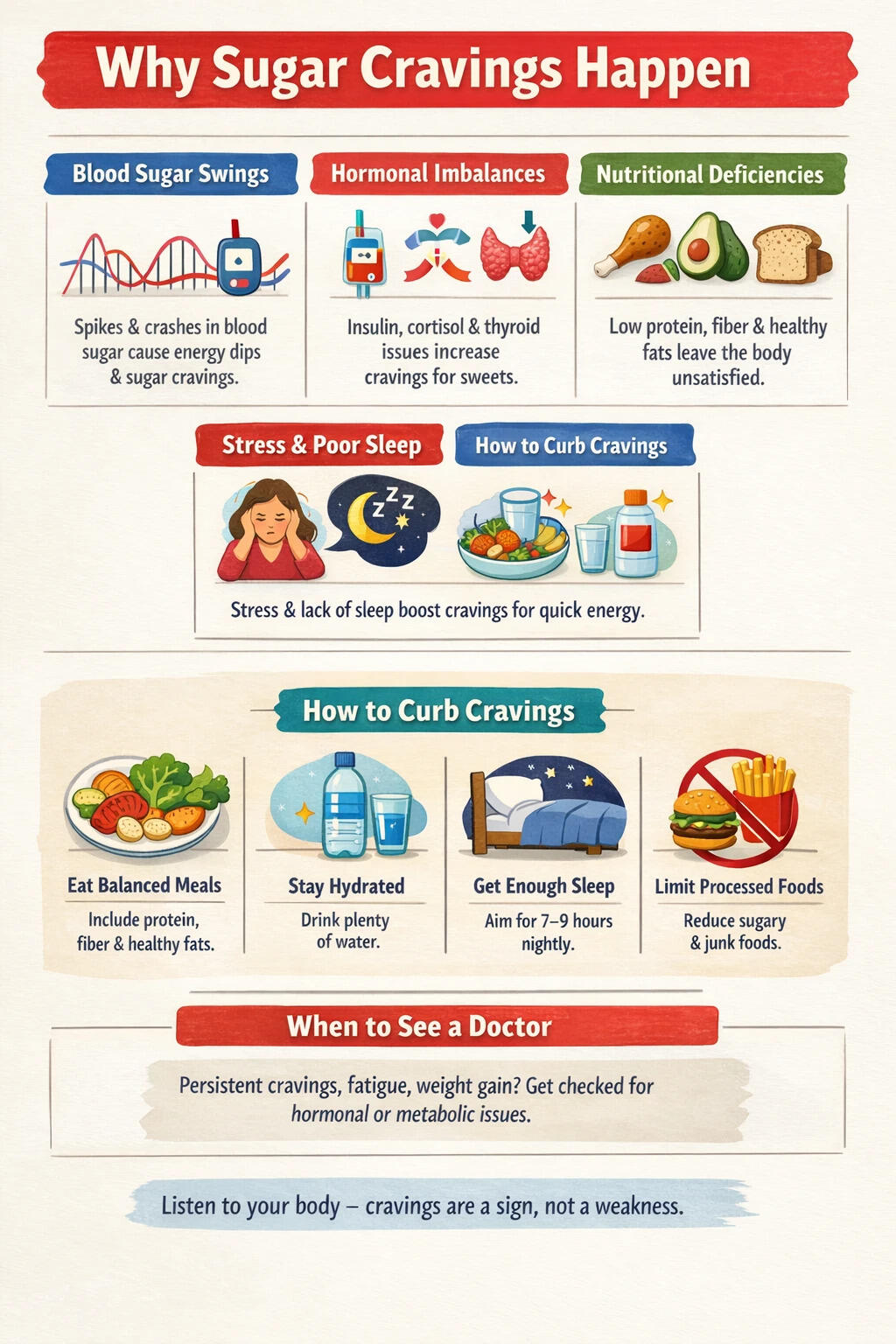
Stabilising meals, improving sleep, and reducing processed foods can help control cravings, while persistent symptoms may require medical evaluation.
Simple ways to regain control over sugar cravings
Managing sugar cravings usually begins with stabilising the body’s energy supply.Balanced meals are the most effective first step. Each meal should include protein, fibre-rich carbohydrates, and healthy fats. This combination slows digestion and prevents sharp blood sugar swings.Other practical strategies include:
- Eating meals at regular intervals so blood sugar does not fall too low.
- Staying hydrated, since thirst can sometimes appear as hunger.
- Sleeping 7-9 hours each night, which helps regulate hunger hormones.
- Reducing ultra-processed foods that create rapid glucose spikes.
- Adding fibre-rich foods such as vegetables, whole grains, and legumes.
When cravings persist alongside symptoms such as fatigue, weight gain, or frequent overeating, medical guidance may help identify possible hormonal or metabolic causes.Experts emphasize that cravings are signals, not personal failures. Understanding those signals makes them easier to manage.
When persistent cravings deserve medical attention
Occasional cravings are normal. But persistent sugar cravings paired with fatigue, mood swings, or sudden weight changes may point toward underlying metabolic changes.Conditions such as insulin resistance, thyroid imbalance, or chronic stress can quietly shape eating patterns.A healthcare professional can evaluate symptoms and recommend tests if needed. Early attention often helps prevent long-term metabolic issues.In the end, the goal is not to eliminate sweetness from life. It is to create a pattern where the body feels balanced, nourished, and satisfied.Medical experts consulted This article includes expert inputs shared with TOI Health by: Dr Monika Sharma, Senior Consultant – Endocrinology, Aakash Healthcare.Inputs were used to explain why some people experience frequent sugar cravings, highlighting how hormonal changes, blood sugar fluctuations, and dietary imbalances can trigger the urge for sweets, along with simple lifestyle and dietary measures that can help manage these cravings.
