
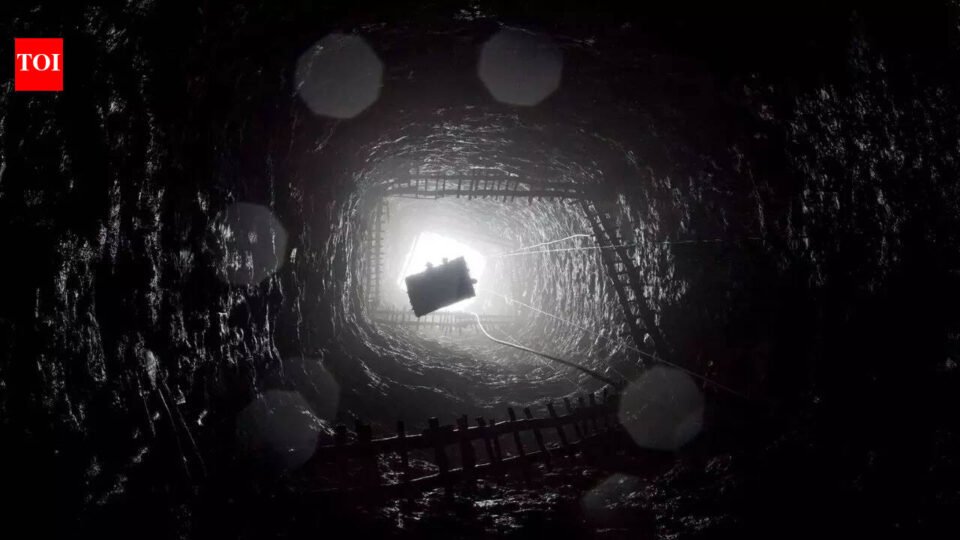
Across the United States, thousands of abandoned coal mines sit quietly beneath the ground. Old tunnels, empty shafts and remnants of an industrial era that once powered cities and factories. For decades, these sites were mostly seen as environmentally problematic, expensive to maintain, and difficult to repurpose.Now, researchers believe those same mines might hold the key to storing clean energy. Scientists at Oak Ridge National Laboratory are reportedly developing advanced modelling tools that could transform these underground networks into massive “water batteries”. The idea sounds unusual at first. Yet it appears to offer two benefits at once. Long-term energy storage for renewable power, and a new economic purpose for communities shaped by coal mining.It is still early days. But experts say the concept could change how energy storage works in regions that lack mountains or traditional hydropower sites.
How pumped storage hydropower stores electricity using water
Energy storage is one of the biggest challenges in the shift toward renewable power. Solar and wind can produce huge amounts of electricity. Just not always when people need it. That’s where pumped storage hydropower comes in.The idea is simple, at least in theory. Water moves between two reservoirs located at different heights. When electricity is cheap or abundant, say during a sunny afternoon, power pumps water uphill. Later, when demand rises, the water flows back down through turbines to generate electricity.Experts say pumped storage hydropower already accounts for more than 90 percent of utility-scale energy storage in the United States. So the technology itself is not new.Traditional systems need large mountains or steep hills to create the height difference required for water pressure. Many regions simply do not have the terrain. That limitation has slowed expansion for years.
How abandoned mines could support future power systems
Researchers at Oak Ridge National Laboratory think abandoned coal mines might solve that problem.Instead of building large reservoirs on mountainsides, the lower reservoir could sit deep inside an existing mine shaft. Water would still move between the two levels. The difference is that one of those levels already exists underground. Thousands of mines across the country reach hundreds of metres below the surface. Some are even deeper. That vertical distance could create the pressure needed to spin turbines and generate electricity. It also means fewer large construction projects on the surface. And possibly much lower costs.Using existing tunnels and shafts reportedly speeds up development as well. Engineers would not need to dig entirely new underground structures.
Why old coal mines need careful testing before reuse
Repurposing a coal mine is not as easy as filling it with water. Minerals left behind from decades of mining can react with water in ways that damage equipment. Turbines are expensive. Corrosion is the last thing engineers want. Researchers say this is where new modelling tools come in.The Oak Ridge team has built detailed hydrodynamic and chemical simulations that track how water might move through mine tunnels. The models also analyse how water interacts with minerals in the surrounding rock. If certain minerals appear likely to cause corrosion, engineers can design systems to reduce that risk. Or choose a different site entirely. Old mines were not designed to handle large volumes of fast-moving water under pressure. The models help researchers check whether tunnel walls might crack or collapse.
Why mining communities are watching closely
For towns built around coal mining, the idea carries a certain symbolism. These mines once powered the industrial economy.Now they might support clean energy. Energy storage projects could also create new jobs in regions where mining has declined. Engineers, technicians, maintenance crews. Small but meaningful economic activity. Experts say it is too early to promise large employment numbers.Turning environmental liabilities into useful infrastructure sounds appealing. Particularly in areas where abandoned mines already require monitoring and maintenance.
