
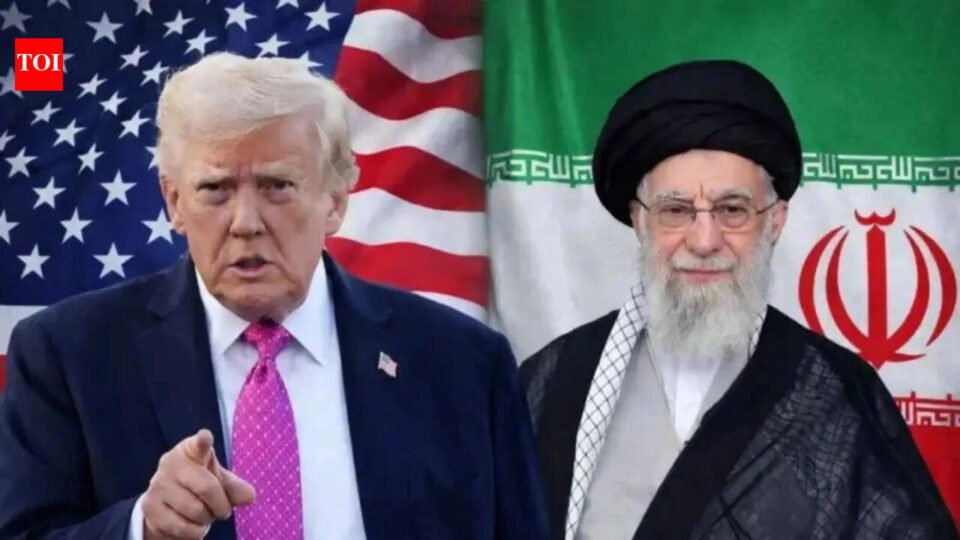
Britain, the United States and China have taken precautionary steps in the Middle East as fears of a possible conflict with Iran intensify.The UK government confirmed on Friday that staff at its embassy in Tehran have been temporarily withdrawn because of the current “security situation”. Earlier in the day, Washington authorised the departure of non-emergency personnel from Israel, while Beijing urged its citizens to leave Iran “as soon as possible”.The moves come amid repeated threats by US President Donald Trump to strike Iran and as the United States carries out what AFP described as its biggest military build-up in decades in the Middle East and Mediterranean region.
UK embassy operates remotely
The British Foreign Office said the UK embassy in Tehran, which had already been temporarily closed last month, would continue to “operate remotely”, according to AFP.Britain’s decision follows rising tensions after the latest round of Oman-mediated talks between Iran and the United States in Geneva. Although both Iranian and Omani officials described Thursday’s discussions as positive, Washington has not publicly commented on their outcome.
China urges evacuation from Iran
China also issued strong travel advisories on Friday.Beijing’s foreign ministry said Chinese nationals currently in Iran should “strengthen safety precautions and evacuate as soon as possible”, according to a statement cited by AFP.It further advised citizens to avoid travelling to Iran “for the time being in light of the current security situation”.Chinese embassies and consulates in Iran and neighbouring countries will provide “necessary assistance” to those seeking to leave via commercial flights or overland routes, the ministry added.Meanwhile, China’s embassy in Israel warned its nationals to remain highly vigilant, avoid unnecessary travel and familiarise themselves with nearby bomb shelters and evacuation routes, state broadcaster CCTV reported.
US allows staff to leave Israel
In a parallel move, the United States authorised non-emergency embassy staff and their families to leave Israel “due to safety risks”, AFP reported.The US embassy in Israel said on its website: “Persons may wish to consider leaving Israel while commercial flights are available.”The New York Times reported that US Ambassador to Israel Mike Huckabee emailed staff urging those who wished to depart to do so “TODAY”.The state department also confirmed that US secretary of state Marco Rubio will travel to Israel on Monday for talks focused on Iran and wider regional issues. State department spokesman Tommy Pigott said Rubio would discuss “a range of regional priorities including Iran, Lebanon and ongoing efforts to implement President Trump’s 20-Point Peace Plan for Gaza”, as per AFP.Rubio’s visit comes at a time when the US is reinforcing its military presence in the region.
Major US military build-up
The US military is deploying additional forces, including the world’s largest aircraft carrier, the USS Gerald R Ford, which is due to arrive off the coast of Israel.Washington already had more than a dozen warships in the Middle East, including another aircraft carrier, before ordering the Gerald R Ford to the region.In his recent State of the Union address, Trump accused Iran of “pursuing sinister nuclear ambitions” and claimed it was developing missiles capable of reaching the United States. Tehran has consistently denied the allegations, insisting its nuclear programme is peaceful and dismissing the claims as “big lies”.
Talks continue despite tensions
The diplomatic moves come just a day after Oman-mediated negotiations between Tehran and Washington in Geneva, seen as a last-ditch effort to prevent war.Iranian foreign minister Abbas Araghchi said success required “seriousness and realism from the other side and avoidance of any miscalculation and excessive demands”.Following the talks, Araghchi told state television that negotiations had “made very good progress and entered into the elements of an agreement very seriously, both in the nuclear field and in the sanctions field”.He indicated that the next round could take place in “perhaps less than a week”, with technical discussions at the International Atomic Energy Agency (IAEA) scheduled to begin in Vienna on Monday.Omani foreign minister Badr Albusaidi also spoke of “significant progress” in a post on X.However, Iran has insisted that discussions focus solely on nuclear matters, while Washington wants Tehran’s missile programme and its support for militant groups curtailed.
Public anxiety inside Iran
In Tehran, some residents voiced scepticism about US intentions but expressed hope that diplomacy would ease economic hardship caused by sanctions.“Whatever the outcome of the negotiations… it should lead to some improvement in people’s economic situation. Not just a little — it is our right,” 34-year-old Ali Bagheri said, as quoted by AFP.Another resident, Hamid Beiranvand, said Iran should “not give any concessions” because Washington “breaks promises”, but added that “everyone prefers that a war doesn’t happen”.Iran has faced rising domestic pressure amid high living costs. Protests in December led to a crackdown that, according to rights groups, killed thousands.
UN raises alarm
The UN’s human rights chief, Volker Turk, said he was “extremely alarmed” at the risk of wider regional escalation and urged restraint.“I hope the voice of reason prevails,” he said.With diplomatic talks continuing but military deployments increasing, the region remains on edge. For now, governments are balancing dialogue with precaution, even as uncertainty over the outcome of US-Iran negotiations deepens.
