The US central bank has raised its forecast for inflation as the Iran war-linked surge in global energy prices threatens self-inflicted damage on the world’s largest economy.
The Federal Reserve held off raising interest rates despite the challenge to price stability posed by President Trump’s decision, along with Israel, to attack the Iranian regime.
Retaliation from Iran, centred on Gulf neighbours, has severely curbed oil and gas output across the region, with the halt to deliveries through the key Strait of Hormuz resulting in a global supply squeeze.
Oil prices rallied higher on Wednesday ahead of the Fed’s rate decision after an Israeli strike on a key Iranian gas field was met by Iranian threats to target energy infrastructure across the Middle East.
Brent crude rose more than 5% to $109 a barrel at one stage. It is 50% up in the month to date.
The bank’s latest economic projections, issued alongside its interest rate announcement, indicated upwards pressure on inflation and the wider economy ahead from the war.
They also noted that US factory gate prices had already hit their highest level for a year in February – before the first bombs were dropped on the last day of that month.
Iran war latest: Criticism of attacks on Iran gas field
The forecasts saw inflation ticking up by 0.3 percentage points by the year’s end than it had expected at the end of 2025.
It was seen by analysts as a cautious response to the conflict to date and market reaction was muted.
The US is the world’s largest oil producer but it imports the bulk of what its refineries need for things like road fuels because they are configured to process heavier oil than the US produces.
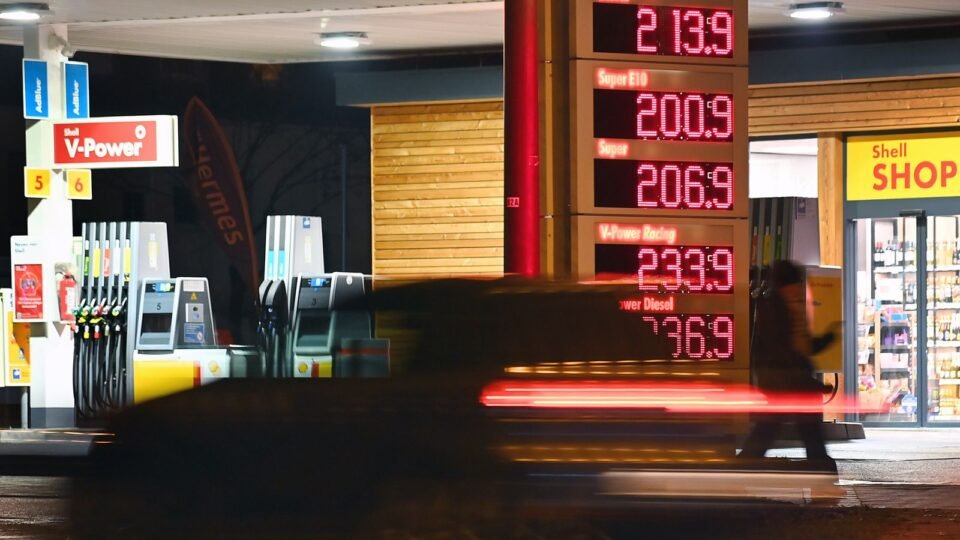
The price shock was first seen at US filling stations where petrol costs are currently up by 28% this month on average, according to AAA data.
The country is far less exposed to shifts in wholesale natural gas costs because it is a major producer and user of its own product. US prices are actually flat in March so far.
The issue for the Fed, like other central banks, is uncertainty over the duration of the war.
The longer it drags on, the more likely banks are to raise interest rates in the hope of dampening the prospects of higher prices becoming engrained in the economy beyond fuel, air fares and transport.
Europe, including the UK, are particularly exposed to so-called secondary effects as energy buyers.
The Bank of England is widely tipped to follow the Fed and leave Bank rate at its current level of 3.75% when its rate-setting committee meets on Thursday.
The same decision is expected shortly afterwards by the European Central Bank though it could, in theory, be the first to react to any extended price shock through a rate increase if the war drags on. That is because its main deposit rate is already less restrictive.
Central banks have no power of control over oil costs, which were on track on Wednesday evening for their highest US market close since hostilities started, only the ability to help limit wider effects by raising borrowing costs.
The crisis promises to be the first major test for Mr Trump’s recently nominated Fed chair Kevin Warsh, who appears set to replace Jerome Powell when his term finishes in May.
The president continues to demand interest rate cuts from the Fed but analysts say there is no credible path to rate cuts while war in the Middle East continues to rage, despite employment market weakness.
