Rachel Reeves has insisted her spring statement will be a quiet affair as she wants the autumn budget to be the sole major fiscal event of the year.
The chancellor will deliver her financial update on the afternoon of 3 March in the House of Commons. An exact time has yet to be confirmed, but she is only expected to speak for about 20 minutes, compared with an hour for a budget.
Last November’s budget was preceded by much speculation, followed by announcements of large tax rises, bringing tax as a share of GDP to an all-time high.
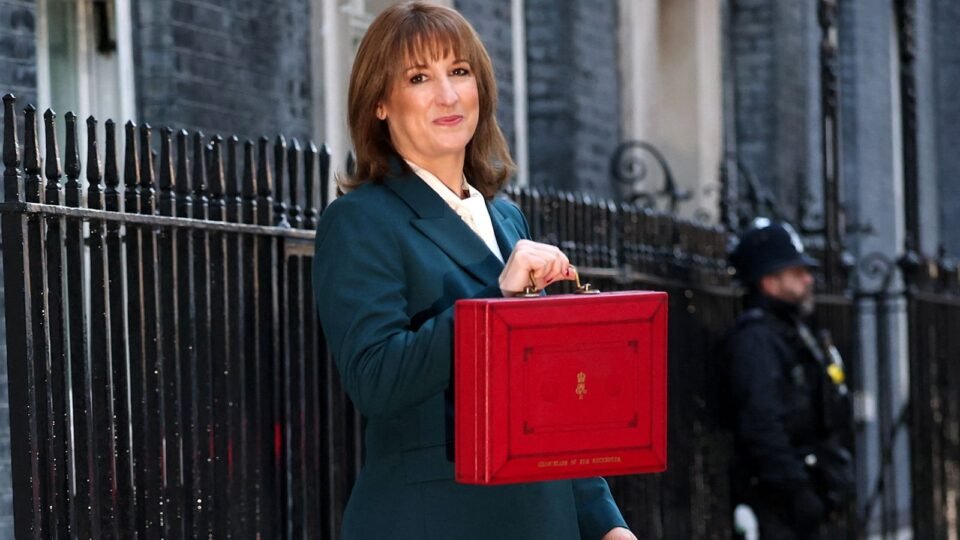
But Ms Reeves and the Treasury have said the spring statement – rebranded from the spring budget – will be low-key and no major announcements will be made. She is not even expected to carry her statement in her famous red box.
Despite it not being a “major” event, the spring statement can influence the government over whether to raise or cut future taxes and spending.
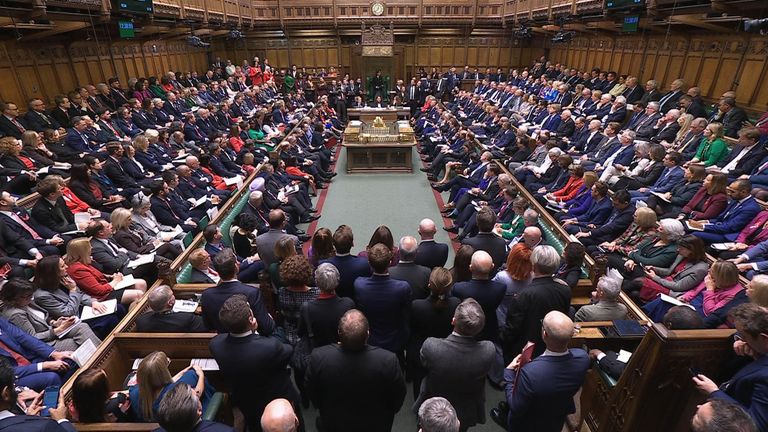
The chancellor delivering the autumn budget last November
Will the OBR be involved in the spring statement?
Ms Reeves will outline the latest economic forecasts from the Office for Budget Responsibility (OBR) – which will then be published after the chancellor has delivered her speech.
So, despite it being “low-key”, it will still be a critical moment as it will show what effect the last budget and the government’s policies have had.
The OBR produces two forecasts a year, which indicate how the economy is expected to perform and if the government is likely to meet the tax and spending rules it has set.
The OBR was thrown into the spotlight at the last budget when it accidentally leaked its assessment, therefore revealing the budget – about 40 minutes before Ms Reeves stood up to deliver her announcement.
This time, following a security review, the Treasury will publish the OBR’s forecast on gov.uk, instead of on the OBR’s own website.
It will be the first time in the OBR’s 16-year history it will not publish a formal assessment of the government’s progress towards meeting its fiscal rules.
However, this will be enough for economists to figure out the size of the chancellor’s headroom, which could have an impact on the economy.
Read more:
Record-breaking budget surplus as tax income rises
Budget 2025 – the key points at a glance
Will Rachel Reeves raise taxes?
The chancellor has said she will not be making any major announcements, but she could make minor changes to tax policy.
However, this could be politically risky as she could then be accused of deploying stealth taxes.
It would also open her up to attacks from opposition parties – and, as seen before, potentially from her own party.
What is the current state of the UK economy?
Despite inflation falling sharply, the UK economy remains fragile, and inflation (currently at 3%) is still above the Bank of England’s target of 2%.
There are also concerns about growth, with the UK’s GDP growing just 0.1% in the last three months of 2025 – but it grew by 1.3% over the whole of 2025.
Unemployment has reached its highest level since 2021, increasing to 5.2% in the three months to December 2025. The unemployment rate among 16 to 24-year-olds across that period was 16.1%, the highest since 2014, according to ONS data.
But when it comes to wages, they are continuing to grow, with annual growth in weekly earnings in the last quarter of 2025, excluding bonuses, rising by 4.2%.
There was an increase in tax receipts due to the government previously raising taxes, which created a £30.4bn government budget surplus in January – £15.9bn more than the year before and the highest (without adjustment for inflation) since monthly records began in 1993.
