
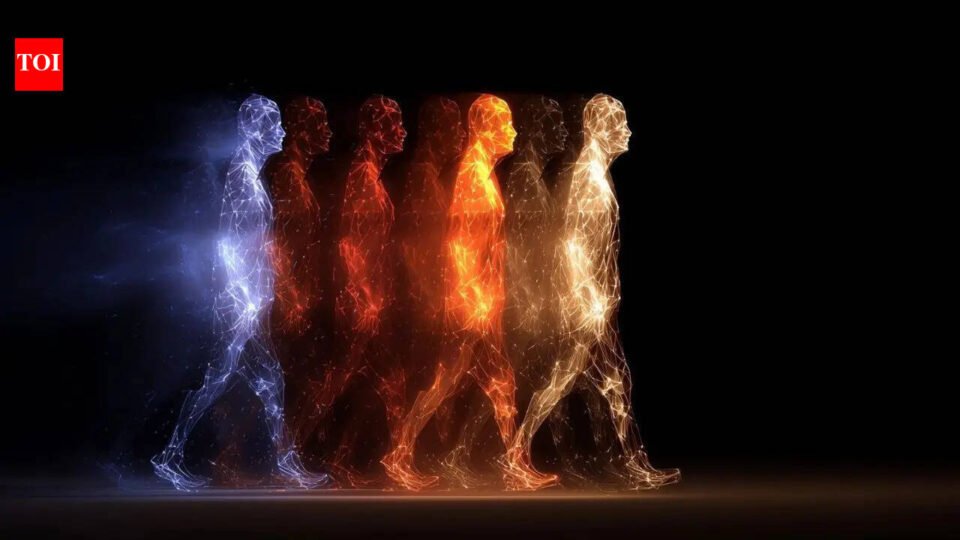
A new genetic study has shifted the way scientists describe the origins of modern humans. For many years, the simplest explanation was that Homo sapiens emerged from a single ancestral population in Africa before spreading out. Research suggests the picture is more complicated. It appears early human groups were spread across different parts of the continent, staying connected over long periods. They mixed, separated, and mixed again. This pattern may have continued for hundreds of thousands of years. Experts say the DNA evidence does not fit a clean branching tree. It looks more like a web of populations that slowly changed together over time. The findings come from large-scale genomic comparisons and fossil context, offering a revised view of where modern humans come from.
Human origins study in Africa reshapes single-origin theory
The study, published in Nature in 2023, examined genetic data from modern African populations and compared it with what is known from fossils of early Homo sapiens. Scientists tested several models of human evolution. Some earlier theories suggested a single origin point within Africa. Others proposed stronger contributions from unknown archaic human groups.What the data seems to show is less tidy. Early populations appear to have been connected, not isolated. They likely shared genes across regions for a very long time. The separation between groups was gradual. It was not a sudden split.One of the key researchers, Brenna Henn from UC Davis, has said the gaps in both fossils and ancient DNA make it hard to draw sharp boundaries. The evidence does not always match neat evolutionary diagrams.
Nama genomes reveal early human genetic diversity in Africa
A major part of the research came from newly sequenced genomes of 44 individuals from the Nama people in southern Africa. The Nama are known for their high genetic diversity, which makes them particularly useful for studying deep human history.These samples were collected over several years from participants living in their communities. The data gave scientists a clearer view of ancient genetic variation that still exists in living populations today. The analysis suggested that the earliest detectable split among modern human lineages happened around 120,000 to 135,000 years ago. Before that time, early human groups were already exchanging genetic material. The connections were ongoing and widespread.Even after populations began to diverge, gene flow did not stop. It continued across different regions. The pattern suggests long-term interaction rather than strict separation.One sentence stands out in the research discussion. The roots of modern humans may have been loosely connected populations rather than a single origin group.
New genetic model questions single ancestral human origin
The study challenges the idea of a single ancestral population giving rise to all modern humans. Instead, it describes a “weakly structured” ancestral system. This means early human groups were only slightly differentiated from one another. They were not entirely separate populations. They were not fully distinct species either. They were something in between, connected by movement and interbreeding.Researchers argue that this model explains modern genetic diversity more naturally. It reduces the need to assume major contributions from unknown archaic human species in Africa. Instead, variation can be explained through structure within early Homo sapiens populations themselves.
