


NEW DELHI: The increase in minimum wages in states such as Uttar Pradesh and Haryana may result in several workers getting out of the provident fund net as the current wage ceiling for mandatory contribution to Employees Provident Fund Organisation is Rs 15,000 a month.Amid labour protests, the UP govt has increased the minimum wage for semi-skilled and skilled workers to over Rs 15,000 in districts such as Ghaziabad and Gautam Budh Nagar from April 1, while in Haryana the basic minimum wage for even for unskilled workers is Rs 15,220.
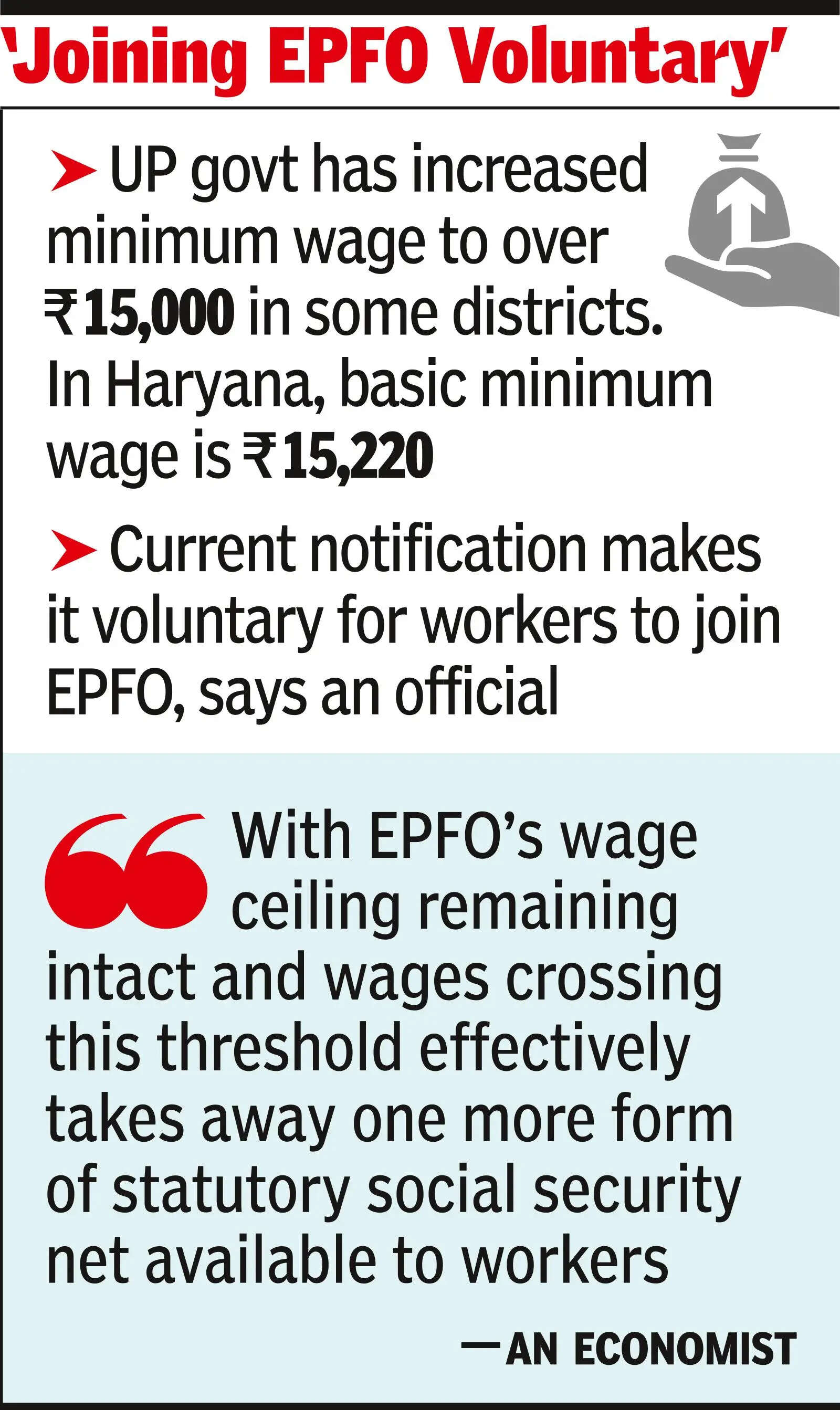
“EPFO coverage is mandatory for workers, who have basic wages up to Rs 15,000. The current notification crosses this threshold, making it voluntary for workers to join. However, a decline in coverage is not foreseen,” an official said. Official data showed that in most states and UTs, the minimum wages for semi-skilled and skilled workers are now in the range of Rs 15,000 to Rs 20,000 a month, with some such as Kerala and Delhi report minimum wages around Rs 22,000 for some work categories. While the Centre has been discussing the possibility of increasing the wage ceiling to Rs 25,000 a month, it has not made headway due to opposition from employers but the latest developments are expected to allow it to push ahead with the plan.Economists pointed out that the latest move by Haryana is in line with the trend seen over the past few years where minimum wages in several states and union territories (UTs) for various categories of workers have breached the EPFO’s threshold, making it imperative for the retirement fund body to raise its own wage ceiling, which has remained unchanged since Sept 2014, so that workers in lower income groups are statutorily enrolled by their employers. Amit Basole, professor at Azim Premji University said EPFO coverage is becoming increasingly skewed in favour of higher income workers. The latest revision by Haryana effectively provides employers with a chance to skip compliance for workers, who are in most need of social security. “Its high time that EPFO revises its own wage ceiling somewhere around Rs 22,000-25,000, so that workers at the bottom of pay scale are statutorily covered by this social safety net,” he said. Labour economist KR Shyam Sundar said the biggest worry with minimum wage is non-compliance. Contractors and establishments anyway don’t pay the prescribed minimum basic wages. The increase in minimum wages in states such as UP and Haryana will result in several workers getting out of the provident fund net as the current wage ceiling for mandatory contribution to Employees Provident Fund Organisation is Rs 15,000 a month.
